Sitharaman Highlights GST Rate Cuts on 9th Anniversary
Synopsis
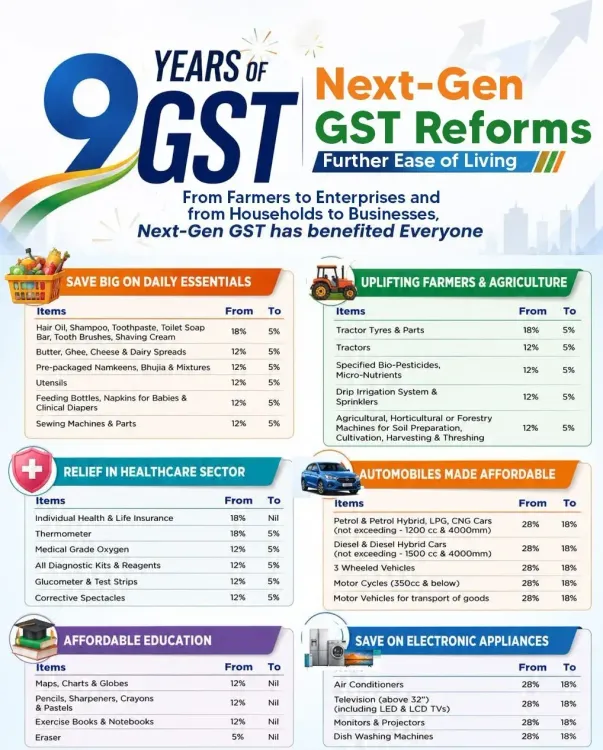
On GST's ninth anniversary, Finance Minister Nirmala Sitharaman highlighted rate rationalisations across daily essentials, healthcare, electronics and automobiles, crediting the reforms with delivering tangible benefits to Indian households since the unified tax regime launched in July 2017.
Key Takeaways
9th anniversary: GST completes nine years on 1 July 2026 , launched under the 101st Constitutional Amendment in 2017.
Sectors covered: Rate rationalisations span daily essentials, healthcare, electronics, automobiles and other sectors, per Sitharaman's post.
Automobile relief: Certain automobile categories saw GST rates fall from 28 per cent to 18 per cent through Council decisions between 2019 and 2022.
Digital compliance: E-invoicing and invoice-matching tools introduced after 2019 have tightened the tax base alongside rate changes.
GST Council's role: The constitutional body comprising Union and state finance ministers drives all rate and exemption decisions.
What to watch: Next GST Council meeting for compensation cess and threshold changes; Union Budget for Centre-state revenue-sharing updates.
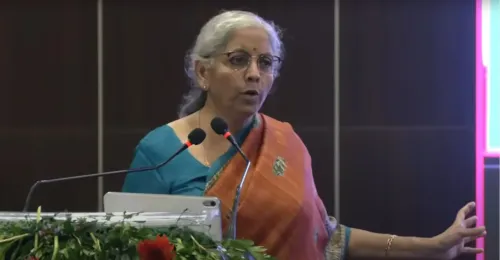
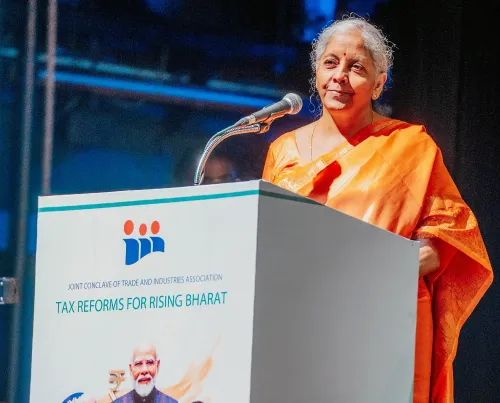
Union Finance Minister Nirmala Sitharaman on Wednesday, 1 July 2026 marked the ninth anniversary of the Goods and Services Tax (GST) by highlighting sweeping rate rationalisations that she said have delivered direct, tangible benefits to households across India. The minister's post, tagged #9YearsOfGST, pointed to reforms spanning daily essentials, healthcare, electronics, automobiles and several other sectors.
Context
GST was launched on 1 July 2017 under the 101st Constitutional Amendment, replacing a fragmented web of central excise duties, service tax and state-level value-added taxes with a single, destination-based levy. The reform, shepherded through Parliament by then Finance Minister Arun Jaitley, was designed to create a unified national market and expand the formal economy. Nine years on, the anniversary has become an occasion for the government to take stock of cumulative compliance gains, revenue trends and the successive rounds of rate simplification carried out since rollout.
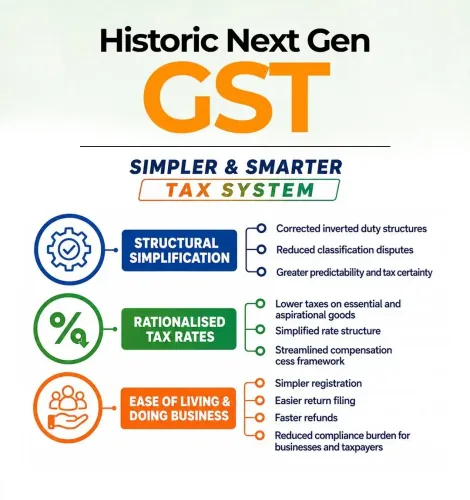
Sitharaman's post described the changes as 'next-generation GST reforms' that 'rationalised rates across daily essentials, healthcare, electronics, automobiles and several other sectors, passing on tangible benefits directly to every household.' The framing positions the reforms not merely as technical tax adjustments but as a household-welfare measure with broad reach.
Policy Backdrop
The GST Council — a constitutional body comprising the Union Finance Minister and state finance ministers — has periodically revised the rate structure since 2018. Notable adjustments have included reductions on medical devices, edible oils and consumer durables. In the automobile segment, certain categories saw rates move from 28 per cent to 18 per cent through Council decisions taken between 2019 and 2022, easing the cost burden on both manufacturers and buyers.
Beyond rate changes, the Council has progressively layered in digital compliance tools — including e-invoicing and an invoice-matching system introduced after 2019 — to tighten the tax base and reduce evasion. The cumulative effect has been a gradual shift from an initial multi-slab architecture toward fewer, broader rate bands, a goal that tax economists and industry bodies have long advocated. Sitharaman's anniversary communication frames this trajectory as an ongoing, consumer-centric project rather than a completed exercise.
Stakeholders and Impact
The sectors named in the minister's post — daily essentials, healthcare, electronics and automobiles — together cover a significant slice of household expenditure, meaning rate reductions in these categories have an outsized effect on consumer price indices and purchasing power. Healthcare providers and pharmaceutical supply chains have particularly benefited from exemptions and lower rates on inputs, reducing the cost of treatment at the point of delivery.
Electronics manufacturers and automobile firms have cited GST rationalisation as a factor in demand recovery and capacity expansion decisions. For households at the lower end of the income spectrum, reductions on daily essentials translate most directly into disposable-income gains. State governments, as co-stakeholders in the Council, share both the revenue implications and the political dividend of these consumer-facing cuts.
What's Next
The government's use of the #9YearsOfGST milestone to amplify reform messaging signals that further rationalisation may be on the agenda. Observers will watch the next GST Council meeting closely for any movement on the compensation cess — a levy originally tied to a five-year state-revenue guarantee that has persisted beyond its initial sunset — as well as potential threshold revisions for small businesses. The subsequent Union Budget is also expected to address revenue-sharing arrangements between the Centre and states as the tax base continues to mature.
With GST collections having grown substantially since 2017, the government faces the dual task of sustaining revenue buoyancy while making good on its stated commitment to further simplify the rate structure and reduce compliance costs for businesses of all sizes.
Point of View
Using the #9YearsOfGST milestone to reinforce the BJP's narrative that structural economic reforms have translated into household-level relief rather than remaining abstract fiscal exercises. The emphasis on sectors such as healthcare and daily essentials is politically deliberate, targeting cost-of-living concerns that have dominated public discourse. Framing the adjustments as 'next-generation' reforms also signals that the rationalisation project is ongoing, pre-empting criticism that the initial multi-slab structure was overly complex. Taken together, the messaging positions the GST architecture as a living, consumer-responsive system rather than a fixed policy legacy.
NationPress
1 Jul 2026
Frequently Asked Questions
What is the 9th anniversary of GST about?
1 July 2026 marks nine years since the Goods and Services Tax was launched across India on 1 July 2017 , replacing multiple central and state levies with a single indirect tax. The government uses the occasion each year to highlight compliance growth, revenue trends and rate reforms carried out by the GST Council .
What GST rate cuts did Nirmala Sitharaman mention?
Finance Minister Nirmala Sitharaman cited rationalised rates across daily essentials, healthcare, electronics, automobiles and several other sectors . Research indicates automobile segments saw rates drop from 28 per cent to 18 per cent in some categories between 2019 and 2022, while medical devices and edible oils also saw reductions.
How does GST rationalisation benefit common households?
Lower GST rates on daily essentials and healthcare reduce the final price consumers pay, effectively increasing disposable income. For lower-income households, cuts on frequently purchased goods have the most immediate impact on the cost of living.
What is the GST Council and who sits on it?
The GST Council is a constitutional body established under the 101st Constitutional Amendment . It comprises the Union Finance Minister as chairperson and the finance ministers of all states and union territories, and it decides GST rates, exemptions and procedural rules by consensus.
What GST changes should we expect next?
Observers are watching the next GST Council meeting for decisions on the compensation cess — originally a five-year state-revenue guarantee levy — and possible threshold revisions for small businesses. The upcoming Union Budget is also expected to address Centre-state revenue-sharing arrangements.