Sitharaman launches Rayalaseema Horticulture Hub, credits Modi's farm schemes
Synopsis
On Gandhi Jayanti, Finance Minister Nirmala Sitharaman laid the foundation for a ₹1 lakh crore Rayalaseema Global Horticulture Hub backed by the World Bank and ADB — framing it as the centrepiece of Modi's farmer welfare agenda and the NDA's vision to turn the historically drought-prone Rayalaseema into 'Ratnala Seema', a land of prosperity.
Key Takeaways
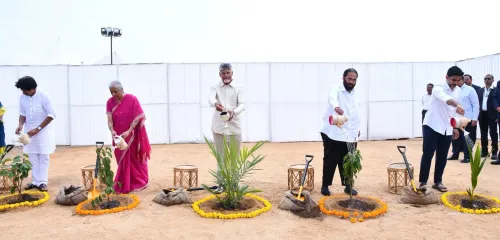
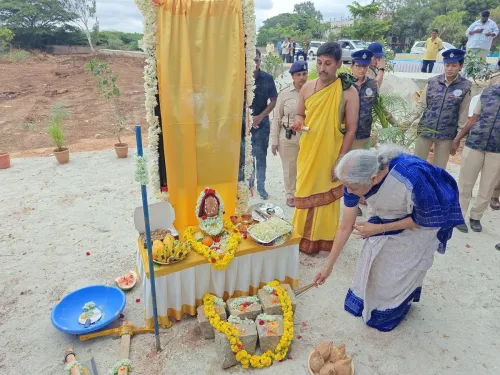
Finance Minister Nirmala Sitharaman laid the foundation stone of the Rayalaseema Global Horticulture Hub and Indian School of Agriculture at Madanapalle on 2 October 2026 .
Andhra Pradesh CM N.
Chandrababu Naidu has envisioned a ₹1 lakh crore horticulture project spanning 10 districts , backed by the World Bank and ADB .
Sitharaman cited urea subsidies of ₹2,700 per bag , keeping farmer price at ₹300 despite import costs hitting ₹3,000 per bag .
Central schemes highlighted include PM-Kisan Samman Nidhi , Kisan Credit Card , PM Fasal Bima Yojana , GOBARdhan , and PM-KUSUM .
The NDA has pledged to transform Rayalaseema into 'Ratnala Seema' following the 2024 electoral mandate in Andhra Pradesh.
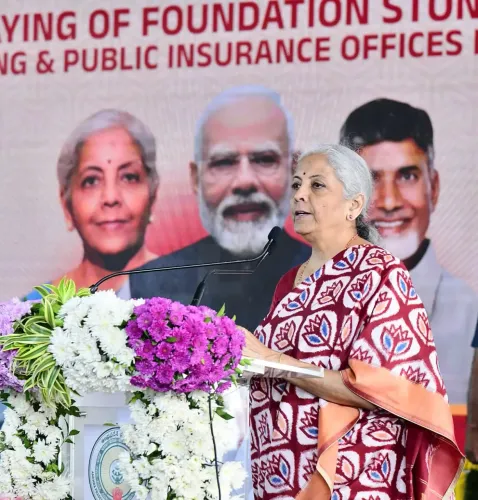
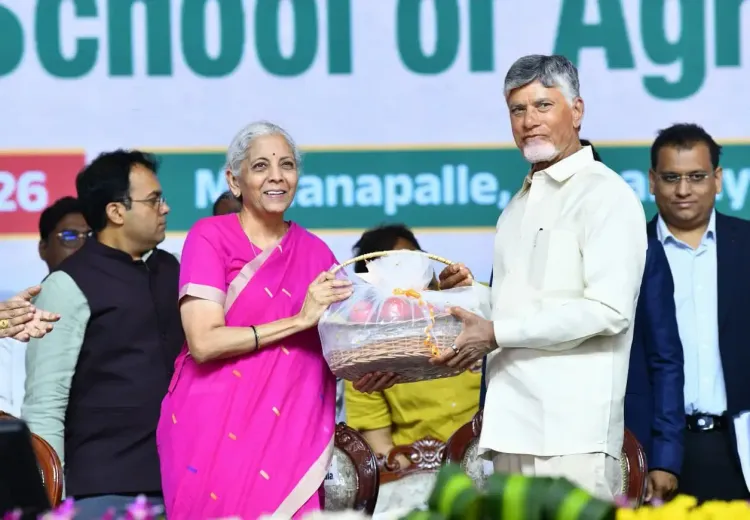
Union Finance Minister Nirmala Sitharaman on Friday, 2 October 2026, laid the foundation stone for the Rayalaseema Global Horticulture Hub and the Indian School of Agriculture at Madanapalle in Annamayya district, Andhra Pradesh, asserting that Prime Minister Narendra Modi has introduced comprehensive schemes addressing every major requirement of farmers. The event coincided with Gandhi Jayanti and Lal Bahadur Shastri Jayanti, lending symbolic weight to what officials described as a transformative push for agricultural livelihoods in the region.
Key Announcements at Madanapalle
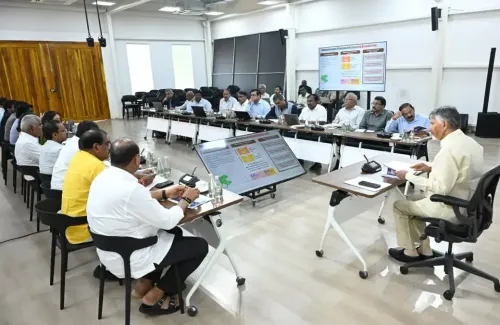
Andhra Pradesh Chief Minister N. Chandrababu Naidu, Deputy Chief Minister Pawan Kalyan, and Human Resource Development Minister Nara Lokesh attended the ceremony. Chief Minister Naidu has envisioned an ambitious ₹1 lakh crore horticulture project spanning 10 districts — eight from Rayalaseema and two adjoining districts — to establish a world-class Global Horticulture Hub. The initiative is being launched with support from PM Modi and financial assistance from multilateral institutions including the World Bank and the Asian Development Bank (ADB).
Sitharaman said the project aims to introduce world-class agricultural technologies and improve water-use efficiency. The simultaneous establishment of the Indian School of Agriculture at Madanapalle is intended to provide institutional support for the region's agrarian workforce. Together, officials framed these as the building blocks for transforming Rayalaseema into what the National Democratic Alliance (NDA) has termed 'Ratnala Seema' — a land of gems and prosperity.
Central Farm Schemes Highlighted
Sitharaman drew attention to several flagship Central schemes, citing PM-Kisan Samman Nidhi for direct benefit transfers and Kisan Credit Cards for institutional credit access as cornerstones of farmer welfare policy. She also referred to the PM Fasal Bima Yojana for crop insurance, the GOBARdhan initiative for converting rural waste into clean biogas, and the PM-KUSUM scheme for solar-powered irrigation pumps.
The Finance Minister underscored the government's push on climate-resilient agriculture, noting that scientifically developed seed varieties capable of withstanding extreme heat and dry spells were being actively promoted. She added that mobile veterinary units and veterinary services had been deployed in coordination with state governments to strengthen dairy and fisheries livelihoods.
Urea Subsidy as a Case Study
Sitharaman cited urea pricing as an illustration of Central support under pressure. Despite global disruptions — including the Covid-19 pandemic and geopolitical tensions in West Asia that pushed the import cost of urea to around ₹3,000 per bag — farmers continued to receive it at ₹300 per bag, with the Centre providing a subsidy of approximately ₹2,700 per bag, she said. This, she argued, demonstrated the government's commitment to insulating farmers from external price shocks.
Political and Historical Context
Launching these initiatives on Gandhi Jayanti, Sitharaman invoked Mahatma Gandhi's ideals, Lal Bahadur Shastri's call of 'Jai Jawan, Jai Kisan', and the vision of former Prime Minister Atal Bihari Vajpayee. The choice of date and venue — in a region historically marked by agrarian distress — carries clear political messaging ahead of the continued consolidation of the NDA alliance in Andhra Pradesh following the 2024 mandate. This comes amid ongoing Centre-state collaboration under the Naidu-led government, which has pursued several large infrastructure and agricultural projects since returning to power.
With multilateral funding secured and foundation stones laid, the spotlight now shifts to execution timelines, land acquisition progress, and the pace at which the World Bank and ADB disbursements are operationalised.
Point of View
But the reliance on World Bank and ADB tranches means execution is contingent on conditionalities and disbursement schedules that rarely move at political pace. Sitharaman's recitation of Central farm schemes — PM-Kisan, PM-KUSUM, Fasal Bima — is well-worn ground; what was missing was any accountability metric on outcomes. The urea subsidy illustration is powerful optics, but the broader question of whether input subsidies translate into improved farmer incomes remains unanswered in the official narrative.
NationPress
2 Oct 2026
Frequently Asked Questions
What is the Rayalaseema Global Horticulture Hub?
It is a ₹1 lakh crore agricultural initiative envisioned by Andhra Pradesh Chief Minister N. Chandrababu Naidu, covering 10 districts — eight in Rayalaseema and two adjoining districts. The project aims to introduce world-class horticulture technologies and improve water-use efficiency, with financial support from the World Bank and ADB.
What was launched at Madanapalle on 2 October 2026?
Finance Minister Nirmala Sitharaman laid the foundation stones for both the Rayalaseema Global Horticulture Hub and the Indian School of Agriculture at Madanapalle in Annamayya district, Andhra Pradesh, on Gandhi Jayanti and Lal Bahadur Shastri Jayanti.
What Central farm schemes did Sitharaman highlight?
Sitharaman cited PM-Kisan Samman Nidhi for direct income support, Kisan Credit Cards for institutional credit, PM Fasal Bima Yojana for crop insurance, GOBARdhan for biogas from rural waste, and PM-KUSUM for solar-powered irrigation pumps.
How much is the Centre subsidising urea for farmers?
Despite global import costs of urea rising to around ₹3,000 per bag due to the Covid-19 pandemic and West Asia geopolitical tensions, farmers continue to receive it at ₹300 per bag. The Centre is providing a subsidy of approximately ₹2,700 per bag, according to Sitharaman.
Who attended the Madanapalle foundation ceremony?
The ceremony was attended by Finance Minister Nirmala Sitharaman, Andhra Pradesh Chief Minister N. Chandrababu Naidu, Deputy Chief Minister Pawan Kalyan, Human Resource Development Minister Nara Lokesh, and other dignitaries.