Sloth bears in Aravalli act as seed dispersers, study finds
Synopsis
A peer-reviewed study from the Aravalli mountains reveals that sloth bears are not just foragers — they are active shapers of the landscape. Their gut passage helps germinate seeds of six plant species, and in a striking twist, the only germination recorded for the invasive shrub Lantana camara came exclusively from bear scat, raising urgent questions for forest managers.
Key Takeaways
A first-of-its-kind study in the Aravalli mountains, Rajasthan finds sloth bears act as selective seed dispersers in semi-arid deciduous forests.
Seeds of six plant species remained viable after passing through the bears' digestive systems, with germination success varying by species.
Germination of the invasive shrub Lantana camara occurred only from scat-derived seeds — a notable ecological finding.
Sloth bear diets shift seasonally: fruits dominate in winter , insects and termites take over in summer.
The study has been accepted for publication in the international journal Biotropica , authored by Utkarsh Prajapati , K.S.
Gopi Sundar , and Vijay Kumar Koli .
The sloth bear is listed as 'Vulnerable' by the IUCN and is endemic to the Indian subcontinent.
A first-of-its-kind dietary study conducted in the semi-arid deciduous forests of the Aravalli mountains in Rajasthan has found that seasonal diet shifts and seed dispersal by sloth bears are helping several plant species multiply across the landscape. The research, accepted for publication in the international journal Biotropica, offers rare insight into the ecological role of large omnivorous mammals in seasonally dry forests.
What the Study Found
Researchers analysed sloth bear scat collected across winter and summer seasons to assess dietary variation and seed dispersal effectiveness. They found that the bears' diet shifts markedly with the seasons — fruits dominate winter diets, while insects and termites make up a larger proportion during summer, demonstrating considerable dietary flexibility in response to seasonal resource fluctuations.
Seeds of six plant species were found viable after passing through the bears' digestive systems. Germination success varied across species, but the results pointed to a meaningful dispersal function. Notably, the germination of the non-native invasive shrub Lantana camara occurred exclusively from scat-derived seeds — a finding that raises questions about the bear's inadvertent role in spreading an invasive species.
Species-Level Germination Outcomes
For four species, post-germination survival of seedlings from scat seeds was not significantly different from those collected directly from plants. However, seedlings of donkey berry (Grewia flavescens) from plant-collected seeds survived better, while seedlings of Coromandel ebony (Diospyros melanoxylon) from scat seeds showed higher survival — suggesting the gut-passage effect is species-specific rather than uniformly beneficial or harmful.
The study also noted that fruit consumption was selective and not consistently proportional to availability, indicating preferential foraging behaviour rather than opportunistic feeding.
Ecological Significance
'Our findings demonstrate that sloth bears function as selective seed dispersers, including enhancing the germination success of an invasive shrub in dry deciduous forests,' researcher K.S. Gopi Sundar said. 'Our findings highlight the importance of increasing focus on how large omnivores influence plant regeneration, thereby potentially affecting landscape-level vegetation dynamics in tropical seasonal ecosystems,' he added.
The study argues that in seasonal tropical systems — where resource availability fluctuates sharply — the ecological roles of mammals are tightly coupled with dietary plasticity. Such plasticity can stabilise ecological interactions but can also significantly shape patterns of plant recruitment and community composition, particularly in water-limited dry forests.
About the Sloth Bear and the Research Team
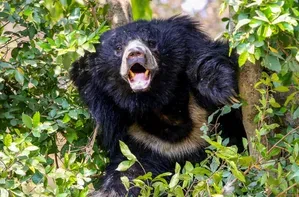
The sloth bear (Melursus ursinus), listed as 'Vulnerable' by the International Union for Conservation of Nature (IUCN) and endemic to the Indian subcontinent, was chosen as a model species for examining linkages between seasonal diet, resource availability, and seed dispersal. Although morphologically adapted for insect-feeding, the species exhibits pronounced dietary variability, incorporating fruits when available.
The study was undertaken by researchers Utkarsh Prajapati, K.S. Gopi Sundar, and Vijay Kumar Koli. Sundar is an independent researcher; Koli is affiliated with a university in Udaipur; and Prajapati conducted the research as part of his doctoral requirements. The authors note that very few prior studies have integrated diet analysis of sloth bears with experimental germination and survival tests, limiting earlier understanding of the ecological consequences of fruit consumption by the species.
As the findings make their way into peer-reviewed literature, conservationists and forest managers in the Aravalli region may need to factor the sloth bear's dispersal role — including its spread of invasive species — into landscape management strategies.
Point of View
And no one had documented it until now. Forest managers in the Aravallis have long treated sloth bear habitat as a protection priority; they may now need to treat it as a vegetation-management variable too. The broader lesson is that India's dry forests are chronically understudied relative to its tiger reserves, and ecological surprises like this one are the predictable result.
NationPress
21 Oct 2026
Frequently Asked Questions
What did the sloth bear seed dispersal study in the Aravalli find?
The study found that sloth bears in the Aravalli mountains of Rajasthan act as selective seed dispersers, with seeds of six plant species remaining viable after gut passage. Notably, germination of the invasive shrub Lantana camara was recorded only from scat-derived seeds, suggesting the bears play a complex and sometimes unexpected role in shaping local vegetation.
Where was the sloth bear dietary study conducted?
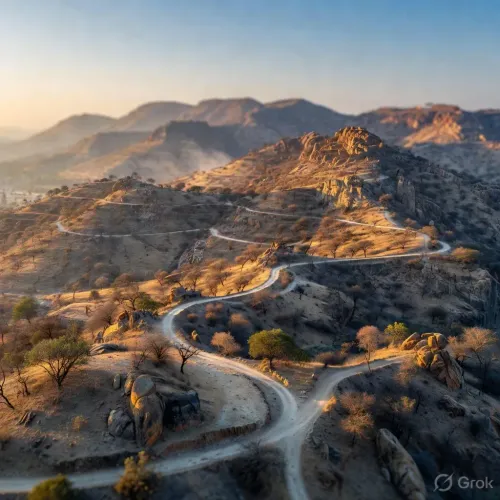
The study was conducted in a semi-arid deciduous forest in the Aravalli mountains of Rajasthan, western India. The region is characterised by lakes and strong seasonal variation in resource availability.
Who conducted the sloth bear research and where is it published?
The study was conducted by researchers Utkarsh Prajapati, K.S. Gopi Sundar, and Vijay Kumar Koli. It has been accepted for publication in the international journal Biotropica. Prajapati undertook the work as part of his PhD, Sundar is an independent researcher, and Koli is affiliated with a university in Udaipur.
Why is the sloth bear's role as a seed disperser significant?
Large omnivorous mammals like sloth bears can link food-web processes with plant regeneration, but their contributions in seasonally dry forests were poorly understood before this study. The findings suggest that sloth bears may help structure vegetation across large landscapes like the Aravallis, with implications for conservation and forest management.
What is the conservation status of the sloth bear?
The sloth bear (Melursus ursinus) is listed as 'Vulnerable' by the International Union for Conservation of Nature (IUCN). It is endemic to the Indian subcontinent and, despite being morphologically adapted for insect-feeding, exhibits significant dietary flexibility by consuming fruits when available.