Smriti Irani Addresses Prenuptial Agreement White Paper Launch in Mumbai
Synopsis
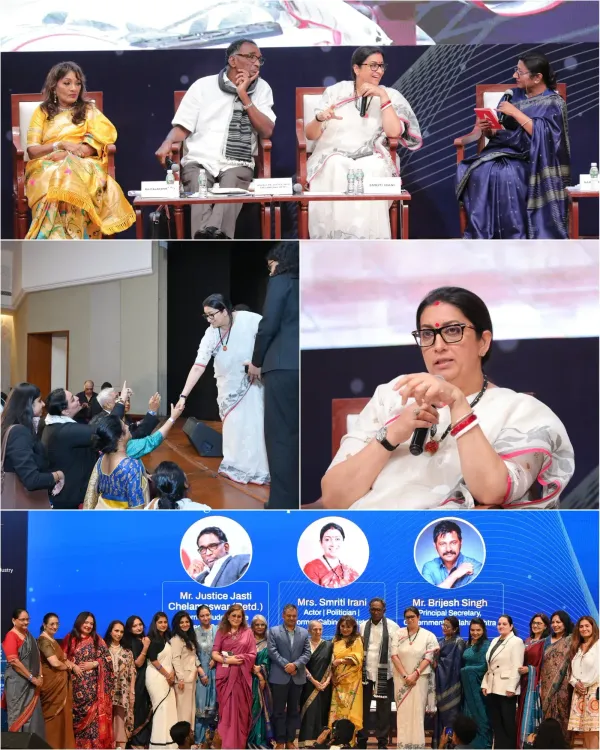
BJP leader Smriti Irani addressed the launch of a White Paper on prenuptial agreements in Mumbai on June 17, 2026, drafted by the IMC Ladies Wing. She called for legal modernisation that preserves marriage's foundational values of trust and mutual responsibility, placing the debate at the intersection of law, culture and women's rights.
Key Takeaways
BJP leader Smriti Irani addressed the launch of the 'Prenuptial Agreements (Recognition, Regulation and Enforcement) – Proposed Bill Concept Note, 2026' in Mumbai on June 17, 2026 .
The White Paper was drafted by the Legal Committee of the IMC Ladies Wing , the women's wing of the Indian Merchants' Chamber .
Prenuptial agreements currently have no statutory recognition under Indian family law, including the Hindu Marriage Act, 1955 .
Irani stressed that legal modernisation must preserve 'trust, mutual responsibility, and commitment' as the foundations of marriage.
Possible next steps include a Law Commission reference or a private member's bill in Parliament.
The debate intersects with broader discussions on the Uniform Civil Code and women's economic rights within marriage.
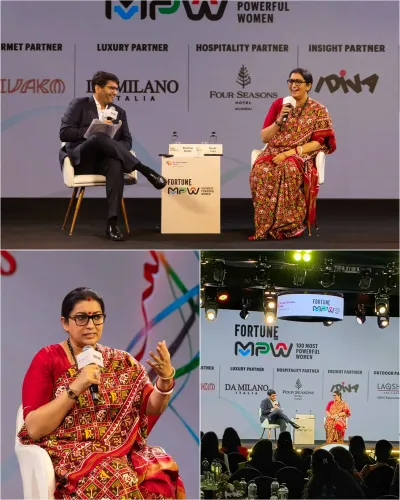
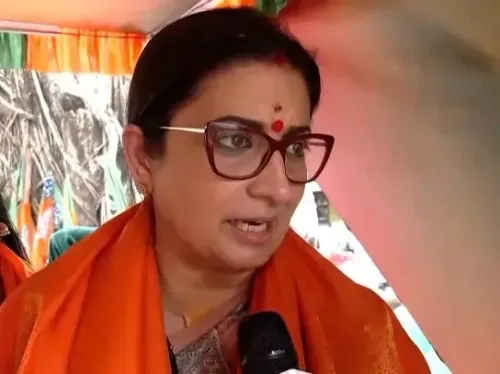
BJP leader Smriti Irani addressed the launch of a White Paper on 'The Prenuptial Agreements (Recognition, Regulation and Enforcement) – Proposed Bill Concept Note, 2026' in Mumbai on Wednesday, June 17, 2026. The document was drafted by the Legal Committee of the IMC Ladies Wing, the women's wing of the Indian Merchants' Chamber, and marks a formal attempt to push prenuptial agreements into mainstream policy discourse.
Context
Irani, speaking at the event, framed the discussion as an opportunity to reflect on 'the enduring institution of marriage and its place within a changing society.' She noted that the conversation around prenuptial agreements 'goes far beyond questions of legal enforceability,' inviting a broader examination of 'the evolving relationship between law, social institutions, and cultural values.'
The former Union Minister of Women and Child Development cautioned that while legal frameworks must adapt to ensure 'justice and dignity,' the strength of marriage 'has always rested on foundations that legislation alone cannot create — namely trust, mutual responsibility, and commitment.'
Policy Backdrop
Prenuptial agreements currently have no statutory recognition under Indian family law. The Hindu Marriage Act, 1955, and parallel personal-law statutes treat marriage primarily as a sacrament rather than a contract, leaving any pre-marital financial arrangements in a legal grey zone.
Landmark reforms — including the Hindu Succession Act amendment of 2005 and the Protection of Women from Domestic Violence Act, 2005 — expanded women's economic rights within marriage, gradually building the legislative scaffolding for more contractual approaches. Parallel debates on a Uniform Civil Code have kept questions of pre- and post-nuptial agreements alive in policy circles.
The IMC Ladies Wing concept note represents one of the more structured civil-society attempts to translate these debates into a draft legislative framework, though the exact provisions of the 2026 concept note are yet to enter the formal public record.
Stakeholders and Impact
The primary beneficiaries of any such legislation would be women entering marriage, particularly those in the workforce who seek to protect assets, define financial obligations, and establish clear succession rights before solemnising a union. Family-law practitioners have long argued that the absence of enforceable prenuptial contracts places women at a disadvantage during divorce proceedings.
Irani underscored this tension, stating that 'the challenge before policymakers is not simply to modernise the law, but to ensure that in doing so we preserve the principles that sustain social cohesion and strengthen the institutions that bind generations together.' Her remarks signal awareness of the cultural resistance that any such bill is likely to encounter across religious and community lines.
What's Next
The White Paper is expected to feed into broader consultations on family-law reform. Possible next steps include a reference to the Law Commission of India or the introduction of a private member's bill in Parliament. Any legislative move would require navigating India's plural personal-law framework, where marriage and succession are governed differently across religious communities.
With rising female workforce participation and growing judicial emphasis on individual autonomy, the political and legal appetite for contractual safeguards within marriage appears to be strengthening — making the IMC Ladies Wing concept note a document that policymakers and family-law practitioners will watch closely.
Point of View
Given the party's traditional emphasis on the sanctity of marriage as a social institution. Her measured endorsement — affirming the need for legal adaptation while insisting on preserving cultural foundations — reflects the careful balancing act that any prenuptial legislation will demand across India's plural personal-law landscape. The framing also positions the BJP as engaged on women's economic rights without appearing to undermine conservative family values. With Uniform Civil Code discussions ongoing, this concept note could become a test case for how far family-law reform can advance before it collides with religious-community sensitivities.
NationPress
16 Sept 2026
Frequently Asked Questions
What is the Prenuptial Agreements Proposed Bill Concept Note 2026?
It is a White Paper drafted by the Legal Committee of the IMC Ladies Wing, the women's wing of the Indian Merchants' Chamber, that proposes a framework for the legal recognition, regulation and enforcement of prenuptial agreements in India.
Are prenuptial agreements legally valid in India?
No. Prenuptial agreements currently have no statutory recognition under Indian family law. Statutes such as the Hindu Marriage Act, 1955, treat marriage primarily as a sacrament rather than a contract, leaving pre-marital financial arrangements in a legal grey zone.
What did Smriti Irani say about prenuptial agreements?
Irani said the debate goes beyond legal enforceability and invites reflection on the evolving relationship between law, social institutions, and cultural values. She emphasised that marriage's strength rests on trust and mutual responsibility, and that modernising the law must not come at the cost of social cohesion.
What is the IMC Ladies Wing?
The IMC Ladies Wing is the women's wing of the Indian Merchants' Chamber, Mumbai. It engages in legal awareness and policy discussions concerning women, and its Legal Committee drafted the 2026 White Paper on prenuptial agreements.
What could happen next with prenuptial agreement legislation in India?
The White Paper may be referred to the Law Commission of India or form the basis of a private member's bill in Parliament. Any legislation would need to navigate India's plural personal-law framework governing different religious communities.