Smriti Irani Extends Vijayadashami Greetings, Invokes Shri Ram
Synopsis
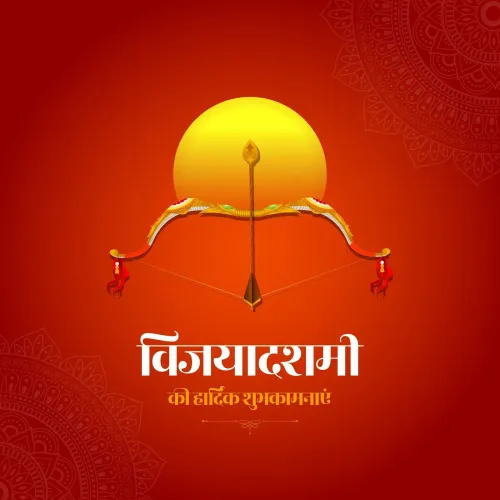
BJP leader Smriti Irani marked Vijayadashami 2026 by posting Sanskrit greetings on X, invoking the Mahabharata maxim 'Where there is dharma, there is victory' and seeking blessings of Maryada Purushottam Shri Ram for all.
Key Takeaways
BJP leader Smriti Irani posted Vijayadashami greetings on X on October 20, 2026 .
She opened with the Sanskrit phrase 'Yato Dharmastato Jayah' — 'Where there is dharma, there is victory' — drawn from the Mahabharata.
She described Vijayadashami as a festival of victory, valour, and devotion to dharma .
The post invoked Maryada Purushottam Prabhu Shri Ram , praying for happiness, good fortune, and prosperity for all.
The greeting reflects the BJP's consistent pattern of public outreach through major Hindu festival messaging.
On the auspicious occasion of Vijayadashami 2026, BJP leader and former Union Minister Smriti Irani extended heartfelt greetings to the nation, invoking the ideals of victory, valour, and righteousness that define the festival.
Posting on X on Tuesday, October 20, Irani opened with the Sanskrit invocation यतो धर्मस्ततो जयः ('Where there is dharma, there is victory') — a phrase drawn from the Mahabharata that resonates deeply in Hindu philosophical tradition. She called Vijayadashami a festival symbolising 'vijay, shaurya aur dharmanishtha' (victory, valour, and devotion to dharma), and prayed that the blessings of Maryada Purushottam Prabhu Shri Ram bring happiness, good fortune, and prosperity into every life.
The Significance of Vijayadashami
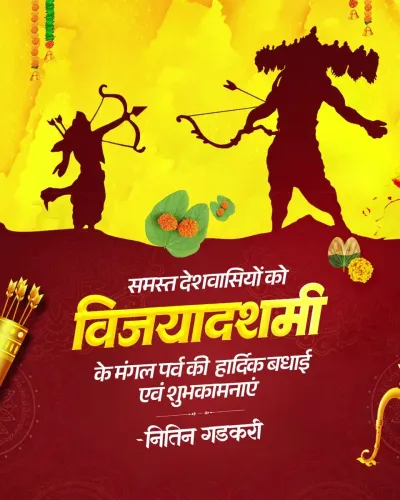
Vijayadashami, celebrated on the tenth day of the Shukla Paksha of Ashwin month, commemorates Lord Rama's victory over the demon king Ravana — the triumph of righteousness over evil. Across India, the day is marked by the symbolic burning of effigies of Ravana, Kumbhakarna, and Meghanada, and by the conclusion of the nine-day Navratri celebrations. The title Maryada Purushottam — 'the most excellent among upright men' — is one of the most revered epithets for Shri Ram, capturing his role as the embodiment of duty and ethical conduct in the Ramayana.
BJP's Consistent Festival Outreach
Irani's greeting reflects a broader and consistent pattern within the Bharatiya Janata Party, whose leaders regularly mark major Hindu festivals with public messages that draw on religious symbolism and cultural identity. The invocation of Shri Ram and the dharm-jaya framework is particularly resonant for the BJP's core constituency, for whom Ram represents both spiritual heritage and civilisational pride. The closing salutation 'Jai Shri Ram' has become one of the most widely recognised expressions in contemporary Hindu public life.
On a day when millions of Indians gather around Ramlila grounds and watch the Ravana effigy burn against the evening sky, a message from a senior national leader tying personal faith to public celebration completes a familiar, deeply felt circle. Dharma's victory, as the festival proclaims, is never just ancient history — it is renewed every year.
Point of View
The Ram epithet, the dharm-jaya framing all slot neatly into the party's long-running cultural-identity playbook. What makes this moment slightly more than routine is the layering: opening with a Mahabharata shloka before pivoting to the Ramayana's Maryada Purushottam signals a deliberate attempt to speak to the full breadth of Hindu scriptural tradition, not just one narrative. For a leader who held the Women and Child Development portfolio, the universal 'sukh, saubhagya aur samridhi' (happiness, fortune, prosperity) framing also softens the message into inclusive aspiration. Across the political spectrum, Vijayadashami greetings have become a non-negotiable public ritual — but the precise theological vocabulary a BJP senior deploys still communicates ideological positioning.
NationPress
20 Oct 2026
Frequently Asked Questions
What did Smriti Irani post on Vijayadashami 2026?
Smriti Irani posted Vijayadashami greetings on X on October 20, 2026, opening with the Sanskrit phrase 'Yato Dharmastato Jayah' and praying for blessings of Maryada Purushottam Shri Ram for everyone's happiness and prosperity.
What does 'Yato Dharmastato Jayah' mean?
'Yato Dharmastato Jayah' is a Sanskrit maxim meaning 'Where there is dharma (righteousness), there is victory.' It originates in the Mahabharata and is widely used in Hindu philosophical and political discourse.
What is Vijayadashami and why is it celebrated?
Vijayadashami, also called Dussehra, is a major Hindu festival celebrated on the tenth day of Ashwin Shukla Paksha. It commemorates Lord Rama's victory over the demon king Ravana, symbolising the triumph of good over evil.
Who is Maryada Purushottam?
Maryada Purushottam, meaning 'the most excellent among upright men,' is a revered epithet for Lord Shri Ram, emphasising his role as the ideal embodiment of duty, righteousness, and ethical conduct in the Ramayana.
Why do BJP leaders post greetings on Hindu festivals?
BJP leaders regularly post public greetings on major Hindu festivals as part of consistent outreach that emphasises cultural and religious identity, aligning with the party's broader ideological positioning around Hindu traditions and symbols.