Smriti Irani Hails India's Gold in Women's 4×400m Relay at Asian Games 2026

Synopsis
BJP leader Smriti Irani congratulated Kiran Pahal, Poovamma Machettira, Prachi, and Vithya Ramraj after India clinched gold in the Women's 4×400m Relay at Asian Games 2026, calling it a spectacular display of speed, strength, and seamless teamwork.
Key Takeaways
India won gold in the Women's 4×400m Relay at the Asian Games 2026 hosted by Japan.
The winning quartet comprised Kiran Pahal , Poovamma Machettira , Prachi , and Vithya Ramraj .
Smriti Irani , senior BJP leader and former Union Minister, publicly congratulated all four athletes by name on September 29, 2026 .
India's women's relay teams have a history of continental-level success, including medals at the 2014 Incheon Asian Games .
The gold reinforces India's growing depth in middle-distance athletics and feeds into future World Athletics Championship and Olympic qualification cycles.
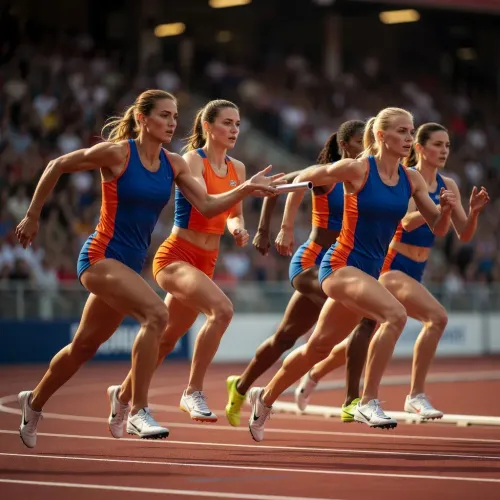
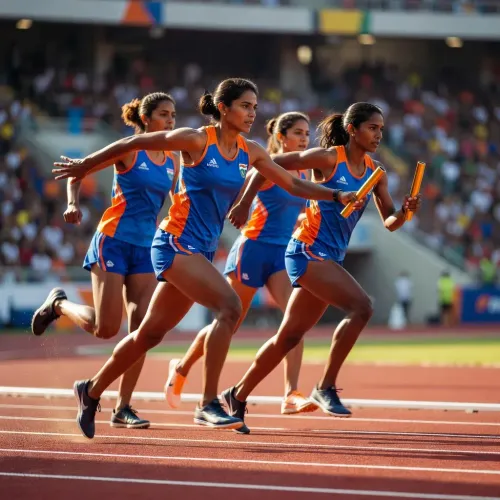
Four women, one baton, one finish line — and India's Tricolour rising to the top of the podium. Kiran Pahal, Poovamma Machettira, Prachi, and Vithya Ramraj powered India to a gold medal in the Women's 4×400m Relay at the Asian Games 2026 on Tuesday, September 29, a result that drew an immediate salute from senior BJP leader Smriti Irani.
The four names behind the gold
Irani's post named each athlete by name — a deliberate, personal acknowledgement rather than a generic team shoutout. Poovamma Machettira, the most experienced of the quartet, has been a fixture in Indian relay squads across multiple Asian Games cycles, bringing race-craft and composure to the anchor stages. Alongside her, Kiran Pahal, Prachi, and Vithya Ramraj completed a unit that Irani described as running with 'one rhythm' and 'one relentless pursuit of gold.'
The relay format demands more than individual pace — it demands synchronised baton exchanges, tactical lane discipline, and the ability to absorb pressure across four consecutive legs. India's gold signals that all four elements clicked on the day that mattered most.
India's relay tradition on the continental stage
India's women's relay teams have a history of punching at the Asian level. The squad claimed relay medals at the 2014 Incheon Asian Games, and each subsequent cycle has tested whether the programme could sustain and deepen that momentum. A gold at the 2026 edition — hosted by Japan — represents a step up in ambition and execution.
The result also reflects a broader pattern: India's investment in athletics infrastructure and centralised training has gradually widened the pool of competitive middle-distance runners, making relay depth — not just individual brilliance — a realistic asset. Four athletes capable of running at continental-gold pace in the same year is not an accident.
What the podium moment means looking ahead
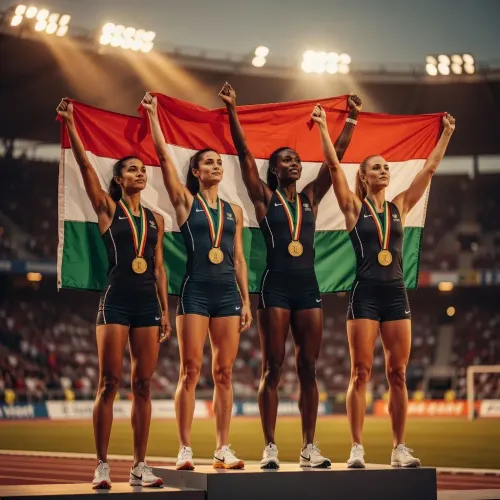
For Indian athletics, a relay gold at the Asian Games carries weight beyond the medal itself. It feeds directly into world rankings, builds team cohesion ahead of World Athletics Championship qualification cycles, and signals to selectors that the women's 400m group is deep enough to compete collectively at the highest continental level.
The next test will be whether this quartet — or a version of it — can carry the momentum into Olympic qualification. That conversation starts now.
Point of View
As Irani did, reflects a deliberate effort to build personal sporting heroes around team events, amplifying visibility for track-and-field disciplines that rarely dominate headlines. The result also strengthens India's case that its relay depth is structurally improving, not episodic. With Olympic qualification cycles approaching, the pressure will now be on athletics administrators to sustain training conditions that produced this quartet.
NationPress
29 Sept 2026
Frequently Asked Questions
Who won the Women's 4x400m Relay gold at Asian Games 2026?
India's quartet of Kiran Pahal, Poovamma Machettira, Prachi, and Vithya Ramraj won the gold medal in the Women's 4×400m Relay at the Asian Games 2026.
Where are the Asian Games 2026 being held?
The Asian Games 2026 are hosted by Japan.
Who is Poovamma Machettira?
Poovamma Machettira is an experienced Indian 400m runner who has represented India at multiple Asian Games editions and is one of the country's leading middle-distance athletes.
What did Smriti Irani say about India's relay gold?
Smriti Irani posted her congratulations on X, calling it 'a golden sprint to glory' and praising the team's speed, strength, and seamless teamwork in powering India to the top of the podium.
Has India won relay medals at the Asian Games before?
Yes, India's women's relay teams have a history of continental success, including relay medals at the 2014 Incheon Asian Games.