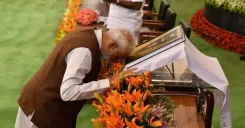
Sonowal: PM translating Ambedkar's vision into action
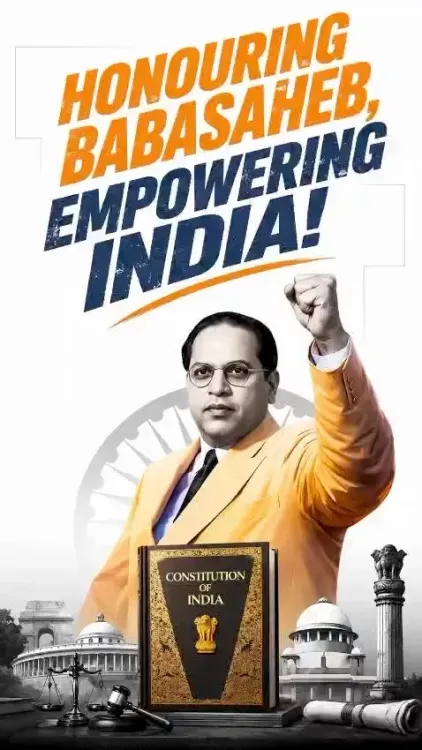
Synopsis
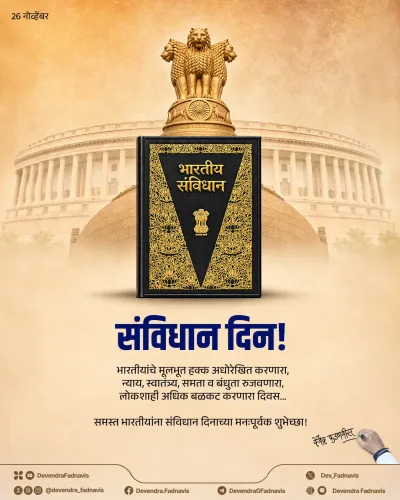
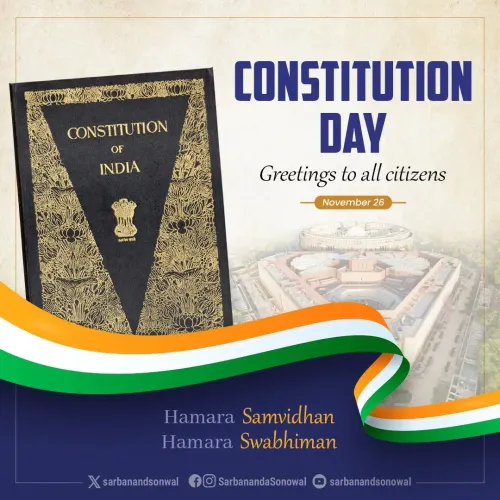
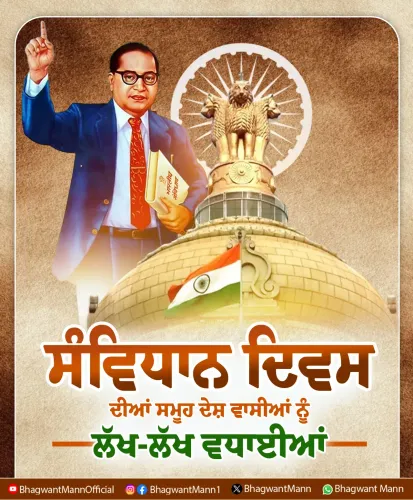
Union Ports and Shipping Minister Sarbananda Sonowal marked Samvidhan Gaurav Diwas by saying Prime Minister Narendra Modi is translating Babasaheb Ambedkar's vision of equality, dignity, justice and opportunity into action for the marginalised, as India observes Constitution Day on 26 November.
Key Takeaways
Union Ports and Shipping Minister Sarbananda Sonowal marked Samvidhan Gaurav Diwas on 26 November 2026 with a tribute to Babasaheb Ambedkar.
He said Prime Minister Narendra Modi is translating Ambedkar's vision of equality, dignity, justice and opportunity into action.
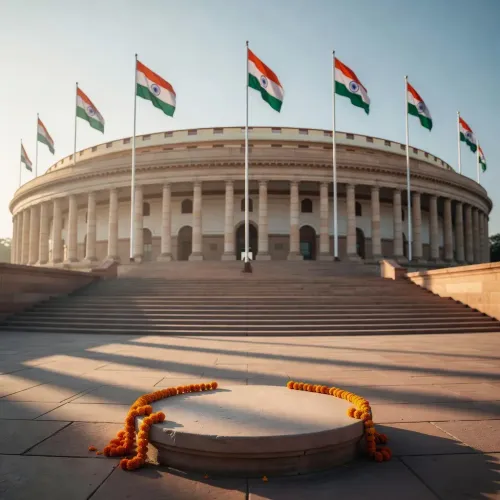
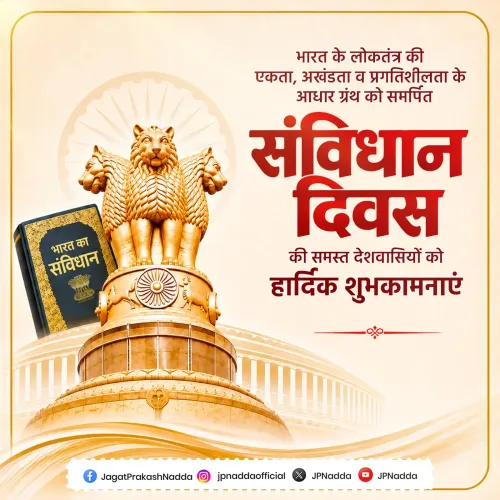
The Constitution of India was adopted on 26 November 1949 ; 26 November was designated Constitution Day in 2015 .
Sonowal's post did not name specific schemes, framing welfare in the language of constitutional rights for the marginalised.
BJP communications routinely link development programmes to Ambedkar's social-equality vision on this date.
On 26 November 2026, as India marked Samvidhan Gaurav Diwas, Union Ports and Shipping Minister Sarbananda Sonowal put Prime Minister Narendra Modi in the line of Babasaheb Ambedkar's founding promise. Equality, dignity, justice and opportunity, he said, were meant as rights of every citizen — and the government is turning that charter into action for the marginalised.
In a post on X, Sonowal wrote that Babasaheb Ambedkar ‘envisioned a nation where equality, dignity, justice and opportunity were the rights of every citizen,’ adding that the Prime Minister is ‘translating this vision into action, empowering the marginalised and ensuring development, dignity and opportunity for all.’
Ambedkar's four promises to the Republic
B. R. Ambedkar, chief architect of the Constitution, spent his political life insisting that the new Republic would not merely declare freedom but distribute it. The text adopted on 26 November 1949 wrote equality, justice and fundamental rights into the basic law, with a special claim on behalf of Scheduled Castes and other communities long denied dignity.
Sonowal's tribute returns to that four-word compact — equality, dignity, justice, opportunity — and treats it as a live mandate rather than a museum piece. That is the civic heart of Constitution Day.
How 26 November became Constitution Day
The Constituent Assembly adopted the Constitution on 26 November 1949; it came into force on 26 January 1950. In 2015, the Union government designated 26 November as Constitution Day, also observed as Samvidhan Gaurav Diwas, to spotlight constitutional values and Ambedkar's authorship.
Every year since, the date has doubled as commemoration and political stage. Leaders invoke the founding text, and governments argue they are still completing its social promise.
Welfare talk as a claim on Ambedkar's legacy
Sonowal's message fits a broader pattern in ruling BJP communications: linking welfare and development programmes to Ambedkar's vision of social equality. The framing presents government action as fulfilment of constitutional guarantees to disadvantaged groups, not merely as administrative delivery.
The post itself names no scheme and offers no new policy. It is a statement of lineage — that empowering the marginalised is how a 1949 charter is supposed to look in 2026.
The Republic will mark this date again. Ambedkar's test remains simple: whether dignity and opportunity stop at the founding text, or reach the last citizen.
Point of View
Sonowal's post is a claim of political lineage: that the present government's welfare politics is the working out of Ambedkar's guarantees of equality and dignity. That framing has become a recurring BJP communication pattern every 26 November, positioning scheme delivery as constitutional fulfilment for disadvantaged groups. Because the post names no programme, the argument stays at the level of values rather than a measurable policy shift. The date will keep drawing such messages; the sharper question is whether official events convert the language into named action.
NationPress
26 Nov 2026
Frequently Asked Questions
What is Samvidhan Gaurav Diwas?
Samvidhan Gaurav Diwas is observed on 26 November to mark the adoption of the Constitution of India in 1949 and to promote constitutional values. The Union government designated the date as Constitution Day in 2015.
When was the Indian Constitution adopted?
The Constituent Assembly adopted the Constitution of India on 26 November 1949. It came into force on 26 January 1950.
Who was B.R. Ambedkar?
B.R. Ambedkar was the chief architect of the Indian Constitution and a leader of the movement for equality, dignity and social justice for Scheduled Castes and other marginalised groups.
What did Sarbananda Sonowal say on Constitution Day?
Union Ports and Shipping Minister Sarbananda Sonowal said Babasaheb Ambedkar envisioned equality, dignity, justice and opportunity as rights of every citizen, and that Prime Minister Narendra Modi is translating that vision into action for the marginalised.
Why is 26 November celebrated as Constitution Day in India?
26 November is Constitution Day because the Constituent Assembly adopted the Constitution on that date in 1949. Since 2015 it has also been observed as Samvidhan Gaurav Diwas to highlight constitutional values and Ambedkar's role.