Union Minister Sonowal greets nation on Constitution Day
Synopsis
Union Ports and Shipping Minister Sarbananda Sonowal greeted citizens on Constitution Day, recalling the Constituent Assembly's 1949 adoption of the Constitution and pledging to uphold its ideals for a prosperous, self-reliant India.
Key Takeaways
Union Ports and Shipping Minister Sarbananda Sonowal issued Constitution Day greetings on 26 November.
He recalled that the Constituent Assembly adopted the Constitution of India on 26 November 1949.
The Constitution came into force on 26 January 1950, observed as Republic Day.
Sonowal honoured the framers and pledged to uphold constitutional ideals to build a prosperous and self-reliant India.
The day is also marked as Samvidhan Diwas, with government events and educational programmes typically held nationwide.
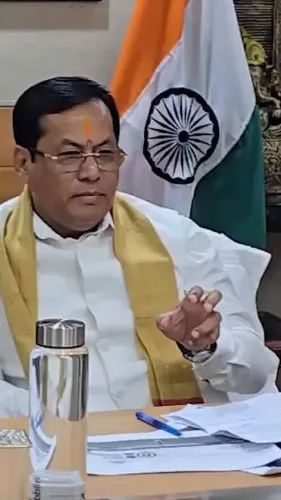
Union Ports and Shipping Minister Sarbananda Sonowal marked Constitution Day by greeting citizens and recalling the hour in 1949 when the Constituent Assembly adopted the Constitution of India. Calling that text the bedrock of the country's democracy, the former Assam chief minister honoured its framers and pledged to uphold its ideals in the work of building a prosperous and self-reliant India.
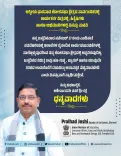
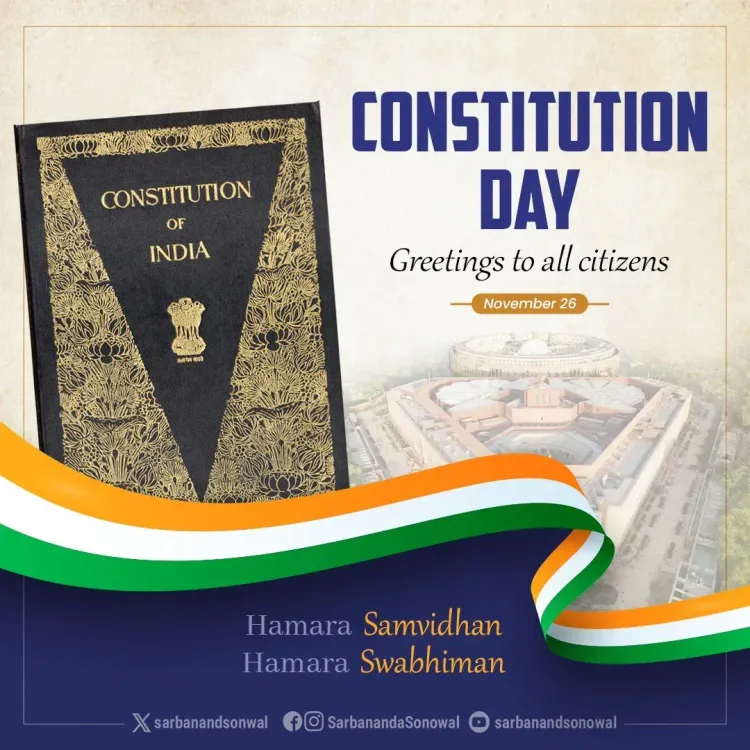
His message was direct. 'Greetings to all citizens on Constitution Day,' he wrote, adding that on this day in 1949 the Constituent Assembly adopted the Constitution of India. 'Today, we honour the remarkable visionaries who framed this sacred document and pledge to uphold its ideals to build a prosperous and self-reliant India.'
The 1949 adoption, two months before Republic Day
The Constituent Assembly adopted the Constitution on 26 November 1949. It came into force only on 26 January 1950, the date Indians now mark as Republic Day. That is why the republic keeps two civic calendars for one document: the day it was adopted, and the day it began to govern.
The Constitution remains the fundamental law of the Union. It sets the democratic framework and the fundamental rights that still structure public life. Samvidhan Diwas (Constitution Day) is the annual moment when ministers and institutions restate that lineage in public.
A familiar pairing of ideals and self-reliance
Sonowal's pledge to a prosperous and self-reliant India sits in a broader pattern of official communications since 2014, in which constitutional fidelity is placed beside national development goals. Union ministers routinely issue such greetings on this date. Government-led events and educational programmes typically run across states and Union Territories on the same day.
The greeting names its audience plainly: all citizens. The document he called sacred still writes the rules they live under.
On Samvidhan Diwas, the easy work is the tribute. The harder work is keeping the 1949 text alive in the institutions that follow.
Point of View
And Sonowal's note fits that template exactly. By pairing honour for the 1949 framers with a call for a self-reliant India, the message folds constitutional memory into the government's economic vocabulary. The post does not announce a new scheme or legal change; it restates a lineage. Watch for the usual spread of government-led events and school programmes on the same date, which is where the observance actually meets the public.
NationPress
26 Nov 2026
Frequently Asked Questions
When is Constitution Day celebrated in India?
Constitution Day, also called Samvidhan Diwas, is observed every year on 26 November, the date in 1949 when the Constituent Assembly adopted the Constitution of India.
When did the Constitution of India come into force?
The Constitution came into force on 26 January 1950, which is celebrated as Republic Day. It had been adopted two months earlier, on 26 November 1949.
Who is Sarbananda Sonowal?
Sarbananda Sonowal is the Union Minister of Ports, Shipping and Waterways. He is a senior BJP leader and a former Chief Minister of Assam.
Why is 26 November called Samvidhan Diwas?
Samvidhan Diwas is the Hindi name for Constitution Day. It commemorates the Constituent Assembly's adoption of the Constitution of India on 26 November 1949.
What did Sarbananda Sonowal say on Constitution Day?
He greeted citizens, called the Constitution the bedrock of India's democracy, honoured the framers, and pledged to uphold its ideals to build a prosperous and self-reliant India.