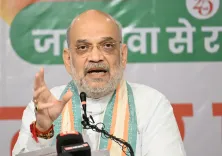
Sonowal hails Assam UCC Bill passage, credits Modi-Sarma
Synopsis
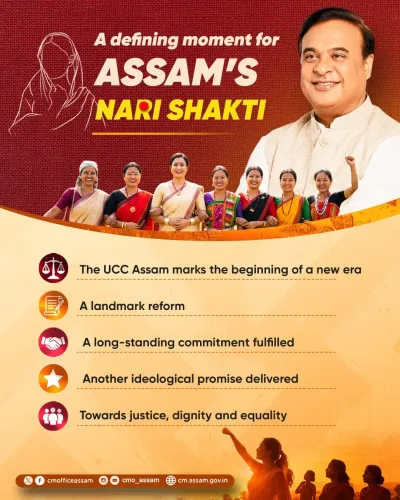
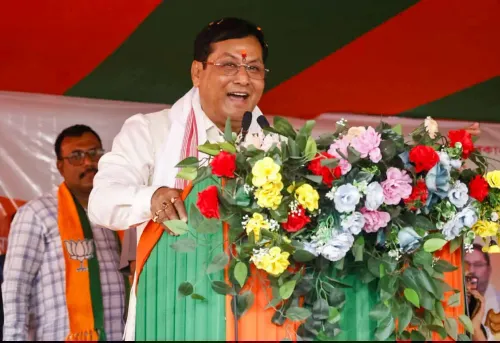
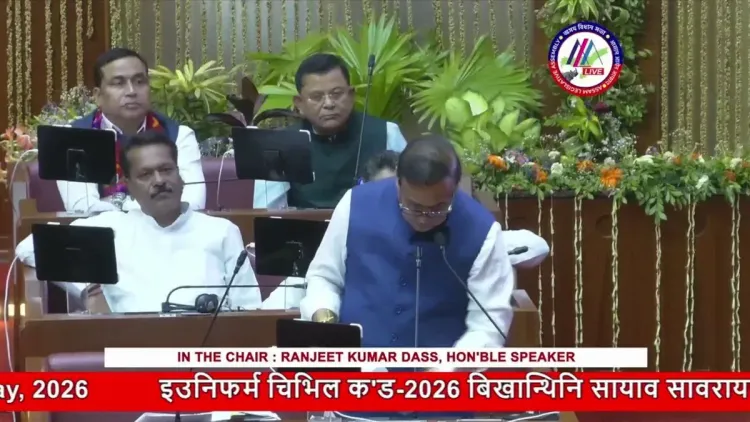
Union Minister Sarbananda Sonowal hailed the passage of the Uniform Civil Code, Assam Bill, 2026 in the Assam Legislative Assembly, calling it a landmark reform for women's rights and social harmony while crediting PM Modi and CM Himanta Biswa Sarma for the achievement.
Key Takeaways
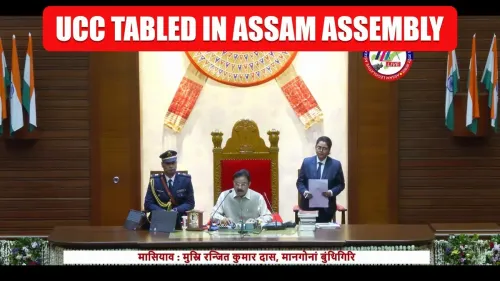
The Uniform Civil Code, Assam Bill, 2026 was passed in the Assam Legislative Assembly on or before 27 May 2026 .
Union Minister Sarbananda Sonowal described the Bill as a historic step toward social justice, equality, and good governance.
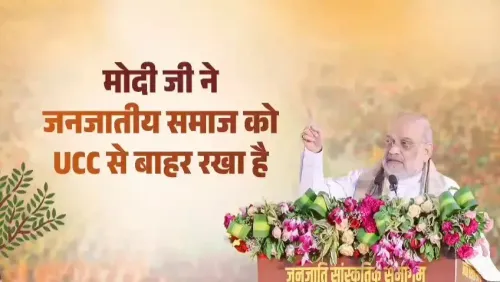
The legislation includes explicit safeguards for the rights and cultural identity of Assam's indigenous and tribal communities .
Chief Minister Dr Himanta Biswa Sarma led the passage of the Bill; PM Narendra Modi 's NDA government is credited with the broader reform agenda.
The Bill's implementation, including rules for tribal exemptions, and potential legal challenges in the Gauhati High Court will be closely watched.
Article 44 of the Constitution has directed the State to secure a uniform civil code since 1950 , making Assam an early state-level mover on this long-pending directive.
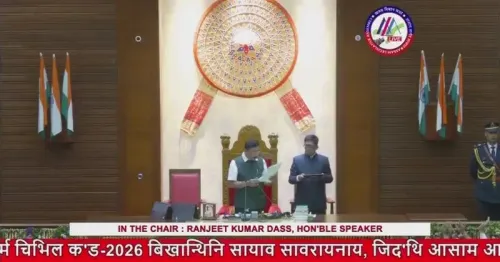
Union Minister of Ports, Shipping and Waterways Sarbananda Sonowal on Wednesday, 27 May 2026 welcomed the passage of The Uniform Civil Code, Assam Bill, 2026 in the Assam Legislative Assembly, calling it a historic chapter in the state's journey toward social justice and equality.
Context
Sonowal, himself a former Chief Minister of Assam and a senior BJP leader, described the Bill as 'a major step towards social justice, equality and good governance while safeguarding the rights and cultural identity of Assam's indigenous and tribal communities.' The legislation is notable for incorporating explicit protections for tribal customary practices alongside its broader civil-code provisions — a design choice that reflects the political sensitivity of imposing uniform personal laws in a state with a large and diverse indigenous population.
The minister extended congratulations to Chief Minister Dr Himanta Biswa Sarma, crediting his leadership for steering the reform through the state legislature. Sonowal also attributed the broader reform impulse to Prime Minister Narendra Modi, whose NDA government has long listed a Uniform Civil Code among its flagship governance commitments.
Policy Backdrop
Article 44 of the Constitution of India, adopted in 1950, lays down a Directive Principle directing the State to secure a uniform civil code for all citizens. Despite decades of debate, no national UCC legislation has been enacted, leaving the field to state-level initiatives. Assam's move places it among the early movers in this space under BJP governance.
The BJP has consistently positioned UCC implementation as a measure to achieve parity in personal laws — covering marriage, divorce, inheritance, and adoption — across religious communities. The party's framing has increasingly emphasised women's rights and equal inheritance as the human-rights case for the reform, while tribal exemptions serve as a political and constitutional safeguard against alienating communities protected under the Fifth and Sixth Schedules of the Constitution.
Stakeholders and Impact
Women in Assam are the most directly cited beneficiaries, with proponents arguing that uniform personal laws will strengthen rights around marriage, divorce, and inheritance that currently vary by religious community. Indigenous and tribal communities across the state — many of whom follow customary laws distinct from both codified Hindu and Muslim personal law — are the other central stakeholder group, and the Bill's reported safeguards for their cultural identity are designed to address concerns that a blanket code could erode traditional practices.
Civil-society groups and legal scholars are expected to scrutinise the precise scope of tribal exemptions and the Bill's interaction with existing protections under the Sixth Schedule of the Constitution, which grants significant autonomy to certain tribal councils in Assam. Any challenge to the legislation would likely be heard first by the Gauhati High Court.
What's Next
The immediate focus will shift to the drafting of rules and implementation guidelines, particularly the contours of exemptions carved out for tribal and indigenous communities. Legal petitions before the Gauhati High Court or the Supreme Court of India cannot be ruled out, given the constitutional complexity of state-level uniform civil codes. At the national level, Assam's legislation may add momentum to discussions around a model Union-level code, a prospect that the Law Commission of India has previously examined. How the Sarma government operationalises the law on the ground will be closely watched as a template — or a cautionary tale — for other states weighing similar moves.
Point of View
Translating a decades-old BJP manifesto commitment into enacted law at the sub-national level for the first time in the Northeast. Sonowal's public endorsement — as a former Assam CM now in the Union Cabinet — lends the development a layered BJP imprimatur, connecting state and central leadership in a single narrative of 'transformative reform.' The tribal-safeguard provisions are the critical variable: they signal an attempt to pre-empt constitutional challenges and political backlash from communities that have historically resisted assimilative legislation, but the adequacy of those safeguards will be tested in courts and on the ground. If Assam's model withstands legal scrutiny, it could become the template that accelerates UCC conversations in other BJP-governed states and, eventually, at the Union level.
NationPress
14 Sept 2026
Frequently Asked Questions
What is the Uniform Civil Code, Assam Bill, 2026?
The Uniform Civil Code, Assam Bill, 2026 is legislation passed by the Assam Legislative Assembly that seeks to establish common personal laws — covering areas such as marriage, divorce, and inheritance — for residents of Assam, while including specific safeguards for the rights and cultural identity of indigenous and tribal communities.
When was the Assam UCC Bill passed?
The Bill was passed in the Assam Legislative Assembly on or before 27 May 2026, the date on which Union Minister Sarbananda Sonowal publicly welcomed its passage.
Will the Assam UCC apply to tribal communities?
According to the Bill's stated objectives as described by Minister Sonowal, it includes safeguards for the rights and cultural identity of Assam's indigenous and tribal communities. The precise scope of those exemptions will be defined in the rules framed under the legislation.
What is the constitutional basis for a Uniform Civil Code in India?
Article 44 of the Constitution of India, a Directive Principle of State Policy adopted in 1950, directs the State to endeavour to secure a uniform civil code for all citizens. Directive Principles are not enforceable in court but guide legislative policy.
Can the Assam UCC Bill be challenged in court?
Yes. Legal challenges to the legislation could be filed before the Gauhati High Court or, ultimately, the Supreme Court of India, particularly on questions relating to the Bill's interaction with Sixth Schedule protections for tribal councils and the rights of religious minorities under personal law.