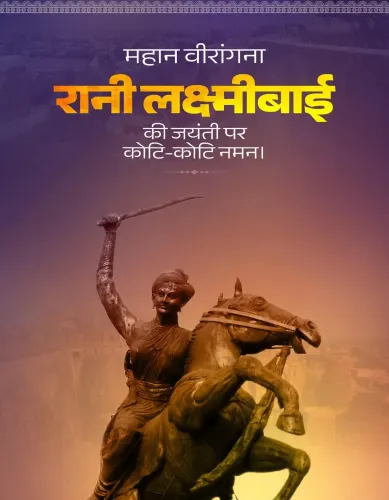
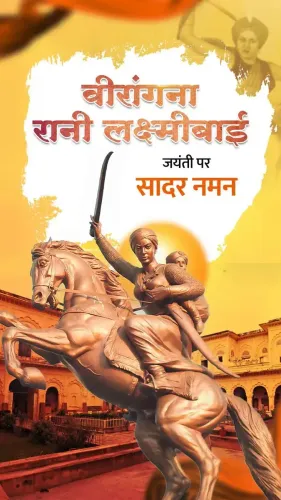
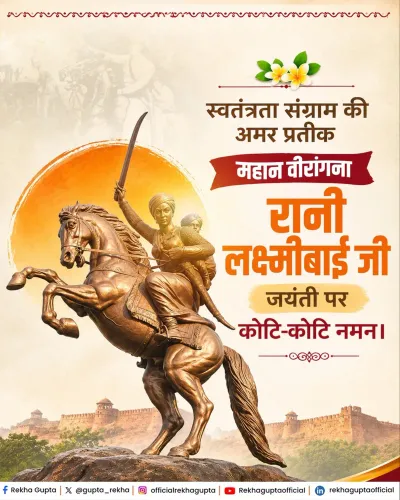
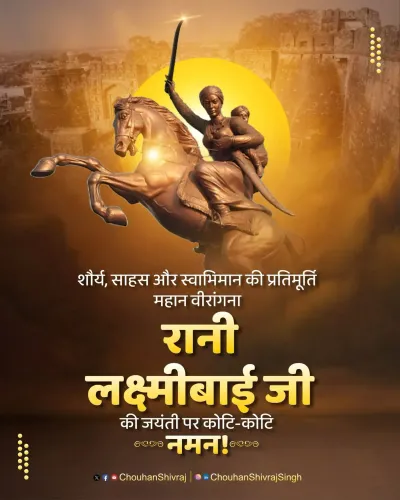
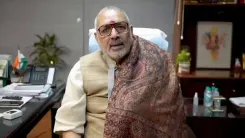
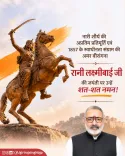
Sonowal pays tribute to Rani Lakshmibai on her birth anniversary
Synopsis
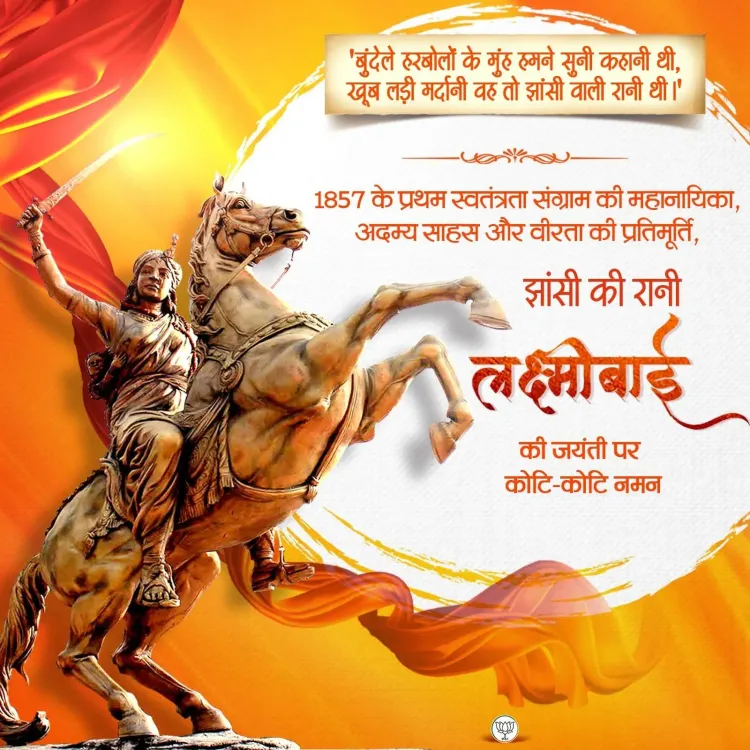
Union Ports Minister Sarbananda Sonowal offered 'koti-koti naman' to Rani Lakshmibai on her birth anniversary, honouring the warrior queen of Jhansi as the supreme heroine of India's 1857 First War of Independence and an emblem of fearless resistance.
Key Takeaways
Union Minister Sarbananda Sonowal paid tribute to Rani Lakshmibai on her birth anniversary on 19 November 2026 .
He described her as the mahanayika (great heroine) of the 1857 First War of Independence and 'embodiment of indomitable courage and valour.' Rani Lakshmibai ( 1828–1858 ) ruled Jhansi and led troops against British forces during the 1857 uprising, dying in battle near Gwalior aged 29.
Her birth anniversary on 19 November draws tributes from leaders across India's political spectrum each year.
Sonowal is a senior BJP leader and former Chief Minister of Assam , serving as Union Minister of Ports, Shipping and Waterways.
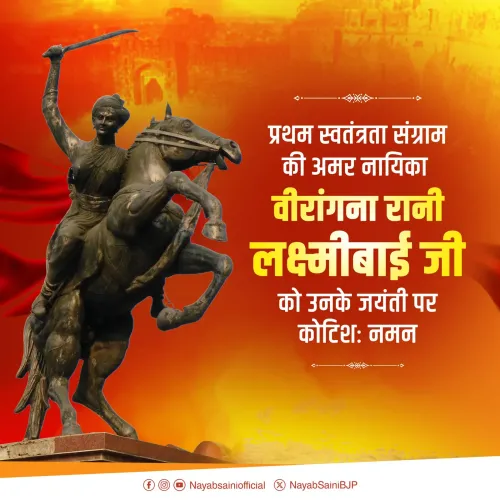
On the birth anniversary of Rani Lakshmibai of Jhansi, Union Ports and Shipping Minister Sarbananda Sonowal offered his reverence to the warrior queen who became the defining symbol of India's first armed uprising against British rule — bowing, as he put it, with 'koti-koti naman' (boundless salutations) to her memory.
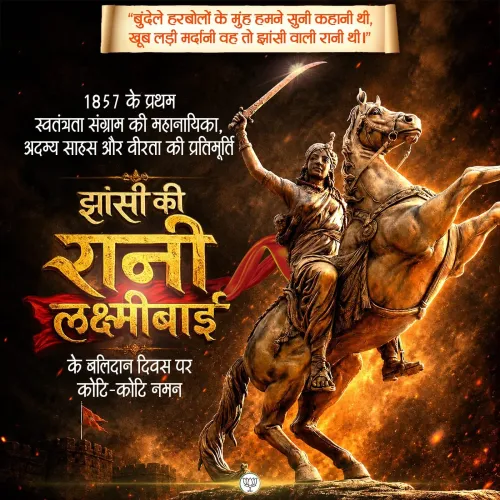
Sonowal's post, shared on 19 November 2026, described Rani Lakshmibai as the 'mahanayika' (great heroine) of the 1857 First War of Independence — 'the embodiment of indomitable courage and valour.' The tribute is a mark of the deep hold her legacy retains in India's national imagination, nearly 170 years after the revolt she led.
Who was Rani Lakshmibai — and why she still matters
Born in 1828, Rani Lakshmibai ruled the princely state of Jhansi in present-day Uttar Pradesh. When the British East India Company moved to annex Jhansi under the Doctrine of Lapse after the death of her husband, she refused to surrender — and led her troops into battle during the 1857 uprising. She died in combat near Gwalior in June 1858, aged just 29.
Her defiance became legend almost immediately. British officers who fought against her acknowledged her remarkable command. In Indian historical memory, she stands as the face of 1857 — a revolt that began as a sepoy mutiny but escalated into a broad challenge to colonial authority across northern and central India.
A tradition of national remembrance
Sonowal's tribute follows a well-established pattern of senior Indian leaders marking the birth anniversaries of 1857 figures with public homage. For a former Chief Minister of Assam and a stalwart of the BJP — a party that has long emphasised India's pre-independence resistance history — such commemorations carry both cultural weight and political resonance. The message is consistent: the sacrifices of 1857 are foundational to the idea of independent India.
Rani Lakshmibai's anniversary on 19 November each year draws tributes from across the political spectrum, a rare moment of uncontested national pride. That consensus itself speaks to how thoroughly her courage has transcended partisan lines.
One queen. One battle. A legacy that an entire nation — nearly seven decades after independence — still stops to salute.
Point of View
Reinforcing the party's narrative of an unbroken thread between pre-independence resistance and its own governance philosophy. For Sonowal — a leader who built his political identity in Assam, a state with its own history of resistance movements — invoking Lakshmibai's courage carries authentic resonance beyond mere ritual. The near-universal, cross-party reverence for Rani Lakshmibai also illustrates how certain historical figures function as rare common ground in an otherwise sharply polarised political landscape. Such commemorations quietly reinforce the idea that the freedom struggle's legacy belongs to all Indians, even as different parties compete to claim it most loudly.
NationPress
19 Nov 2026
Frequently Asked Questions
When is Rani Lakshmibai's birth anniversary?
Rani Lakshmibai's birth anniversary falls on 19 November each year. She was born in 1828 and is remembered as the warrior queen of Jhansi who led troops in the 1857 uprising against British rule.
What did Sarbananda Sonowal say about Rani Lakshmibai?
Sonowal called Rani Lakshmibai the mahanayika (great heroine) of the 1857 First War of Independence and described her as the 'embodiment of indomitable courage and valour,' offering her his 'koti-koti naman' (boundless salutations).
Who was Rani Lakshmibai and why is she famous?
Rani Lakshmibai ( 1828–1858 ) was the queen of the princely state of Jhansi who refused British annexation and led her forces in the 1857 revolt , dying in combat near Gwalior at age 29. She is one of India's most celebrated symbols of resistance against colonial rule.
What was the 1857 First War of Independence?
The 1857 uprising began as a sepoy revolt against the British East India Company but expanded into a broad armed resistance across northern and central India. It is widely regarded as India's first organised challenge to British colonial authority.
Who is Sarbananda Sonowal?
Sarbananda Sonowal is a senior BJP leader serving as India's Union Minister of Ports, Shipping and Waterways. He previously served as Chief Minister of Assam from 2016 to 2021.