Stalin slams 'horse-trading at horse speed' in Tamil Nadu
Synopsis
DMK president M. K. Stalin on 25 May 2026 publicly attacked what he called 'horse-trading at horse speed' in Tamil Nadu, alleging a minority government is buying AIADMK and AMMK legislators to survive a confidence vote while Congress looks the other way from inside the cabinet.
Key Takeaways
Stalin posted a three-scene breakdown on 25 May 2026 alleging systematic floor-management by Tamil Nadu's ruling side ahead of a confidence vote.
Stalin alleged that a faction of the AIADMK was being 'price-negotiated' to vote for the government, and an AMMK member was also drawn in.
He accused the government of inducting AIADMK members into its own party after engineering their resignations — reportedly inside the state secretariat.
Stalin turned his fire on Congress , alleging the party wrote a letter opposing NDA support but is now a cabinet partner watching the horse-trading silently.
The episode raises questions under the Tenth Schedule anti-defection law, with the Tamil Nadu Assembly Speaker likely to face petitions on resignations and disqualifications.
Stalin's wordplay — 'தூயசக்தி' (pure force) vs 'துயரசக்தி' (force of sorrow) — frames the attack as a moral indictment of both the ruling party and its allies.
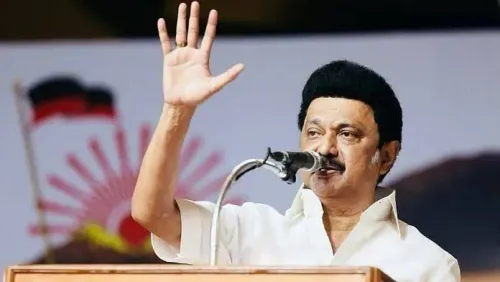
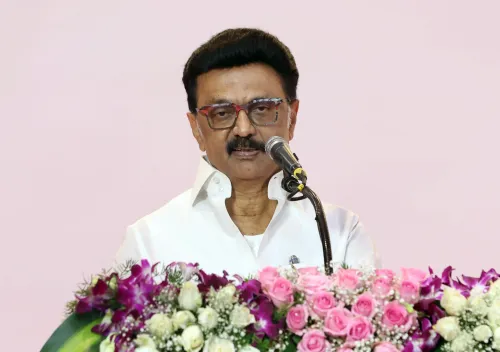
DMK president M. K. Stalin on Monday, 25 May 2026, launched a sharp attack on what he described as frantic floor-management manoeuvres in Tamil Nadu, accusing the ruling dispensation of desperate horse-trading to survive a confidence vote — and simultaneously calling out the Congress party's silence as rank hypocrisy.
Context
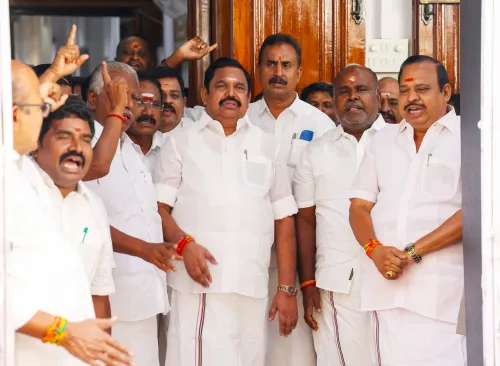
Stalin's post, written in Tamil, describes three sequential 'scenes' of alleged political manipulation. In the first, a government without a clear majority is said to be approaching coalition partners for support. In the second, a faction of the AIADMK (All India Anna Dravida Munnetra Kazhagam) is accused of being 'price-negotiated' into voting in favour of the government during a trust vote, with even an AMMK (Amma Makkal Munnetra Kazhagam) member reportedly drawn in as a bonus.
The third scene, as Stalin describes it, involves engineering resignations of select AIADMK legislators and inducting them into the ruling party — with the induction allegedly conducted inside the government secretariat itself. Stalin asks pointedly: 'இந்த கண்றாவிக் காட்சிகளைப் பார்க்கத்தான் மக்கள் உங்களுக்கு வாக்களித்தார்களா?' ['Is this the shameful spectacle the people voted you in for?']
Policy Backdrop
Tamil Nadu's political landscape has long been marked by coalition arithmetic and the periodic fragmentation of parties. The AIADMK, the state's principal opposition, has itself witnessed internal splits that gave rise to the AMMK under T. T. V. Dhinakaran. Floor tests and defection-related proceedings fall under the Tenth Schedule of the Constitution — the anti-defection law — which empowers the Speaker to decide on disqualification petitions when legislators switch allegiance.
Attempts to peel away MLAs from rival parties and absorb them during or after a confidence vote have recurred across Indian states, drawing judicial scrutiny. The specific assembly arithmetic in Tamil Nadu in 2026 that has triggered the current floor test is part of the ongoing political churn the research flags as a pattern in the state.
Stalin's Broadside at Congress
A significant portion of Stalin's attack is directed at the Congress party. He notes that Congress had written a letter stating it would extend support only on the condition that the government does not seek NDA backing — yet, he alleges, Congress ministers are now sitting in the cabinet and 'whistling with amusement' as the very horse-trading they claimed to oppose unfolds before them.
Stalin uses a wordplay in Tamil to drive home his point: those who called themselves 'தூயசக்தி' ('pure force') have been exposed as 'துயரசக்தி' ('force of sorrow'). The formulation is a direct rhetorical device to undercut both the ruling party's moral claims and Congress's anti-BJP posturing.
What's Next
The immediate flashpoint is the outcome of the confidence vote and any subsequent proceedings before the Tamil Nadu Assembly Speaker on resignations or disqualification petitions under the anti-defection law. If the Speaker accepts resignations of AIADMK members who have joined the ruling party, by-elections could follow, reshaping the assembly's composition. Stalin's public broadside signals that the DMK intends to keep political and public pressure at maximum intensity through the floor-test process, framing the episode as a test of democratic integrity for Tamil Nadu's voters.
Point of View
He is not just commenting on the moment but building a durable narrative frame for the next electoral cycle. The focus on secretariat-level induction of defectors is particularly sharp — it ties the horse-trading allegation to institutional impropriety, a charge harder to dismiss than routine political mudslinging. If the confidence vote proceeds as described, the DMK stands to benefit whether the government falls or survives under a cloud.
NationPress
20 Sept 2026
Frequently Asked Questions
What is the 'horse-trading' Stalin is talking about in Tamil Nadu?
Stalin alleges that the Tamil Nadu government, lacking a clear majority, is negotiating with AIADMK and AMMK legislators — offering inducements for their support in a confidence vote, and even inducting some AIADMK members into the ruling party after engineering their resignations.
What is a confidence vote or trust vote in the Tamil Nadu assembly?
A confidence vote (trust vote) is a floor test in which the ruling government must demonstrate it commands the support of a majority of legislators in the assembly. If it fails, the government must resign.
Why is Stalin criticising Congress in this post?
Stalin says Congress had written a letter promising support only if the government avoided NDA backing, yet Congress is now part of the cabinet and is staying silent while the very horse-trading it claimed to oppose is playing out.
What is the anti-defection law and how does it apply here?
The Tenth Schedule of the Indian Constitution disqualifies legislators who voluntarily give up party membership or vote against party direction. If AIADMK members resign and join the ruling party, the Tamil Nadu Assembly Speaker will likely receive petitions to disqualify them.
What does 'Thooya Sakthi' and 'Thuyara Sakthi' mean in Stalin's post?
'Thooya Sakthi' means 'pure force' in Tamil — a self-description used by the ruling side. Stalin twists it to 'Thuyara Sakthi', meaning 'force of sorrow', to mock the gap between their stated ideals and alleged actions.