Stalin Pays Tribute to Kalam on Birth Anniversary
Synopsis
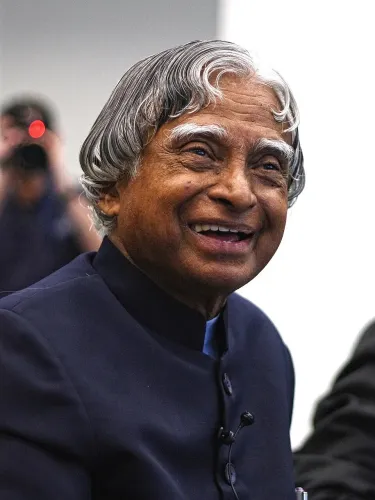
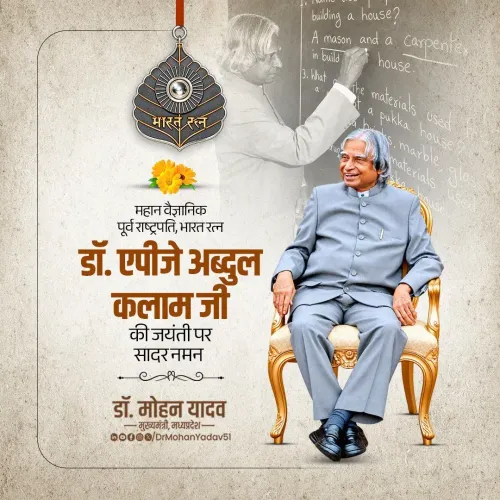
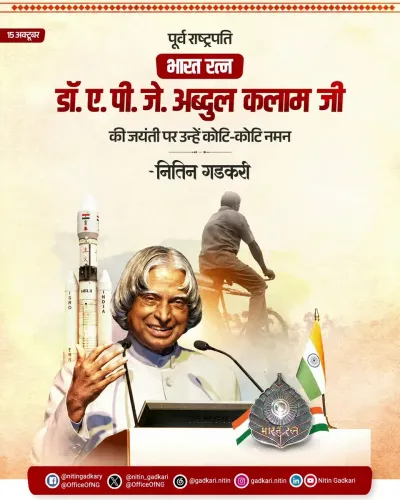
DMK president and Tamil Nadu CM M. K. Stalin paid tribute to Dr. A.P.J. Abdul Kalam on his birth anniversary, honouring the Bharat Ratna scientist-President's vision of defeating poverty through science — and linking it to his government's Dravidian Model of equitable development.
Key Takeaways
Stalin posted a Tamil tribute to Dr.
Abdul Kalam on his birth anniversary, 15 October 2026 .
Kalam, born 1931 in Rameswaram , served as India's 11th President (2002–2007) and received the Bharat Ratna in 1997 .
Stalin highlighted Kalam's belief that poverty is India's true enemy and that science and technology can defeat it.
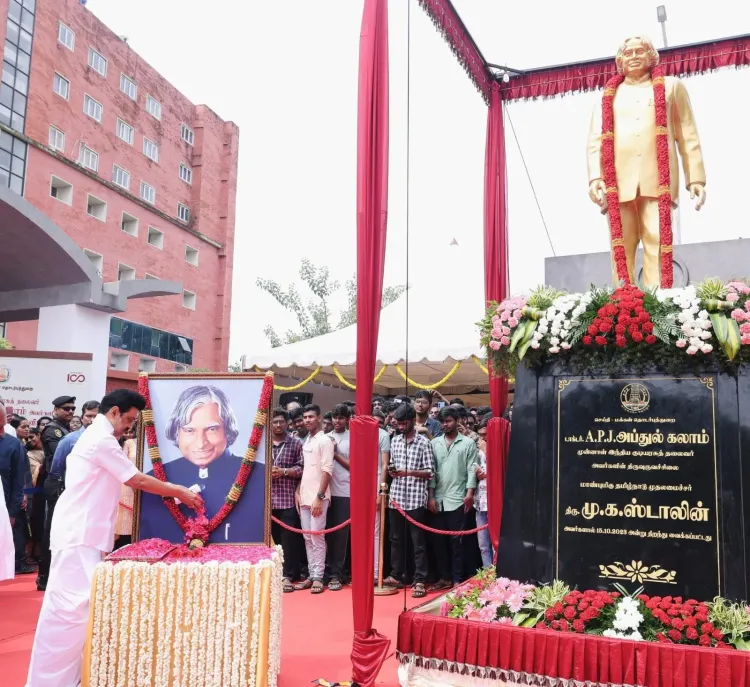
The DMK government installed a statue of Kalam at Anna University, Chennai and instituted an annual award in his name .
Stalin appealed to Tamil Nadu's youth to commit to building an equal-opportunity India in the spirit of Kalam's vision.
The tribute explicitly ties Kalam's anti-poverty philosophy to the DMK's Dravidian Model of equitable governance.
From a humble fishing town on the Tamil Nadu coast to the highest constitutional office in the land — the arc of Dr. A.P.J. Abdul Kalam's life remains one of India's most enduring stories of possibility. On Thursday, 15 October 2026, DMK president and Tamil Nadu Chief Minister M. K. Stalin marked what would have been Kalam's birth anniversary with a tribute on X, invoking the former President's conviction that poverty — not any people — is India's true enemy.
Posting in Tamil, Stalin wrote: 'மிக எளிய பின்புலத்தில் பிறந்து, கற்ற கல்வியாலும் கண்ட கனவுகளாலும் இந்தியாவின் குடியரசுத் தலைவராய் உயர்ந்த பாரத ரத்னா திரு. அப்துல் கலாம் அவர்களுக்கு என் புகழ் வணக்கத்தைச் செலுத்துகிறேன்' — ('Born from the humblest of backgrounds, rising through education and dreams to become the President of India, I offer my respectful tributes to Bharat Ratna Dr. Abdul Kalam.')The man who called poverty India's real enemy
Stalin's tribute centres on a signature Kalam conviction: that poverty is India's foremost adversary, and that science and technology are the weapons to defeat it. Dr. A.P.J. Abdul Kalam, born 15 October 1931 in Rameswaram, grew up in modest circumstances before ascending to lead India's missile and space programmes and, later, the nation itself as its 11th President from 2002 to 2007. He was awarded the Bharat Ratna in 1997. His relentless message — that equitable access to knowledge is the only durable path out of poverty — resonates with particular force in a state that has long staked its identity on education as a social equaliser.
Kalam's legacy embedded in Anna University and the Dravidian Model
The tribute is not merely rhetorical. Stalin noted that his government has installed a statue of Abdul Kalam at Anna University in Chennai and instituted an annual award in Kalam's name, both honouring the scientist-statesman on home soil. The moves are deliberate alignments: Kalam's emphasis on technology-driven poverty elimination maps neatly onto what DMK calls its #DravidianModel — a governance framework built around social justice, equitable welfare, and investment in education.
The Dravidian Model, central to Stalin's administration since it came to power in 2021, frames inclusive development not as charity but as rational policy — a framing Kalam himself championed across decades of public life. Anchoring that narrative to Kalam's legacy gives it a national, non-partisan legitimacy that transcends party lines.
A call to Tamil Nadu's youth on Kalam's birthday
Stalin closed his post with a direct appeal to young people, urging them to commit — on this day — to building the kind of developed India Kalam envisioned: one where opportunities and resources reach every section of society equally. The ask is pointed. Tamil Nadu has among India's higher youth literacy rates, and the state government has repeatedly positioned student welfare and skill development as flagship priorities. Invoking Kalam's dream is also a reminder of the distance still to travel.
Kalam did not live to see that India realised — he passed away in July 2015 — but his birthday continues to be observed across the country as a moment to measure the gap between aspiration and arrival. Stalin's tribute, rooted in both personal reverence and political programme, makes clear that closing that gap remains the stated mission in Chennai.
The question Kalam spent a lifetime posing — when will every Indian child have an equal shot at that arc from Rameswaram to Rashtrapati Bhavan? — is still the most urgent one on the table.
Point of View
DMK projects its Tamil-rooted governance philosophy onto a pan-Indian canvas. Kalam's apolitical, science-first image provides DMK with a unifying figure that sidesteps caste and religious lines — a valuable ideological resource for a party navigating federal politics. The call to youth also reads as electoral groundwork, reinforcing the government's positioning as the custodian of opportunity for the next generation. Over time, institutionalising Kalam's legacy through awards and statues in Tamil Nadu builds a durable narrative link between Dravidian governance and national scientific achievement.
NationPress
15 Oct 2026
Frequently Asked Questions
Why is Abdul Kalam's birthday celebrated on 15 October?
Dr. A.P.J. Abdul Kalam was born on 15 October 1931 in Rameswaram, Tamil Nadu . His birthday is observed across India as a day to celebrate scientific achievement and the spirit of aspiration, particularly among young people.
What did MK Stalin say about Abdul Kalam on his birth anniversary 2026?
M. K. Stalin posted a tribute in Tamil honouring Kalam's journey from humble origins to the Presidency, citing his conviction that poverty is India's real enemy and that science can defeat it. He also noted that his government has installed a statue and instituted an annual award at Anna University in Kalam's honour.
What is the Abdul Kalam Award given by the Tamil Nadu government?
The Tamil Nadu government under M. K. Stalin instituted an annual award in Dr. Abdul Kalam's name , presented at Anna University in Chennai . It honours individuals in line with Kalam's legacy of science, technology, and social progress.
What is the Dravidian Model that Stalin links to Kalam's vision?
The Dravidian Model is the DMK government's governance framework in Tamil Nadu , emphasising equitable access to education, technology, and welfare to reduce inequality. Stalin has drawn a direct parallel between this approach and Kalam's belief that science and knowledge can eliminate poverty.
Where is the Abdul Kalam statue installed by the DMK government?
The DMK government installed a statue of Dr. A.P.J. Abdul Kalam within the campus of Anna University in Chennai , Tamil Nadu, as part of its efforts to institutionalise his legacy under the Dravidian Model administration.