Amit Shah to Rahul Gandhi: Stop blaming SIR, prepare for 2029 defeat
Synopsis
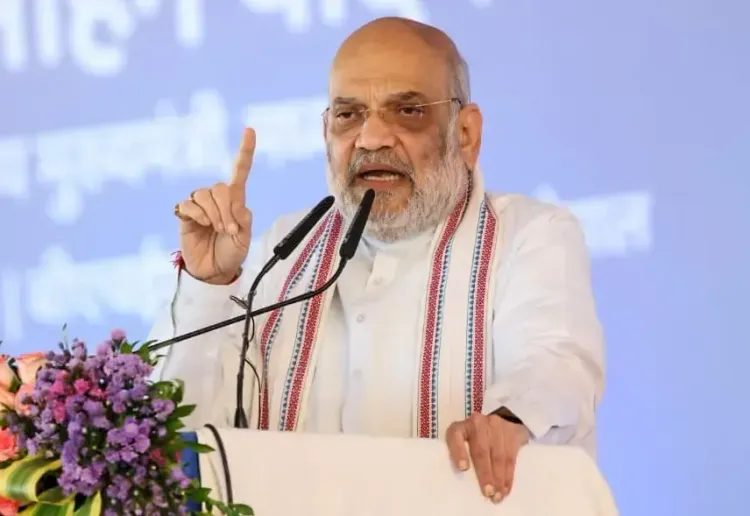
Home Minister Amit Shah didn't just celebrate the BJP's Gujarat civic sweep — he weaponised it. Daring Rahul Gandhi to 'prepare for 2029 defeat' and accusing Congress of using the SIR controversy to shield infiltrators, Shah's salvo signals an early, aggressive BJP offensive ahead of the next general election cycle.
Key Takeaways
Amit Shah on 13 October warned Rahul Gandhi and Congress to 'prepare for defeat in 2029,' claiming the BJP-NDA would return with a thumping majority under PM Modi .
The BJP won 38 of 44 seats in the Gandhinagar Municipal Corporation , with its vote share rising by 10 percentage points .
Shah alleged Congress was opposing the Special Intensive Revision (SIR) of electoral rolls to 'protect infiltrators,' not genuine voters.
AAP candidates reportedly forfeited deposits on all 32 seats they contested in Gujarat's civic polls.
Shah cited BJP wins across Rajasthan , Tripura , Assam , and West Bengal to argue Congress's decline is a national, not Gujarat-specific, pattern.
Shah dismissed Gandhi's opposition rally, saying assembling 14 parties and 8,000 people does not represent the country's voice.
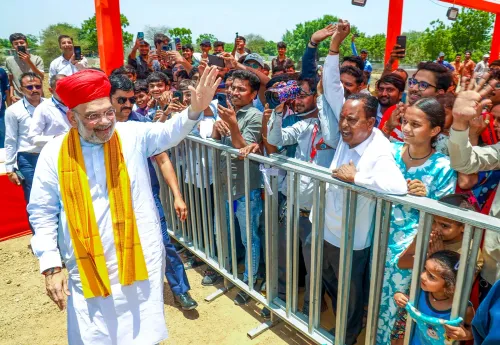
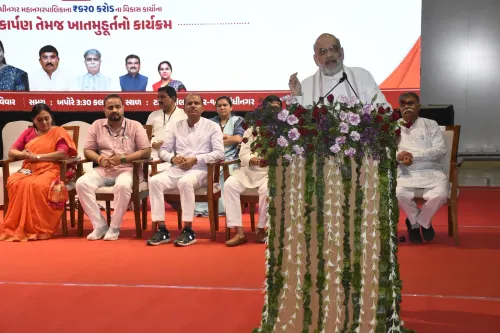
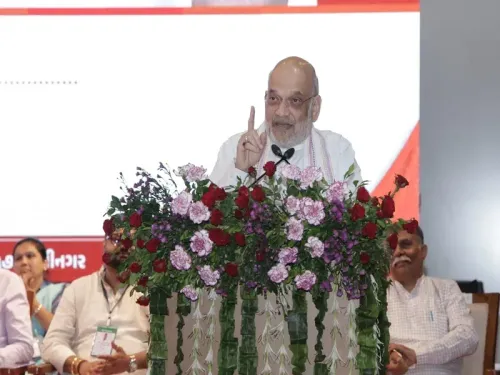
Union Home Minister Amit Shah on Tuesday, 13 October launched a withering attack on Leader of the Opposition Rahul Gandhi and the Indian National Congress, dismissing the party's repeated allegations against the electoral process as a calculated attempt to paper over a string of poll defeats. Shah's remarks came on the heels of the Bharatiya Janata Party's sweeping victory in Gujarat's civic elections.
Shah's Direct Warning to Congress
In an unsparing political broadside, Shah declared: '2029 mein haar ka mann bana lein' — 'Make up your mind to face defeat in 2029' — asserting that the BJP-led National Democratic Alliance would return to power with a thumping majority under Prime Minister Narendra Modi's leadership. He challenged Gandhi to explain whether the Congress would now blame the Special Intensive Revision (SIR) of electoral rolls for its latest rout in Gujarat's civic polls as well.
Shah pointedly noted that the current SIR exercise commenced only after the 2024 Lok Sabha elections, yet the Congress had been losing elections under Gandhi's stewardship well before the revision began. 'Will Rahul Gandhi now say that the Congress lost Gujarat because of SIR?' he asked, urging the party to examine its own political shortcomings rather than question constitutional institutions.
Gujarat Civic Poll Results: BJP's Dominant Show
The BJP secured 38 of the 44 seats in the Gandhinagar Municipal Corporation, also retaining control of the Thara and Okha municipalities. Shah underscored that the party's vote share in the Gandhinagar civic body had risen by 10 percentage points, calling it a reflection of continued voter confidence in Modi's leadership.
Taking a dig at the Congress, Shah noted the party had last won Gujarat in 1985 — 41 years ago — and had failed to regain a political foothold since. He also targeted the Aam Aadmi Party (AAP), claiming its candidates forfeited their deposits on all 32 seats it contested in the Gujarat civic elections.
A National Pattern, Shah Argues
The Home Minister marshalled results from multiple states to build his case against the Congress. In bypolls across Tamil Nadu, West Bengal, and Puducherry, he said the Congress failed to win a single seat. In Assam's Nagaon, the BJP reportedly wrested a Lok Sabha seat from the Congress; in West Bengal, the BJP claimed victories in Nandigram and wrested the Rejinagar seat from the opposition.
In Rajasthan's local body elections, Shah claimed the BJP won 90 per cent of Municipal Corporation seats, 66 per cent of Municipal Council seats, and 65 per cent of Municipal Board seats. In Tripura's Gram Samiti elections — conducted through ballot boxes — he said the NDA won approximately 4,000 of 4,600 seats, pointedly noting the ballot-box format to rebut claims of electronic voting irregularities.
Shah further stated that the Congress had failed to win in Tripura for 30 years and in West Bengal for 56 years, questioning how the party could continue to attribute such long-running electoral failure to democratic institutions.
SIR Row and the Infiltration Allegation
On the ongoing controversy over the SIR exercise — which prompted Gandhi to demand the resignation of Chief Election Commissioner Gyanesh Kumar — Shah alleged that the Congress was opposing the voter-list revision not out of concern for genuine electors but to 'protect infiltrators' and 'undermine the electoral process'. He claimed the public had seen through this political strategy and would reject it.
Gandhi's Rally Dismissed
Shah also dismissed Gandhi's recent efforts to rally opposition parties, arguing that assembling workers from 14 political parties and drawing a crowd of 8,000 people did not make someone the voice of the country. 'The voice of the country is in its villages, fields, forests and far-flung areas,' he said, asserting that the Congress leadership had lost touch with ordinary voters.
With the BJP's national electoral record growing and the 2029 general elections on the horizon, Shah's remarks signal an early and aggressive framing of the political narrative ahead of a pivotal cycle.
Point of View
He is seeking to shift the debate from electoral process integrity — where Congress has a legitimate question to raise — to national security, a terrain where the BJP has historically dominated. The Congress, which has now lost Gujarat consecutively since 1985, faces a structural credibility problem: opposing the SIR while losing comprehensively makes the narrative even harder to sustain. What mainstream coverage underplays is that the SIR process, regardless of political intent, does carry genuine questions about documentation burdens on marginalised voters — questions that deserve scrutiny independent of who benefits electorally.
NationPress
13 Oct 2026
Frequently Asked Questions
What did Amit Shah say about Rahul Gandhi and the SIR controversy?
Shah accused Rahul Gandhi and the Congress of using opposition to the Special Intensive Revision (SIR) of electoral rolls to 'protect infiltrators' rather than defend genuine voters. He challenged Gandhi to explain whether the Congress would blame SIR for its defeat in Gujarat's civic polls and urged the party to introspect instead of questioning democratic institutions.
What are the results of the Gujarat civic elections that Shah cited?
The BJP won 38 of 44 seats in the Gandhinagar Municipal Corporation and retained control of the Thara and Okha municipalities, with its vote share increasing by 10 percentage points. AAP candidates reportedly forfeited deposits on all 32 seats they contested.
What is the Special Intensive Revision (SIR) of electoral rolls?
The SIR is an exercise to revise and update voter rolls, which Shah stated began only after the 2024 Lok Sabha elections. The Congress has opposed it and demanded the resignation of Chief Election Commissioner Gyanesh Kumar over the process, allegations that Shah dismissed as politically motivated.
Why did Shah say Congress should prepare for defeat in 2029?
Shah argued that the BJP's consistent electoral wins across Gujarat, Rajasthan, Tripura, Assam, and West Bengal demonstrate a national mandate, and that the Congress under Rahul Gandhi's leadership has been losing elections irrespective of the SIR. He predicted the BJP-led NDA would return to power with a thumping majority in 2029 under PM Modi.
How long has Congress been out of power in Gujarat and other states Shah mentioned?
Congress last won Gujarat in 1985 — 41 years ago. Shah also pointed out that the party has not won in Tripura for 30 years and in West Bengal for 56 years, using these figures to argue the party's decline predates any SIR-related controversy.