Is the STT increase designed to safeguard household savings from speculative risks?

Synopsis
On February 2, Chief Economic Advisor V. Anantha Nageswaran discussed the recent increase in Securities Transaction Tax, underscoring its purpose to protect household savings from speculation. This move, part of the Union Budget 2026-27, aims to safeguard investors and discourage risky trading practices.
Key Takeaways
STT hike aims to protect household savings.
Increased rates for futures and options .
Market reactions include a decline in brokerage shares.
Focus on reducing speculation in F&O trading.
Government seeks to balance revenue and investor protection.
New Delhi, Feb 2 (NationPress) Chief Economic Advisor V. Anantha Nageswaran stated on Monday that the decision to raise the Securities Transaction Tax on derivatives trading, as revealed in the Union Budget 2026-27, is intended to protect household savings from volatile speculation rather than simply generating government revenue.
He emphasized, "The goal of the STT increase is not to enhance revenue; rather, it is to ensure that the savings of hardworking individuals are utilized effectively to grow wealth within households. The SEBI has highlighted the significant financial losses incurred by individuals involved in F&O trading," the CEA informed reporters.
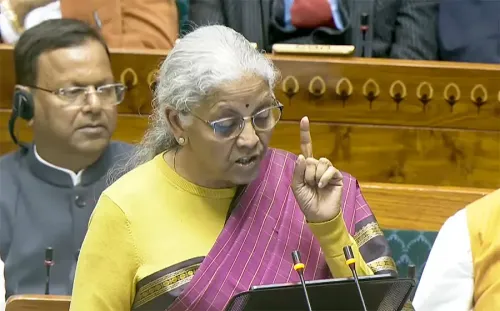
The Union Budget 2026-27, delivered by Finance Minister Nirmala Sitharaman on Sunday, proposed increasing the STT on futures from the current 0.02% to 0.05% and raising the options premium and the rate for exercising options to 0.15% from the previous 0.1% and 0.125%, respectively.
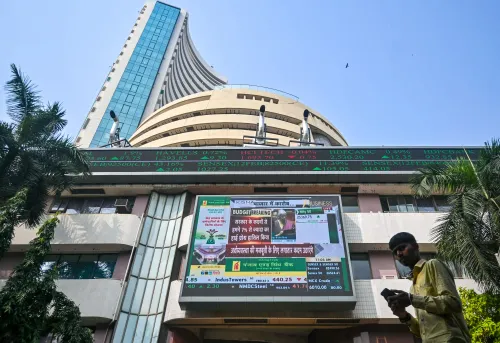
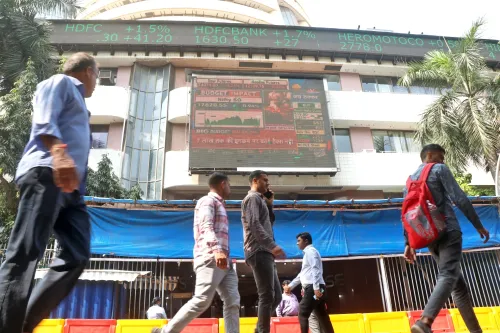
Following the Budget announcement, a decline in the stock market shares of brokerage firms was linked to the STT hike.
These tax modifications are designed mechanically. The STT is applied on a per-transaction basis, meaning that a higher rate escalates trading costs for active participants, including those using intraday strategies that depend on high turnover. By increasing transaction fees, the government raises the total cost of derivatives trading in addition to exchange and other statutory charges.
Revenue Secretary Arvind Shrivastava also commented post-budget that "the trading volumes in the F&O market reflect significant speculation relative to the country’s GDP and underlying securities market."
He added, "This leads to substantial losses for retail investors. The government aims to deter speculation. The STT increase is intended to mitigate systemic risks in the derivatives market. The rate remains relatively low when compared to trading volumes."
In her budget address, Sitharaman described the STT modification as a form of "course correction" in the derivatives sector and noted that it would also "produce additional revenue" for the government.
Point of View
Our commitment remains with the nation. The recent announcement regarding the STT increase reflects a proactive approach to support retail investors by curbing speculation and promoting financial security. Balancing revenue generation with investor protection is crucial in maintaining market integrity.
NationPress
19 Sept 2026
Frequently Asked Questions
What is the purpose of the STT hike?
The STT hike aims to protect household savings from speculative trading rather than solely generating revenue for the government.
How much has the STT increased for futures and options?
The STT for futures has risen from 0.02% to 0.05%, while the rates for options premium and exercise have increased to 0.15%.
Who announced the STT hike?
The hike was announced by Chief Economic Advisor V. Anantha Nageswaran during the Union Budget 2026-27 presentation.
What impact did the STT increase have on the stock market?
Following the announcement, there was a notable decline in the stock market shares of brokerage firms attributed to the STT hike.
What is the government's rationale behind the STT increase?
The government intends to discourage speculation in the derivatives market, thereby protecting retail investors from substantial losses.