CM Sukhu Dismisses BJP's Alternation Theory, Cites Factionalism
Synopsis
Chief Minister Sukhvinder Singh Sukhu has rejected BJP's claim that Himachal Pradesh's five-year government-change tradition will end his tenure, arguing that alternation follows corruption — not cycles — and that BJP's internal factions must first unite before posing any real challenge.
Key Takeaways
CM Sukhu rejected BJP's assertion that Himachal Pradesh 's five-year government-change cycle will end his tenure.
He argued that governments change only where corruption and land transactions occur — not as an automatic cycle.
Sukhu cited the period of Congress MLA defections as the real test his government passed, not the five-year mark.
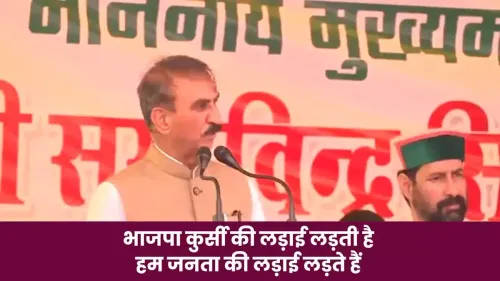
He claimed BJP's internal factions are engaged in separate sloganeering and must unite before challenging the Congress government.
Himachal Pradesh has maintained an unbroken anti-incumbency pattern since the 1980s , alternating between Congress and BJP.
The remarks are widely seen as early political positioning ahead of the 2027 Himachal Pradesh assembly elections .
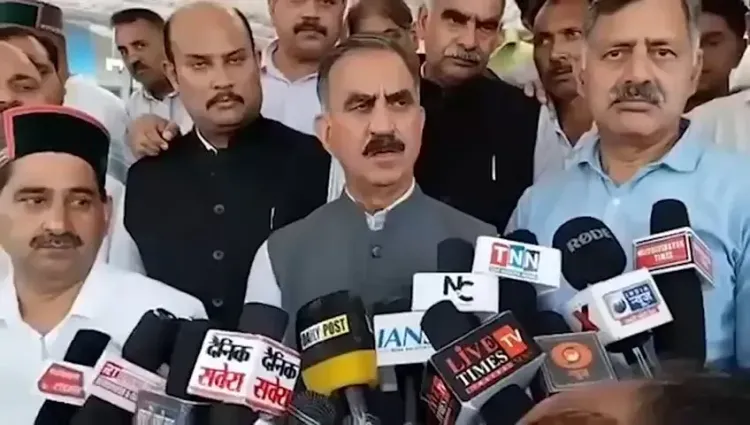
Himachal Pradesh Chief Minister Sukhvinder Singh Sukhu on Monday, 27 July 2026, pushed back sharply against the Bharatiya Janata Party's assertion that the state's decades-old tradition of alternating governments will unseat his administration after five years, saying the pattern of change is rooted in corruption — not calendar cycles.
Context
Posting in Hindi on X, Sukhu said: 'देवी-देवताओं और जनता ने मुझे लंबे समय तक प्रदेश के लोगों की सेवा के लिए चुना है' ('The gods and the people have chosen me to serve the people of the state for a long time'). He directly addressed BJP's confidence in the anti-incumbency cycle, arguing that governments change only where corruption and land transactions occur — implying his administration is free of both.
The Chief Minister also pointed to a moment he described as the real test of his government's survival: the period when several Congress legislators broke away from the party. He argued that if the government were to fall, it would have fallen then — not at the five-year mark.
Policy Backdrop
Himachal Pradesh has recorded an unbroken pattern of the ruling party losing power after each five-year term since the 1980s. Congress ended the incumbent BJP government's term in the December 2022 assembly elections and formed the state government under Sukhu. The BJP has since positioned itself as the government-in-waiting, banking on this historical trend.
The Congress administration has faced repeated opposition pressure, including episodes involving legislator loyalty. Sukhu's reference to MLAs who left the party alludes to a period of political turbulence that the government ultimately weathered, which he now cites as evidence of institutional resilience rather than vulnerability.
Stakeholders and Impact
Sukhu trained his sharpest remarks on BJP's internal organisation, stating that the party's factions — which he described as being engaged in separate sloganeering — would need to unite before mounting any credible challenge to the Congress government. He said: 'कांग्रेस सरकार के ख़िलाफ़ प्रदर्शन करने से पहले भाजपा के पाँचों गुटों को एकजुट होना पड़ेगा' ('Before protesting against the Congress government, all five BJP factions will have to unite').
The remarks are directed at Himachal Pradesh voters and Congress legislators ahead of the 2027 assembly elections, seeking to consolidate confidence within the ruling party while framing BJP as organisationally fractured. Opposition unity — or the lack of it — has historically been a decisive factor in state election outcomes.
What's Next
Attention will now shift to whether the BJP in Himachal Pradesh responds with a unified counter-narrative or whether internal fault lines persist as the 2027 assembly election cycle draws closer. Any by-elections in the state will serve as an early indicator of both the ruling party's ground-level support and the opposition's ability to consolidate.
For Sukhu, the post signals an intent to reframe the electoral conversation — moving it away from the anti-incumbency narrative and toward questions of governance integrity and opposition cohesion. How voters and BJP's state leadership respond will shape the political temperature in Shimla in the months ahead.
Point of View
He attempts to shift the burden of proof onto the opposition. The reference to surviving MLA defections is equally deliberate — it reframes a past moment of weakness as demonstrated resilience. The attack on BJP's factionalism suggests Congress is watching opposition organisational dynamics closely as the 2027 election approaches, and sees internal division as a genuine vulnerability to exploit.
NationPress
25 Oct 2026
Frequently Asked Questions
What did Himachal Pradesh CM Sukhu say about the five-year government change tradition?
CM Sukhu said the tradition of governments changing every five years applies only where corruption and land deals occur, implying his administration does not meet that threshold and will not follow the pattern.
Has Himachal Pradesh always changed governments every five years?
Yes. Since the 1980s, Himachal Pradesh has seen an unbroken pattern of the ruling party — alternating between Congress and BJP — losing power after each five-year term.
What did Sukhu say about BJP factions in Himachal Pradesh?
Sukhu claimed BJP has multiple internal factions that are currently busy with separate sloganeering and would need to unite before they could mount any credible protest or challenge against his government.
When did Congress win power in Himachal Pradesh under Sukhu?
Congress won the Himachal Pradesh assembly elections in December 2022, ending the incumbent BJP government's term, and Sukhvinder Singh Sukhu became Chief Minister.
When is the next Himachal Pradesh assembly election?
The next Himachal Pradesh assembly election is expected in 2027, and it is increasingly becoming the focal point of political positioning by both Congress and BJP in the state.