CM Sukhu announces 100% salary for study leave in Himachal Pradesh
Synopsis
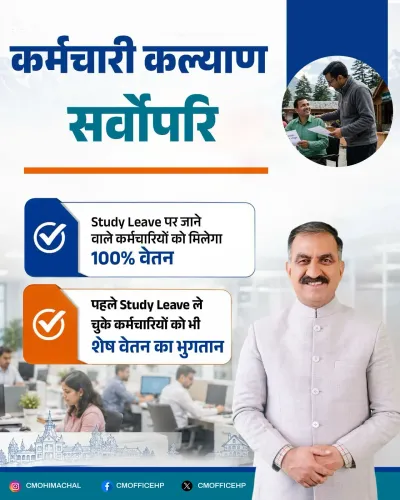
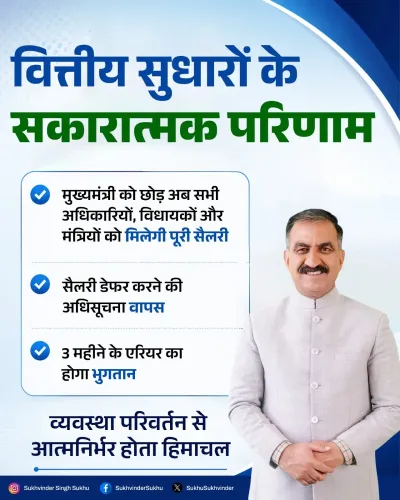
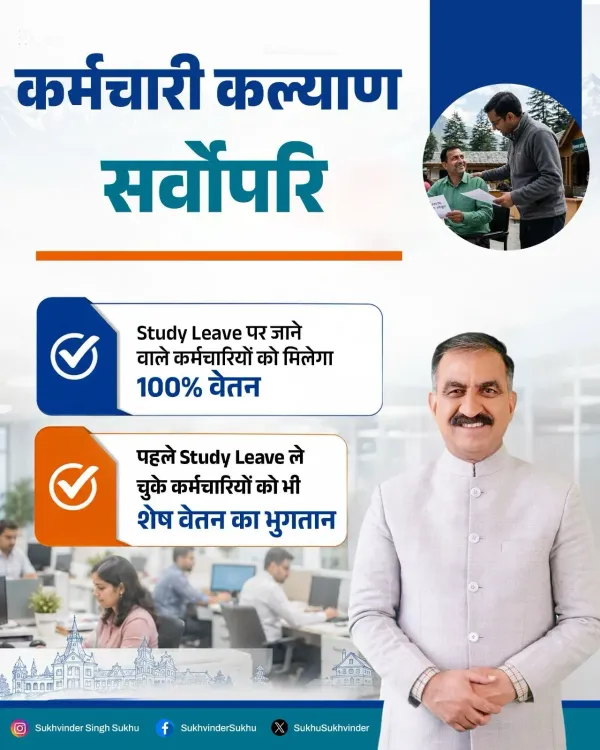
Himachal Pradesh CM Sukhvinder Singh Sukhu has announced that state government employees on study leave will receive 100% of their salary. The benefit applies retrospectively, with past study-leave employees entitled to their outstanding salary dues, aiming to encourage upskilling and strengthen governance.
Key Takeaways
Himachal Pradesh CM Sukhvinder Singh Sukhu announced on June 15, 2026 that employees on study leave will receive 100% of their salary .
The policy applies retrospectively — employees who previously took study leave under partial-pay rules will receive the remaining salary dues.
The initiative is aimed at encouraging state government employees to acquire new knowledge, modern skills, and specialised expertise.
The move complements the Union government's Mission Karmayogi framework for civil services capacity building, launched in 2021 .
A formal notification from the Himachal Pradesh Department of Personnel is awaited to operationalise the decision and define eligibility criteria.
Budgetary provisions for the retrospective arrears are expected to be examined in the upcoming Himachal Pradesh Legislative Assembly monsoon session.
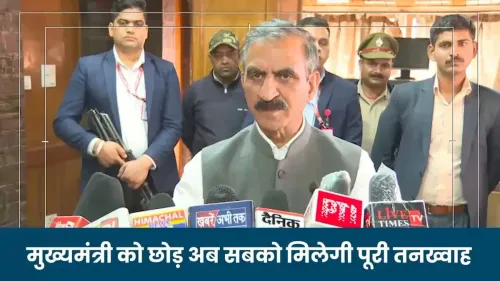
Himachal Pradesh Chief Minister Sukhvinder Singh Sukhu announced on Monday, June 15, 2026, that state government employees proceeding on study leave will henceforth receive 100 per cent of their salary — a reversal of the earlier practice of partial pay during such leave. The decision will also apply retrospectively, with employees who previously took study leave entitled to receive the remaining salary dues.
Posting on X, CM Sukhu stated: 'कर्मचारियों की योग्यता और दक्षता में वृद्धि बेहतर प्रशासन की आधारशिला है' ('Enhancing the competence and efficiency of employees is the cornerstone of better governance'). He added that the initiative would encourage employees to acquire new knowledge, modern skills, and expertise.
Context
Study leave provisions for government servants in India have historically allowed employees to pursue higher education or specialised training while remaining on the rolls of their department. However, such leave has often come with a pay cut — typically a fraction of the basic salary — making it financially unattractive for many employees, particularly those with family obligations.
The Himachal Pradesh government's decision addresses this disincentive directly by guaranteeing full pay. The retrospective clause is particularly notable: employees who had already availed study leave under the older, reduced-pay regime will be compensated for the shortfall.
Policy Backdrop
The announcement aligns with a broader national push to build capacity within the civil services. The Union Cabinet approved the National Programme for Civil Services Capacity Building, known as Mission Karmayogi, in 2021, with the aim of upgrading the competencies of government personnel through structured and continuous learning frameworks.
Several Indian states have periodically revised their civil service leave rules to incentivise upskilling, and the Department of Personnel and Training (DoPT) has issued guidelines encouraging such measures. The Himachal Pradesh move fits within this pattern, while going a step further with its retrospective application — a feature that mirrors occasional state-level efforts to correct past disparities in employee benefits.
Stakeholders and Impact
The primary beneficiaries are Himachal Pradesh state government employees who are currently on study leave, those who plan to avail it in the future, and those who took it in the past under partial-pay conditions. The retrospective provision means the government will need to calculate and disburse arrears to the last category.
For the state administration, the measure is framed as an investment in human capital: a more skilled workforce is expected to translate into improved service delivery across departments. The financial outlay for arrears and enhanced salaries will likely come under scrutiny in upcoming budget discussions or during the monsoon session of the Himachal Pradesh Legislative Assembly.
What's Next
A formal notification from the Himachal Pradesh Department of Personnel is awaited to operationalise the decision, including eligibility criteria, the process for retrospective claims, and any cap on the duration of study leave covered. Assembly questions during the monsoon session may shed further light on the budgetary provisions earmarked for this initiative.
If implemented smoothly, the policy could set a precedent for other states to revisit their own study leave frameworks — strengthening the case that administrative reform begins with investing in the people who run the administration.
Point of View
While generating goodwill ahead of potential assembly scrutiny. Placed alongside central initiatives such as Mission Karmayogi, the decision positions the Himachal Pradesh government as aligned with the national capacity-building agenda, even as it stakes out independent ground on employee benefits. The real test will be in implementation — whether the Department of Personnel issues clear, time-bound guidelines and whether the treasury can absorb arrear payments without disrupting other commitments.
NationPress
13 Sept 2026
Frequently Asked Questions
What did CM Sukhu announce about study leave for Himachal Pradesh employees?
CM Sukhvinder Singh Sukhu announced on June 15, 2026 that state government employees proceeding on study leave will receive 100% of their salary, up from the partial pay that was previously provided.
Will the study leave salary benefit apply to employees who already took study leave?
Yes, the decision applies retrospectively. Employees who previously took study leave under the old partial-pay rules will be entitled to receive the outstanding salary dues owed to them.
Why is Himachal Pradesh giving full salary during study leave?
The government's stated objective is to encourage employees to pursue higher education and acquire modern skills, with the reasoning that a more competent workforce leads to better governance and public service delivery.
What is Mission Karmayogi and how does it relate to this decision?
Mission Karmayogi is a Union Cabinet-approved national programme from 2021 designed to build the capacity of civil servants through structured learning. The Himachal Pradesh study-leave policy aligns with this broader national framework for upskilling government employees.
When will the Himachal Pradesh study leave salary policy come into effect?
A formal notification from the Himachal Pradesh Department of Personnel is still awaited. The announcement was made on June 15, 2026, but implementation details, eligibility criteria, and the process for retrospective claims are yet to be officially published.