CM Sukhu Approves 400 Multi-Task Worker Posts in HP Panchayats
Synopsis
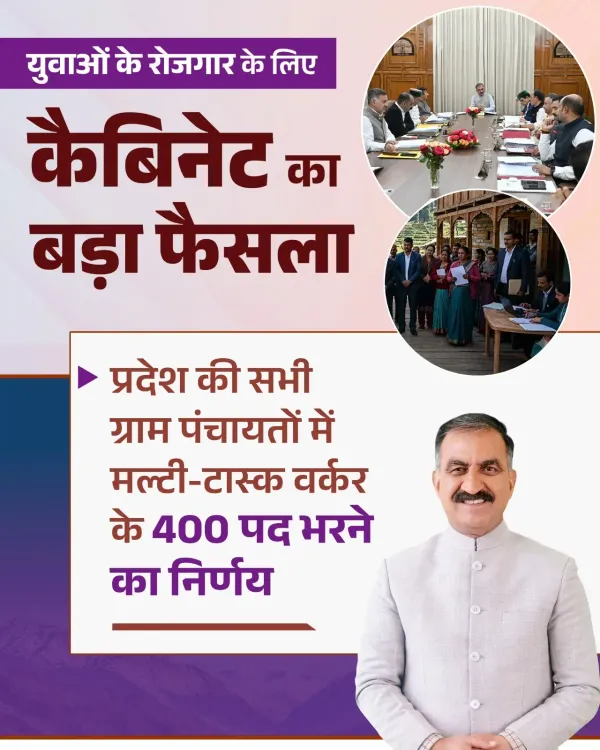
CM Sukhvinder Singh Sukhu announced that the Himachal Pradesh cabinet has approved filling 400 Multi-Task Worker posts across all gram panchayats, aiming to strengthen rural administration and improve service delivery in the state's dispersed hilly settlements.
Key Takeaways
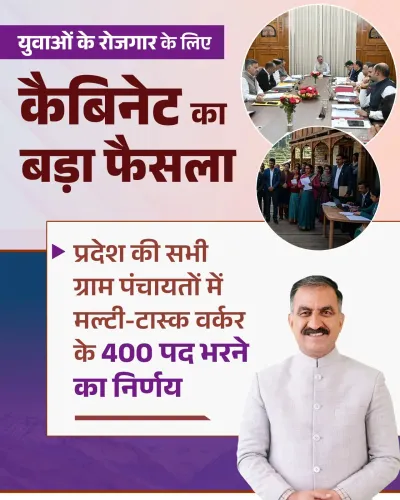
The Himachal Pradesh cabinet approved filling 400 Multi-Task Worker posts across all gram panchayats in the state.
CM Sukhvinder Singh Sukhu made the announcement on 21 July 2026 via a post on X.
The move is intended to strengthen the functioning of panchayats and improve rural service delivery.
The decision is rooted in the 73rd Constitutional Amendment Act of 1992 , which mandated empowered panchayati raj institutions.
Rural residents and local job-seekers are the primary stakeholders, with 400 direct government employment opportunities now on the table.
Implementation timelines and formal recruitment notifications are the key next steps to watch.
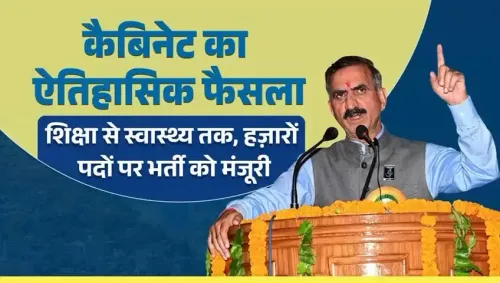
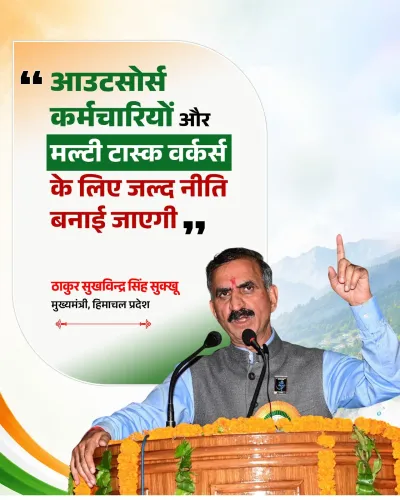
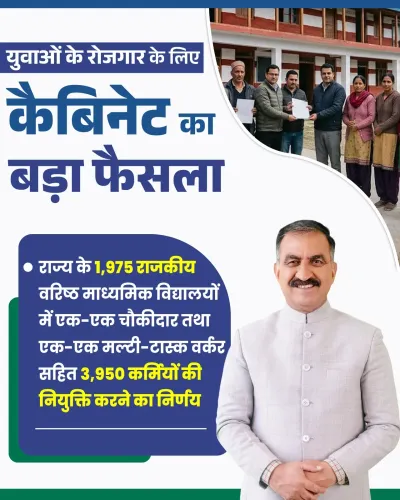
Himachal Pradesh Chief Minister Sukhvinder Singh Sukhu announced on Tuesday, 21 July 2026, that his cabinet has approved the filling of 400 posts of Multi-Task Workers across all gram panchayats in the state, a move aimed at strengthening village-level governance and improving rural service delivery.
Posting on X, CM Sukhu stated: 'हमारी सरकार ने कैबिनेट बैठक में प्रदेश की सभी ग्राम पंचायतों में मल्टी-टास्क वर्कर के 400 पदों को भरने का निर्णय लिया है' ['Our government has decided in a cabinet meeting to fill 400 posts of Multi-Task Workers in all gram panchayats of the state']. He added that this would strengthen the functioning of panchayats and help improve services and systems in rural areas.
Context
Himachal Pradesh is a northern Indian state characterised by dispersed rural settlements spread across difficult hilly terrain. Gram panchayats — the foundational tier of local self-government — are the primary interface between the state administration and rural citizens, responsible for delivering a wide range of services from infrastructure maintenance to welfare scheme implementation. Staffing gaps at this level have long constrained effective governance in remote areas.
The decision comes from a full cabinet meeting, signalling institutional consensus rather than a unilateral executive order. The recruitment of 400 Multi-Task Workers is intended to address functional vacancies that limit panchayats' operational capacity.
Policy Backdrop
The constitutional basis for this decision traces back to the 73rd Constitutional Amendment Act of 1992, which mandated the establishment and empowerment of panchayati raj institutions across all Indian states. The amendment devolved significant administrative and developmental responsibilities to village bodies, but effective delivery has always depended on adequate human resources at the grassroots level.
Indian states have periodically recruited for panchayat-level positions to operationalise this constitutional mandate. Himachal Pradesh, given its geography and the density of its rural population, has historically emphasised local body functionality as a governance priority. Multi-Task Workers serve as versatile ground-level staff, supporting panchayat secretaries and elected representatives in day-to-day administrative tasks.
Stakeholders and Impact
The most immediate beneficiaries of this decision are rural residents across Himachal Pradesh's gram panchayats, who stand to receive faster and more consistent delivery of government services. Panchayat bodies themselves gain administrative bandwidth, reducing the burden on existing staff and elected members who often perform multiple roles due to understaffing.
For job-seekers in rural Himachal Pradesh, the 400 new posts represent direct government employment opportunities, a significant consideration in a state where public-sector jobs carry considerable social and economic weight. The recruitment process, once initiated, will be watched closely by local youth and employment advocacy groups.
What's Next
The cabinet decision marks the policy approval stage; implementation will depend on the state government issuing formal recruitment notifications and establishing a selection process. Observers will track whether the recruitment is completed within a defined timeline and whether budgetary allocations are made in the upcoming state budget or assembly session to sustain these positions. Any follow-up announcements on panchayat funding or broader rural staffing policy will indicate the depth of the government's commitment to this initiative.
Point of View
Such decisions also serve as a counter-narrative to opposition criticism about rural neglect. The real test, however, will be the speed and transparency of the actual recruitment process.
NationPress
20 Oct 2026
Frequently Asked Questions
What did CM Sukhu announce about panchayat workers in Himachal Pradesh?
CM Sukhvinder Singh Sukhu announced on 21 July 2026 that the Himachal Pradesh cabinet has approved filling 400 Multi-Task Worker posts across all gram panchayats in the state to strengthen rural governance and service delivery.
What is a Multi-Task Worker in a gram panchayat?
A Multi-Task Worker is a versatile ground-level government employee who supports panchayat secretaries and elected representatives in day-to-day administrative and operational tasks at the village level.
How many Multi-Task Worker posts are being filled in Himachal Pradesh panchayats?
The Himachal Pradesh cabinet has approved filling 400 Multi-Task Worker posts across all gram panchayats in the state.
What is the constitutional basis for panchayat staffing decisions in India?
The 73rd Constitutional Amendment Act of 1992 mandated the establishment and empowerment of panchayati raj institutions across Indian states, devolving administrative and developmental responsibilities to village-level bodies that require adequate staffing to function.
What happens next after the Himachal Pradesh cabinet approves panchayat recruitment?
After cabinet approval, the state government must issue formal recruitment notifications and establish a selection process. Budgetary allocations in the upcoming state budget or assembly session will determine whether these positions are sustainably funded.