Sunetra Pawar Restructures NCP With Triple-Layer Family Command
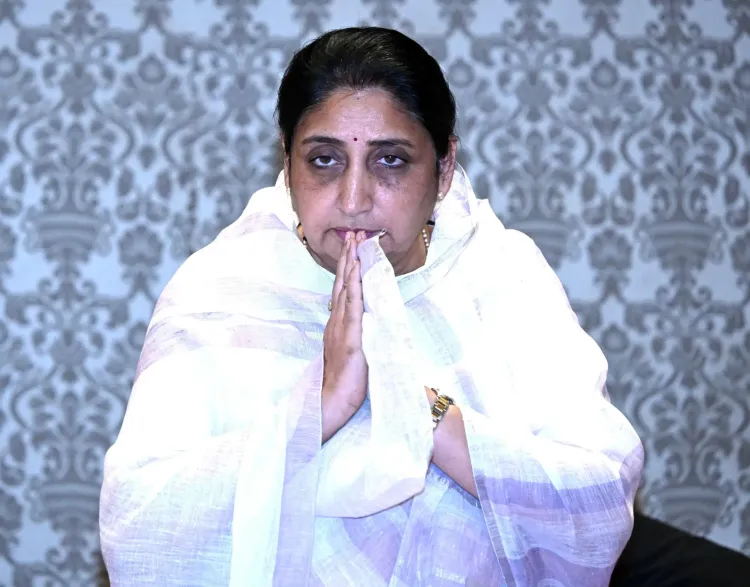
Synopsis
After Ajit Pawar's sudden death, Sunetra Pawar has seized control of the NCP by installing herself as Maharashtra's first female Deputy CM and party president, while deploying sons Parth and Jay in a calculated triple-layer command structure — a power play that's already fuelling a new Pawar vs Pawar showdown headed for Baramati in 2029.
Key Takeaways
Sunetra Pawar has been sworn in as Maharashtra's first female Deputy Chief Minister following the death of her husband Ajit Pawar .
She has also assumed the role of NCP President , consolidating executive and organisational authority under a single family command.
A triple-layer responsibility structure has been implemented: Sunetra Pawar controls statewide party affairs, Parth Pawar manages Delhi and Mumbai , and Jay Pawar oversees Baramati, Beed, and Pune rural .
Sunetra Pawar's letter to the Election Commission of India seeking to void interim party decisions has signalled deep distrust toward senior NCP leaders Sunil Tatkare and Praful Patel .
Jay Pawar has hinted at contesting the Baramati seat in the 2029 Maharashtra Assembly elections , with NCP-SP threatening to counter with Yugendra Pawar .
The upcoming Maharashtra Legislative Council elections are seen as the first major electoral test of Sunetra Pawar's restructured party leadership.
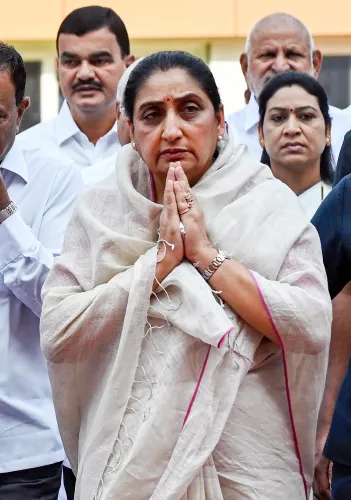
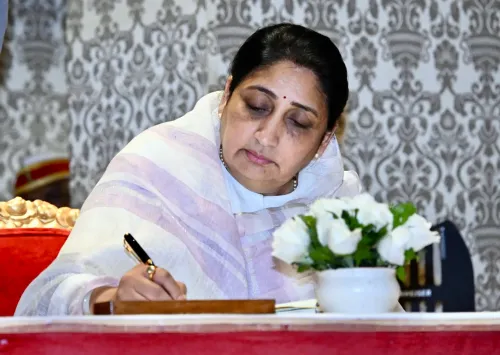
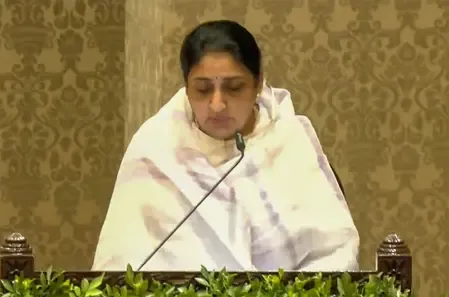
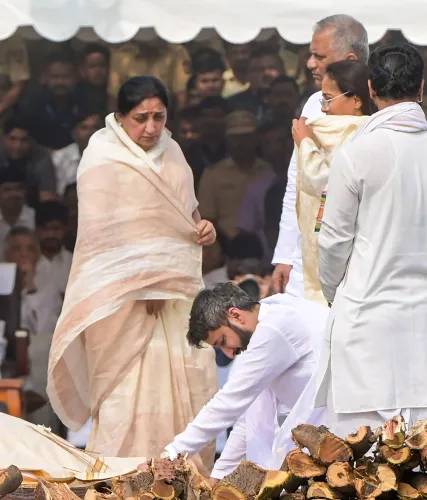
Mumbai/Baramati, April 24: In the wake of the sudden death of Maharashtra Deputy Chief Minister Ajit Pawar, his wife Sunetra Pawar has executed a sweeping reorganisation of the Nationalist Congress Party (NCP), assuming the roles of Maharashtra's first female Deputy Chief Minister and NCP President while simultaneously rolling out a structured three-tier family command system to consolidate power and prevent internal fragmentation.
The Triple-Layer Leadership Structure Explained
Sunetra Pawar has retained supreme authority over statewide party organisation and final decision-making, positioning herself as the apex of the new power hierarchy. She is also personally driving the party's electoral growth strategy across Maharashtra.
Her elder son, Parth Pawar — an NCP Rajya Sabha member — has been assigned responsibility for party affairs in Delhi and Mumbai, effectively making him the family's political bridge between the national capital and the state's commercial hub.
Her younger son, Jay Pawar, has been entrusted with oversight of the politically significant regions of Baramati, Beed, and Pune rural — areas that form the traditional electoral stronghold of the Pawar family and carry immense symbolic weight in Maharashtra's political geography.
Strategic Intent: Blocking Internal Power Grabs
Political analysts view the rapid restructuring as a deliberate move to insulate the party from potential internal coups by senior NCP leaders who may have sought to exploit the leadership vacuum following Ajit Pawar's demise. By distributing roles within the immediate family, Sunetra Pawar has effectively created an interlocking command structure where no single external leader can accumulate unchecked influence.
This assessment gains credibility from Sunetra Pawar's letter to the Election Commission of India (ECI) seeking to nullify all party correspondence issued between Ajit Pawar's death and her formal assumption of the party presidency. The move was widely interpreted as a signal of deep distrust toward NCP State President Sunil Tatkare and NCP National Working President Praful Patel, both of whom had been managing party affairs in the interregnum.
Notably, this mirrors a broader pattern seen in Indian regional parties — from the Samajwadi Party to the DMK — where founding-family succession crises are resolved by rapidly centralising authority within the dynastic core rather than allowing institutionalised party democracy to determine leadership.
Jay Pawar Eyes Baramati Debut in 2029
The political temperature in Baramati surged further when Jay Pawar openly hinted at an electoral debut during the recent by-election campaign. "I don't speak to the media often, but there is a strong demand from the people and NCP workers that I should be the party candidate from Baramati in 2029. My expectation is to continue working as a party worker, but I will honour the will of the people," he stated.
The statement, carefully worded to appear reluctant while clearly signalling ambition, sets the stage for yet another chapter in the storied political saga of Baramati — a constituency that has been synonymous with the Pawar family for decades.
Pawar vs Pawar: The Rivalry Refuses to Fade
The inter-family political rivalry that captivated Maharashtra during the 2024 Lok Sabha elections — when Sunetra Pawar contested against her sister-in-law Supriya Sule in Baramati — shows no sign of cooling. NCP-SP legislator Rohit Pawar responded sharply to Jay Pawar's electoral hint, suggesting that if Jay Pawar enters the fray in 2029, the rival faction could field Yugendra Pawar, potentially engineering another high-stakes family confrontation in the same constituency.
This signals that the Sharad Pawar-led NCP (SP) faction is not conceding Baramati without a fight, and that the next assembly cycle could witness the most complex intra-family electoral battle in Maharashtra's political history.
Maharashtra Legislative Council Elections: The Next Battleground
The upcoming Maharashtra Legislative Council elections are being closely watched as the first major electoral test of Sunetra Pawar's leadership. Political observers believe the Pawar family views these elections as an opportunity to reassert dominance within the NCP's decision-making apparatus and to demonstrate that loyalty to the family command will be rewarded with candidacies and organisational positions.
As Sunetra Pawar undertakes statewide tours to consolidate the party base, the coordinated involvement of Parth Pawar in national lobbying and Jay Pawar in rural grassroots mobilisation suggests a long-term generational succession plan — one designed to carry the Ajit Pawar legacy forward while gradually transitioning power to the next generation of the family.
With the Maharashtra Legislative Council elections on the horizon and the 2029 Assembly elections already casting a long shadow, all eyes will be on whether Sunetra Pawar's triple-layer restructuring can hold together a fractious party — or whether it accelerates the very internal tensions it was designed to suppress.
Point of View
Mirroring the very dynastic consolidation that fractured the NCP in the first place. The 2029 Baramati contest, if it materialises as another Pawar-versus-Pawar clash, will be the ultimate referendum on whether voters reward loyalty to a name or demand something more.
NationPress
15 Oct 2026
Frequently Asked Questions
What leadership changes has Sunetra Pawar made in NCP after Ajit Pawar's death?
Sunetra Pawar has been sworn in as Maharashtra's first female Deputy Chief Minister and appointed NCP President, centralising all party authority. She has also implemented a triple-layer family responsibility structure, assigning son Parth Pawar to manage Delhi and Mumbai affairs, and son Jay Pawar to oversee Baramati, Beed, and Pune rural regions.
Why did Sunetra Pawar write to the Election Commission of India?
Sunetra Pawar wrote to the Election Commission seeking to nullify all NCP party correspondence issued between Ajit Pawar's death and her formal assumption of the party presidency. This move is widely seen as reflecting her distrust of NCP State President Sunil Tatkare and National Working President Praful Patel, who had managed party affairs in the interim.
Will Jay Pawar contest the Baramati seat in the 2029 Maharashtra Assembly elections?
Jay Pawar has publicly hinted at contesting from Baramati in 2029, citing strong demand from NCP workers and the public. NCP-SP legislator Rohit Pawar has responded by suggesting the rival faction could field Yugendra Pawar against him, potentially setting up another high-profile intra-family electoral battle.
What is the significance of the NCP triple-layer leadership structure?
The triple-layer structure distributes NCP authority exclusively within the immediate Pawar family — Sunetra at the top, Parth handling national and urban politics, and Jay managing rural strongholds. Political analysts see this as a strategy to prevent senior NCP leaders from accumulating power and to ensure long-term dynastic control of the party.
What is the current status of the Pawar vs Pawar political rivalry in Maharashtra?
The rivalry between Ajit Pawar's NCP faction and Sharad Pawar's NCP (SP) faction remains intense and is escalating. With Jay Pawar signalling interest in Baramati for 2029 and the NCP-SP faction threatening to field Yugendra Pawar in response, the next Maharashtra Assembly election could witness another direct family confrontation in the constituency.