NCP power struggle: legal feuds and Parth Pawar's rise threaten party's future
Synopsis
The NCP's post-Ajit Pawar transition is unravelling faster than its new leadership can manage. A formal legal challenge to Sunetra Pawar's election as president, an open rift with Praful Patel, and the controversial rise of Parth Pawar are converging into a crisis that could trigger MLA defections and render the party politically irrelevant — all while the Supreme Court has yet to settle who the 'real' NCP even is.
Key Takeaways
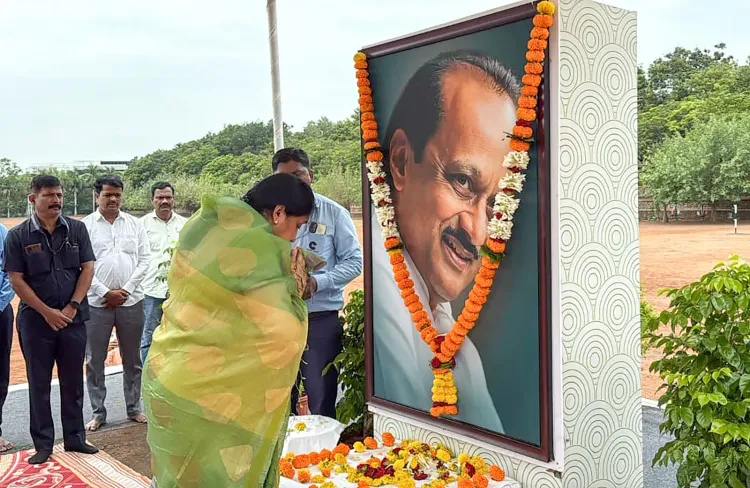
Ajit Pawar , NCP leader and Deputy Chief Minister , died in January 2026 , triggering a leadership vacuum.
Former National Secretary Sachchidanand Singh has legally challenged Sunetra Pawar's election as National President on 26 February 2026 , citing procedural violations.
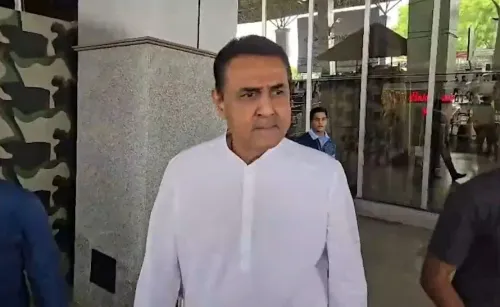
Praful Patel has publicly signalled dissent, calling for 'corrective measures' — widely read as criticism of the Pawar family's centralised control.
Parth Pawar , Rajya Sabha MP , is reportedly functioning as de facto decision-maker, generating resentment among senior MLAs and party workers.
The NCP has failed to reclaim the Finance portfolio despite talks with Union Home Minister Amit Shah , signalling weakened coalition leverage.
Political observers warn of imminent MLA defections to the Shinde faction , BJP , or NCP (SP) if institutional reforms are not implemented urgently.
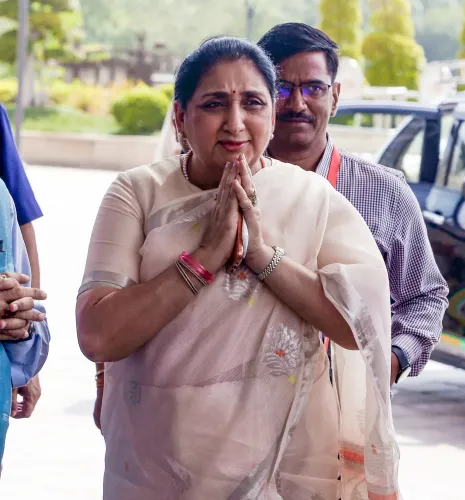
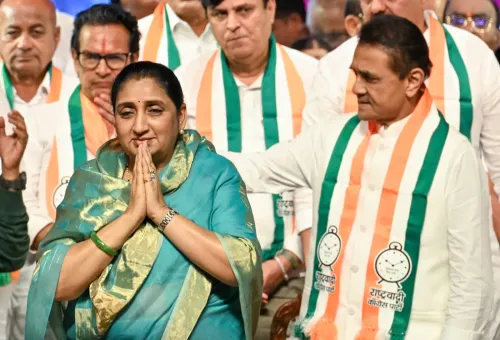
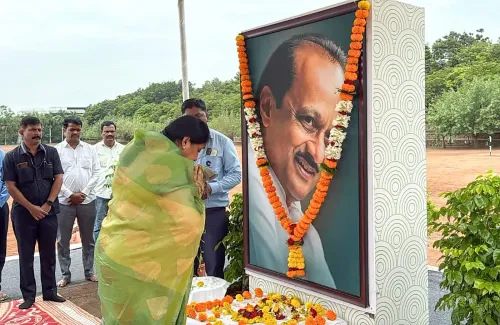
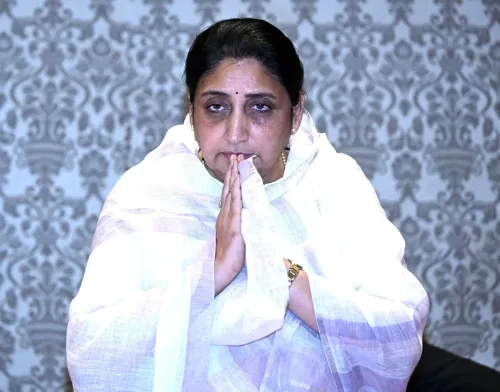
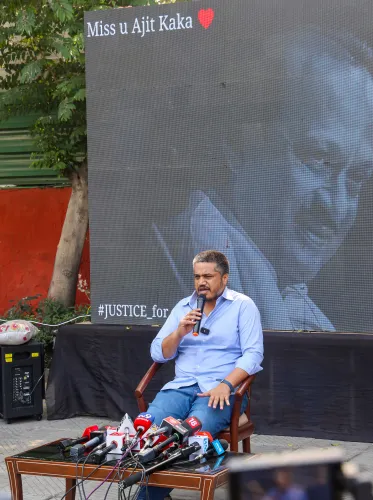
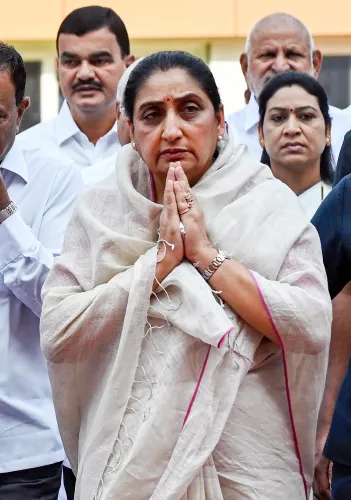
The Nationalist Congress Party (NCP) is confronting an acute existential crisis in the wake of the death of its founding strongman and Deputy Chief Minister Ajit Pawar in January 2026. The transition of authority to his widow, Sunetra Pawar, has fractured the party's internal cohesion rather than consolidating it, exposing deep structural fault lines that observers warn could prove irreversible.
Legal Challenge to Sunetra Pawar's Presidency
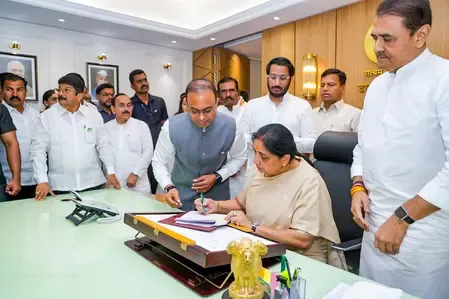
The most immediate threat is legal. Former National Secretary Sachchidanand Singh has served a formal notice challenging Sunetra Pawar's election as National President on 26 February 2026, alleging that mandatory constitutional procedures were bypassed entirely. According to the notice, no independent election authority was appointed, no official notification was issued, and no election calendar was published — rendering the process procedurally void.
The notice names Sunetra Pawar, Praful Patel, and former general secretary Brijmohan Shrivastav, demanding a response within 15 days. While Patel and Maharashtra State Unit President Sunil Tatkare have publicly dismissed the notice as legally baseless, party insiders caution that a dismissal alone will not neutralise the risk. If Singh approaches the Supreme Court, the party's operational legitimacy could be frozen — particularly since the apex court has yet to settle the foundational question of which faction constitutes the 'real' NCP in its ongoing dispute with the NCP (Sharad Pawar) faction.
The Internal Power Struggle
Behind closed doors, the contest for control began the moment Ajit Pawar died. Senior leaders reportedly moved to consolidate authority under Praful Patel in his capacity as Working President. Sunetra Pawar responded by writing to the Election Commission of India (ECI) to nullify decisions taken during the transition period, a move that has deepened the rift between the family and the party's veteran leadership.
The consequences have already become visible externally. The NCP has been unable to reclaim the Finance portfolio — previously held by Ajit Pawar and central to the party's leverage — despite high-level discussions with Union Home Minister Amit Shah. That failure signals a measurable decline in the party's bargaining power within the ruling coalition.
Patel's public acknowledgement that 'corrective measures' are needed to fill the vacuum left by Ajit Pawar is widely read as a coded signal of dissatisfaction from the party's senior tier.
Parth Pawar's Rise and Grassroots Resentment
Compounding the crisis is the rapid ascent of Parth Pawar, Rajya Sabha MP and son of Sunetra Pawar. Since entering the upper house, Parth has reportedly been functioning as the de facto decision-maker on his mother's behalf — a role that has generated significant resentment among senior MLAs and ground-level workers.
A close aide to the late Ajit Pawar put it plainly: 'Parth Pawar has to earn his political stripes rather than inheriting them through decree. Instead of acting as an intermediary from closed rooms, he must build mass contact, travel across Maharashtra, and earn the respect of the cadres.'
Under Ajit Pawar, legislators had direct, immediate access to power. Under the current arrangement, a perceived communication gap between Sunetra Pawar and the legislative wing — combined with Parth's limited public outreach — has alienated the very base the party depends on for electoral survival.
What Happens If the Party Fails to Stabilise
Political observers argue the NCP's legislators are fundamentally pragmatic. If the Pawar family and veteran leaders such as Patel and Tatkare continue working at cross-purposes, MLAs are likely to migrate toward more stable political formations — the Shinde faction, the Bharatiya Janata Party (BJP), or the rival NCP (SP) camp — to protect their own electoral futures. This is not a hypothetical: defections of this nature have reshaped Maharashtra politics repeatedly over the past decade.
Unlike the NCP (SP) led by patriarch Sharad Pawar, the Sunetra Pawar-led faction cannot easily draw on a narrative of victimhood or a deep emotional legacy to retain loyalty. Its survival depends almost entirely on institutional credibility and access to power — both of which are now under strain.
The Path to Stabilisation
Political observers suggest a two-pronged approach is essential. First, a core committee of veteran leaders must be formally empowered to vet all major political and legislative decisions, replacing the current model of unilateral family directives. Second, Sunetra Pawar must leverage her position as Deputy Chief Minister to actively resolve constituency-level issues for her legislators — replicating the hands-on, accessible style that made Ajit Pawar indispensable to the party's rank and file.
Regular legislative party meetings and transparent communication channels, observers say, are the minimum conditions for preventing a full-scale defection wave. Whether the new leadership acts on these recommendations before the legal and political pressures become unmanageable will determine whether the NCP survives as a meaningful political force in Maharashtra.
Point of View
Transactional, and non-transferable — and no amount of family loyalty can replicate it. The legal challenge to Sunetra Pawar's presidency is serious not because Singh will necessarily prevail, but because it exposes the party to Supreme Court scrutiny at precisely the moment the foundational NCP identity dispute remains unsettled. Parth Pawar's rise may be inevitable over time, but the pace and method — bypassing the legislative wing, operating from closed rooms — is accelerating the very fragmentation it seeks to prevent. The NCP has a narrow window to shift from dynasty management to institutional politics; if it misses it, the defection math will do the rest.
NationPress
13 Oct 2026
Frequently Asked Questions
What triggered the NCP's current leadership crisis?
The crisis was triggered by the death of Deputy Chief Minister Ajit Pawar in January 2026 , which left the party without its dominant leader. The transition of authority to his widow, Sunetra Pawar , has been contested both legally and internally, fracturing the party's cohesion.
What is the legal challenge against Sunetra Pawar's presidency?
Former National Secretary Sachchidanand Singh has served a notice challenging Sunetra Pawar's election as NCP National President on 26 February 2026 , alleging that mandatory constitutional procedures — including appointing an independent election authority and issuing proper notifications — were bypassed. If Singh approaches the Supreme Court , the party's operational legitimacy could be frozen.
Why is Parth Pawar's rise controversial within the NCP?
Parth Pawar , a Rajya Sabha MP with a limited electoral track record, is reportedly acting as the de facto decision-maker on behalf of his mother Sunetra Pawar . Senior MLAs and grassroots workers resent taking directives from a young leader who, critics say, has not yet earned political credibility through direct public engagement.
What does Praful Patel's call for 'corrective measures' mean?
Praful Patel's public acknowledgement that 'corrective measures' are needed is widely interpreted as a signal of dissatisfaction with the Pawar family's centralised control of the party. It reflects the frustration of veteran leaders who feel sidelined by the new leadership structure.
What happens if the NCP fails to resolve its internal disputes?
Political observers warn that pragmatic MLAs will migrate to more stable political formations — the Shinde faction , the Bharatiya Janata Party (BJP) , or the rival NCP (Sharad Pawar) camp — if the Pawar family and veteran leaders continue working at cross-purposes. Such defections could render the party electorally irrelevant in Maharashtra .