Why Did the Supreme Court Reject the PIL on IndiGo's Operational Crisis?

Synopsis
The Supreme Court has dismissed a PIL regarding IndiGo Airlines' operational crisis, directing the petitioner to approach the Delhi High Court. The case highlights significant flight disruptions affecting passengers nationwide, raising concerns over public safety and operational oversight.
Key Takeaways
Supreme Court directs petitioner to Delhi High Court.
PIL alleges humanitarian crisis due to flight disruptions.
DGCA forms a committee to investigate IndiGo's operational failures.
Next hearing scheduled for January 22, 2026.
IndiGo reports improvements in flight operations.
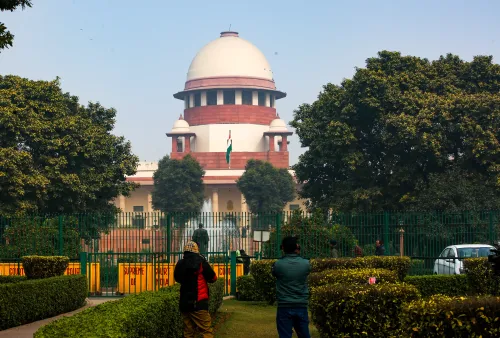
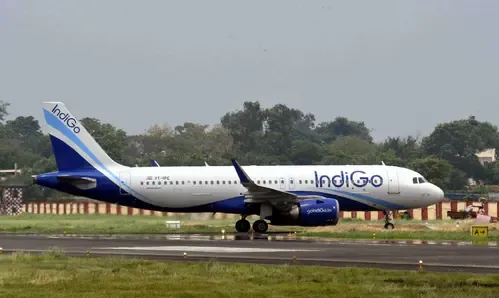
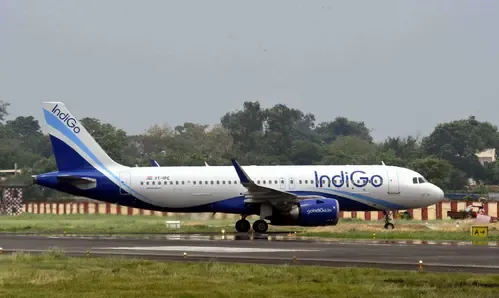
New Delhi, Dec 15 (NationPress) The Supreme Court on Monday chose not to accept a public interest litigation (PIL) that called for immediate judicial action regarding an unprecedented operational failure of IndiGo Airlines, which has experienced major flight disruptions this month.
The Bench, led by Chief Justice of India (CJI) Surya Kant, noted that the Delhi High Court is already addressing this issue and allowed advocate Narendra Mishra, the petitioner in person, to present his concerns before the High Court.
Comprising Justices Joymalya Bagchi and Vipul Pancholi, the Bench encouraged the Delhi High Court to allow him to intervene in the ongoing proceedings.
Senior advocate Mukul Rohatgi informed the apex court that a PIL concerning the recent IndiGo flight delays is pending at the Delhi High Court, and the Directorate General of Civil Aviation (DGCA) has set up a committee to investigate the matter.
While recognizing that the issue pertains to a larger public interest, the CJI Kant-led Bench made it clear that the petitioner could return to the Supreme Court if any grievances remain after the High Court's decision.
“We value your concern, but rather than having two parallel processes, you should take your case to the Delhi High Court. If the High Court does not resolve your issue, you may return to us,” the apex court stated, emphasizing that the High Court is fully equipped to handle the matters at hand.
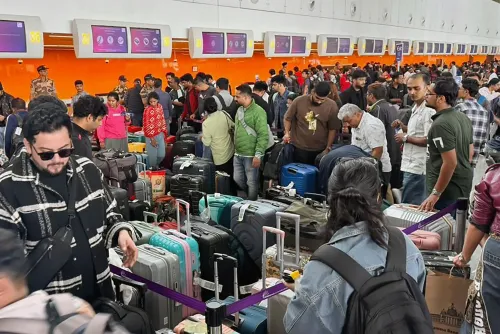
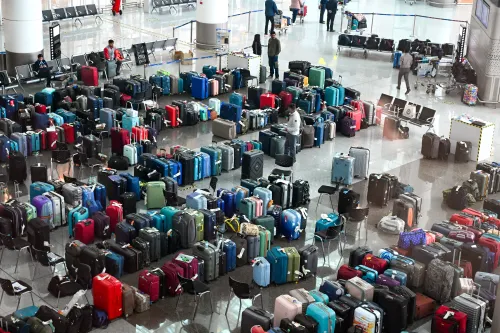
The PIL claimed that widespread flight cancellations and serious delays by IndiGo Airlines have escalated into a “humanitarian crisis” at major airports, leaving passengers—including senior citizens, infants, and individuals with medical needs—without food, water, rest areas, or emergency support.
"The situation has evolved beyond a simple contractual dispute between the airline and its customers. It has escalated into a matter of serious public harm and a clear infringement of the Fundamental Right to Life and Liberty (Article 21) of the citizens of India," the petition asserted. It further argued that the chaos stemmed from planning failures during the implementation of Phase-II of the revised Flight Duty Time Limitation (FDTL) norms for pilots, alleging inadequate oversight from both IndiGo and the DGCA.
Meanwhile, the Delhi High Court, while examining a separate PIL on this matter, criticized the Centre for allowing the situation to escalate into a nationwide crisis impacting millions of passengers and the national economy.
The case is scheduled for further hearing on January 22, 2026.
"We acknowledge the measures taken by the Union Ministry of Civil Aviation and DGCA. However, we are concerned about how such a situation was allowed to develop, leaving millions of passengers unattended at airports. This situation does not merely inconvenience passengers; it also has significant implications for the country's economy, as the swift movement of passengers is crucial for economic stability," remarked a bench led by Chief Justice Devendra Kumar Upadhyaya and Justice Tushar Rao Gedelain in their order dated December 10.
On the operational side, IndiGo reported on Saturday it was steadily normalizing operations, having conducted over 2,000 flights for the second consecutive day. The airline noted that it operated more than 2,050 flights on December 12, with only two cancellations due to technical difficulties, and all affected customers were immediately reaccommodated on alternative flights.
Point of View
It's essential to recognize the implications of the Supreme Court's decision to direct the petitioner to the Delhi High Court. This situation not only highlights the operational challenges faced by IndiGo Airlines but also underscores the need for robust oversight and accountability in the aviation sector, ensuring that public interests are safeguarded.
NationPress
19 Sept 2026
Frequently Asked Questions
What was the Supreme Court's decision regarding the PIL on IndiGo?
The Supreme Court refused to entertain the PIL and directed the petitioner to approach the Delhi High Court, which is already considering related matters.
What are the main concerns raised in the PIL?
The PIL alleges that IndiGo's flight cancellations and delays have created a humanitarian crisis at airports, impacting passenger rights and safety.
What is the role of the DGCA in this matter?
The DGCA has formed a committee to investigate the operational issues faced by IndiGo Airlines amid the ongoing concerns about flight disruptions.
When is the next hearing for this case?
The matter is scheduled for further hearing on January 22, 2026.
How is IndiGo Airlines responding to the situation?
IndiGo has reported a normalization in operations, operating over 2,000 flights consistently and minimizing cancellations.