Did the Supreme Court Just Dissolve a 25-Year-Old Marriage?
Synopsis
In a landmark ruling, the Supreme Court has declared a 25-year marriage officially dissolved, citing irretrievable breakdown and no chance of reconciliation. This significant legal decision emphasizes the importance of recognizing the reality of a marriage that has long ceased to exist.
Key Takeaways
The Supreme Court declared a 25-year marriage dissolved.
The court emphasized the absence of reconciliation possibilities.
Prolonged separation was deemed a form of cruelty.
The ruling sets a precedent for future divorce cases.
Recognizing the reality of a dead marriage is crucial.
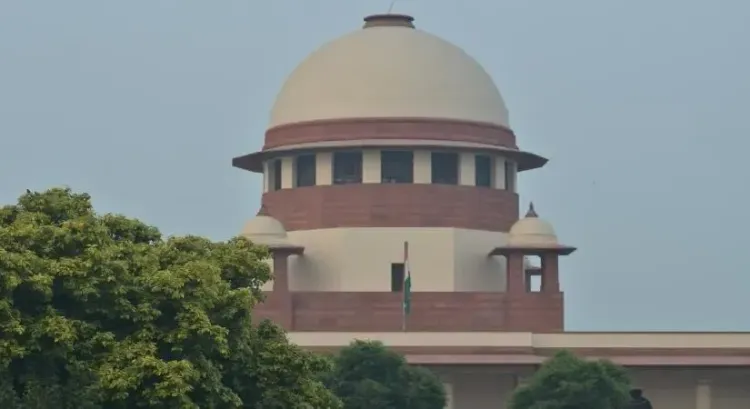
New Delhi, Dec 16 (NationPress) The Supreme Court has officially dissolved a marriage that lasted 25 years, declaring that it had "ceased to exist in reality" and emphasizing the absence of any chance for reconciliation.
In a ruling favoring the husband's petition, a bench led by Justice Manmohan and Justice Joymalya Bagchi exercised its extraordinary authority to ensure "complete justice between the parties" and granted the divorce based on the grounds of irretrievable breakdown.
This Bench, presided over by Justice Manmohan, overturned a 2011 decision from the Gauhati High Court that had nullified a divorce decree issued by a trial court in Shillong.
The Court remarked, "The parties have lived separately for an excessively long duration, and the marriage has lost all sanctity". It also noted that reconciliation is not achievable, as the couple has been apart since November 2001 and has no children from their union.
Initially solemnized in August 2000, the marriage faced litigation as early as 2003, extending over 22 years, as the judgment highlighted. Despite mediation attempts ordered by the Supreme Court in 2012, no agreement was reached.
The bench articulated that prolonged separation without any hope of reunion constitutes cruelty.
Referencing previous rulings, the apex court stated that a marriage where the parties have been separated for decades becomes "only on paper".
It added, "An unworkable marriage, which has ceased to be effective, is futile and bound to be a source of great misery to the parties", explaining that not dissolving such a legal tie may lead to mental cruelty.
Rejecting the Gauhati High Court's stance that the wife had not abandoned the husband, the Supreme Court clarified that the case did not revolve around assigning fault but recognizing the reality of a dead marriage.
According to the Justice Manmohan-led Bench, "No spouse can be compelled to resume life with a consort, and nothing is gained by keeping the parties tied forever to a marriage that has, in reality, ceased to exist".
The Supreme Court upheld the 2010 divorce decree issued by the Additional Deputy Commissioner (Judicial) in Shillong, nullifying the Gauhati High Court's ruling and officially terminating the marriage.
In conclusion, "The order of the Additional Deputy Commissioner (Judicial) Shillong, granting a decree of divorce to the parties, is upheld, and the High Court's impugned order is set aside. Thus, the appeal stands allowed," stated the apex court.
Point of View
I view this ruling as a significant reaffirmation of the need for legal systems to acknowledge the realities of personal relationships. The decision highlights the importance of protecting individuals from prolonged emotional distress in marriages that have effectively ended. It opens the door for discussions on legal reforms concerning marriage and divorce.
NationPress
7 Oct 2026
Frequently Asked Questions
What led to the Supreme Court's decision to dissolve the marriage?
The Supreme Court found that the marriage had 'ceased to exist in reality' due to prolonged separation and a lack of possibility for reconciliation.
How long had the couple been living apart?
The couple had been living separately since November 2001.
What was the basis for the divorce granted by the Supreme Court?
The divorce was granted on the grounds of irretrievable breakdown of marriage.
Did the court consider the wife's stance on the separation?
Yes, the court rejected the previous view that the wife had not deserted the husband, focusing instead on the reality of the marriage's end.
What implications does this ruling have for future divorce cases?
This ruling may set a precedent for recognizing prolonged separations as valid grounds for divorce, promoting a more compassionate approach to marital dissolution.