Will the Supreme Court Grant Bail to Umar Khalid, Sharjeel Imam, and Gulfisha Fatima in the Delhi Riots Case?

Synopsis
The Supreme Court is currently hearing bail pleas from student leaders accused in the Delhi riots case. With arguments presented by top lawyers, the case raises important questions about justice and the implications of dissent in a democracy.
Key Takeaways
Supreme Court hearings highlight justice system challenges.
Prolonged detention without trial raises concerns.
Arguments question legality of UAPA charges.
Protests framed as legitimate dissent.
Legal implications for future activism.
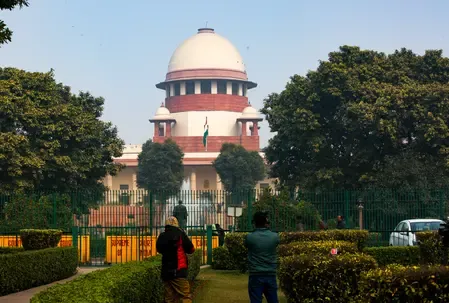
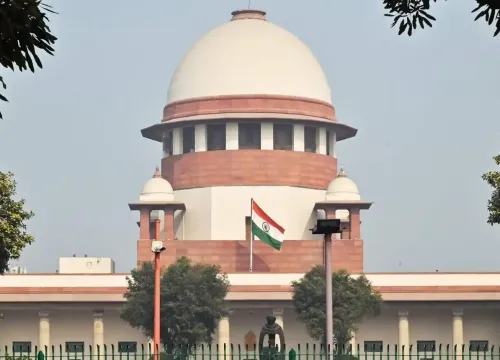
New Delhi, Dec 2 (NationPress) The Supreme Court resumed its deliberation on the bail applications of student activists Umar Khalid, Sharjeel Imam, Gulfisha Fatima, and others, who face accusations under the Unlawful Activities (Prevention) Act (UAPA) in relation to the alleged larger conspiracy behind the 2020 Northeast Delhi riots.
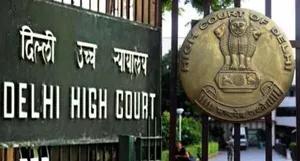
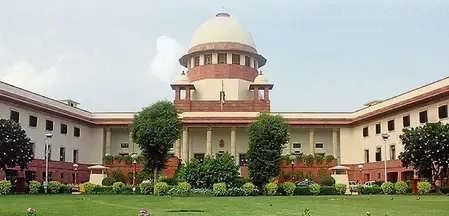
A panel of Justices Aravind Kumar and N.V. Anjaria listened to the rebuttal arguments presented by senior advocates Kapil Sibal, Abhishek Manu Singhvi, and Siddharth Dave, representing the petitioners who are contesting the Delhi High Court's September 2 ruling that denied them bail.
During the proceedings, senior Advocate Abhishek Manu Singhvi, representing Gulfisha Fatima, asserted that the 32-year-old has been incarcerated for more than five years, even though her allegations are “similar to, and considerably lesser than” those against co-defendants Devangana Kalita and Natasha Narwal, who received bail in 2021.
Singhvi emphasized that Gulfisha's situation exemplifies a “caricature of our justice system,” noting that her bail hearing has been postponed 90 times in the Delhi High Court, with 25 of those delays due to the unavailability of the Bench and 26 attributed to renotification.
He argued, “Keeping someone in custody for such a protracted period without a conviction trivializes our criminal justice system. This amounts to pre-trial punishment.”
Moreover, Singhvi pointed out that the “regime change” theory mentioned by the prosecution was not included in the primary chargesheet or the subsequent four chargesheets, surfacing solely in the counter-affidavit before the Supreme Court, seemingly aimed at biasing the court’s perspective.
Defending Umar Khalid, senior advocate Kapil Sibal referenced the Amravati speech cited by the prosecution, arguing that it invoked Mahatma Gandhi and the principle of non-violence. “Promoting Gandhian civil disobedience cannot be classified as a conspiracy,” Sibal contended, asserting, “If this speech qualifies as UAPA, many of us might face jail time.”
Sibal informed the Justice Kumar-led Bench that Khalid has been imprisoned for five years and three months without any charges being formally filed. “Should bail be denied today, he risks spending an additional three years awaiting trial. What public interest does this serve? This is punitive. I am innocent until proven guilty,” Sibal remarked.
Challenging the prosecution's delays, he indicated that numerous supplementary chargesheets were submitted over time, obstructing the initiation of arguments on the charges in the trial court.
Sibal characterized the student protests as “legitimate forms of dissent,” stating, “Chakka jams, rail rokos — they occur throughout India. Students protested, whether rightfully or not. You cannot label that a terrorist act. It is inappropriate to imprison someone as a penalty for protesting.”
In his arguments for Sharjeel Imam, senior advocate Siddharth Dave contended that the prosecution lacked evidence apart from the speeches for which Imam is already undergoing separate trials. “Sharjeel is neither a terrorist nor anti-national,” Dave stated, emphasizing, “He has not been convicted in any case, yet he has been branded an ‘intellectual terrorist’. This is intolerable.”
Dave pointed out that Imam was already in custody in January 2020, weeks ahead of the February riots, complicating any alleged connection to a conspiracy related to the violence. “If the claim is conspiracy, the prosecution must provide more than just the speech. There is nothing,” the senior counsel concluded.
Point of View
It's imperative to recognize that the ongoing hearings in the Supreme Court reflect vital issues surrounding justice and the treatment of dissenters. The implications of these bail petitions extend beyond individual cases, touching on the fundamental principles of democracy and the rights of individuals in the face of state power.
NationPress
23 Sept 2026
Frequently Asked Questions
What is the basis for the bail pleas of Umar Khalid and others?
The bail pleas are based on the argument that prolonged detention without a conviction is unjust and that the accusations lack substantial evidence.
How long have Umar Khalid, Sharjeel Imam, and Gulfisha Fatima been in custody?
Umar Khalid has been in custody for over five years, while Gulfisha Fatima has also been detained for more than five years.
What legal act are the accused charged under?
The accused are charged under the Unlawful Activities (Prevention) Act (UAPA).
What are the arguments made by the defense lawyers?
Defense lawyers argue that the allegations are baseless and that the prolonged detention without trial is a violation of justice.
What impact could this case have on future protests?
The outcome of this case could set a precedent for how dissent is treated in India, impacting future protests and the rights of activists.