Will the Supreme Court Address the Definition of the Aravalli Hills Today?
Synopsis
The Supreme Court's hearing today on the Aravalli Hills' definition could reshape environmental protections. With governmental assurances at stake, this crucial case raises significant questions about the ecological future of this sensitive region. Will the court's ruling redefine conservation efforts?
Key Takeaways
The Supreme Court is addressing the definition of the Aravalli Hills.
Concerns about ecological protection are central to this hearing.
Government actions include a ban on new mining leases.
The new definition has raised controversy among political leaders.
Future conservation efforts may depend on the court's ruling.
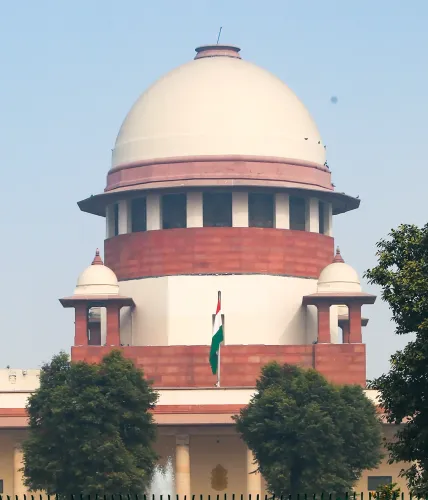
New Delhi, Dec 29 (NationPress) The Supreme Court is set to conduct an important suo motu hearing regarding the definition of the Aravalli Hills today, which aims to tackle issues surrounding the preservation of this ecologically sensitive region amidst governmental promises of protection.
According to the list of cases available on the apex court's website, a Bench led by Chief Justice of India (CJI) Surya Kant, along with Justices J.K. Maheshwari and A.G. Masih, will review the suo motu writ petition titled “In Re: Definition of Aravalli Hills and Ranges and Ancillary Issues” on December 29.
The Supreme Court has proactively taken up the matter due to rising apprehensions regarding the safeguarding of the ecologically delicate Aravalli range, alongside the government’s ongoing assurances to uphold its integrity.
In a decisive step to eliminate illegal mining and enhance ecological safeguards, the Union Ministry of Environment, Forest and Climate Change (MoEF&CC) has mandated state governments to enforce a “complete ban” on issuing any new mining leases within the Aravalli region.
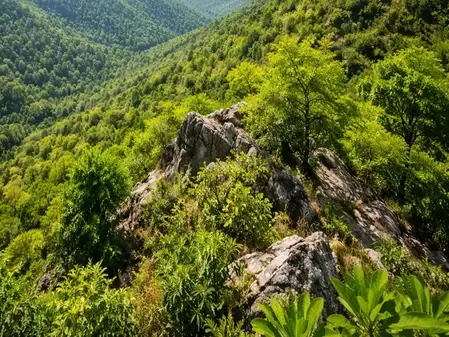
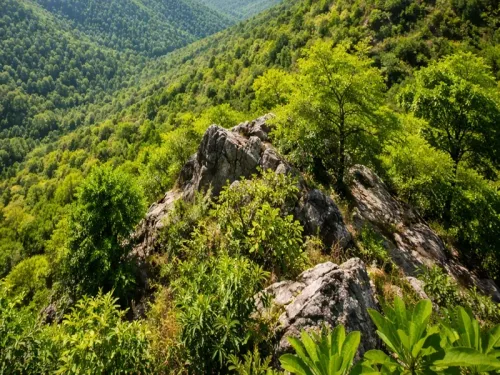
This ban will be uniformly applied throughout the Aravalli landscape, extending from Delhi to Gujarat. The Ministry emphasized that the goal is to “maintain the continuity of the range as a geological ridge” and to halt unregulated mining operations.
To further enhance conservation efforts, the MoEFCC has directed the Indian Council of Forestry Research and Education (ICFRE) to pinpoint additional areas and zones across the entire Aravalli range where mining should be restricted, in addition to the already designated protected areas.
In a related matter, Congress leader and former Environment Minister Jairam Ramesh wrote to Union Minister for Environment, Forests and Climate Change Bhupender Yadav on Sunday, expressing serious concerns regarding the recent redefinition of the Aravalli Hills.
He indicated that the new definition limits the classification to landforms that reach an elevation of 100 meters or higher.
On the social media platform X, Ramesh shared, “Here is my most recent letter to the Union Minister of Environment, Forests & Climate Change, posing four pointed questions regarding the detrimental redefinition of the Aravallis.”
In the letter dated December 28, the Congress leader highlighted what he described as prevalent concerns surrounding the new definition and sought clarification from the minister by asking four specific questions. He wrote to Minister Yadav: “There are understandably widespread concerns with the re-definition of the Aravalli Hills that restrict them to landforms having an elevation of 100 meters or more. In this connection, please allow me to raise four specific questions for your consideration.”
Point of View
It is imperative to recognize the significance of the Supreme Court’s hearing on the Aravalli Hills. This case embodies the crucial balance between development and ecological conservation, highlighting the need for stringent measures to protect our environment. The judicial response could set a precedent for future environmental policies.
NationPress
17 Sept 2026
Frequently Asked Questions
What is the significance of the Supreme Court hearing?
The hearing addresses the ecological preservation of the Aravalli Hills and the government's commitments to protect this fragile area.
What actions has the government taken regarding mining in the Aravalli?
The Union Ministry has mandated a complete ban on new mining leases in the Aravalli region to curb illegal mining and protect the environment.
Who raised concerns about the redefinition of the Aravalli Hills?
Congress leader Jairam Ramesh expressed serious concerns regarding the restrictions imposed by the new definition.
What is the new definition of the Aravalli Hills?
The new definition limits the classification to landforms with an elevation of 100 meters or more.
What could be the outcome of this hearing?
The hearing could lead to significant changes in the legal protections for the Aravalli Hills, influencing future environmental policies.