Swamy Urges Amit Shah to Suspend Starlink Security Clearance
Synopsis
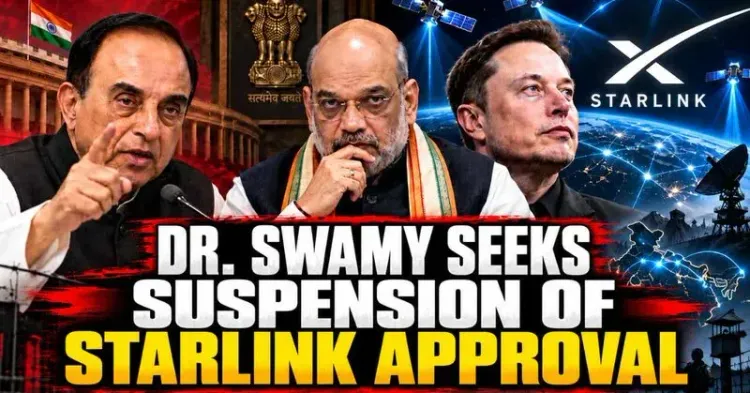
Veteran politician Dr. Subramanian Swamy has called on Home Minister Amit Shah to suspend and review the security clearance of Elon Musk's Starlink in India, raising concerns about foreign-controlled satellite infrastructure and data sovereignty under India's layered regulatory framework.
Key Takeaways
Subramanian Swamy publicly urged Home Minister Amit Shah on 23 October 2026 to suspend and review Starlink's security clearance in India.
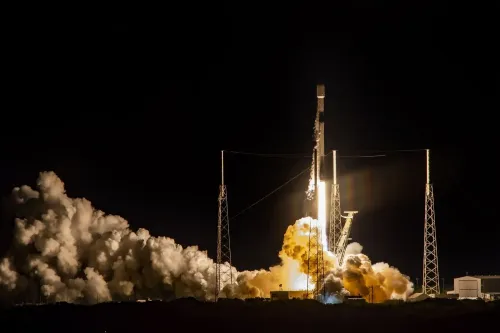
Starlink , operated by Elon Musk's SpaceX , requires approvals from the DoT, TRAI, and a security clearance from the Ministry of Home Affairs to operate in India.
India's IN-SPACe framework, established in 2020 , mandates multi-agency security and licensing oversight for foreign satellite service providers.
India has a consistent pattern of applying layered security scrutiny to foreign-controlled critical digital infrastructure, including telecom equipment and communication networks.
The MHA has not issued a public response to Dr.
Swamy's demand as of this report.
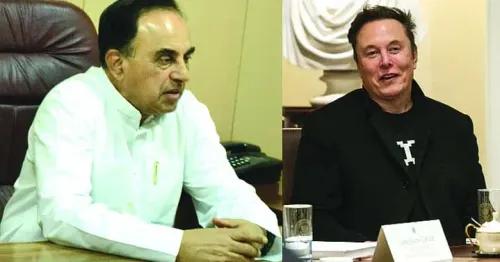
A pointed national-security alarm has been raised at the highest level of India's home ministry. Veteran politician Dr. Subramanian Swamy — former Union Minister and Rajya Sabha MP — publicly urged Union Home Minister Amit Shah on Friday, 23 October 2026, to immediately suspend and undertake a comprehensive review of the security clearance granted to Elon Musk's Starlink satellite broadband service for operating in India.
The security clearance at stake
Starlink, the satellite internet service operated by SpaceX, has been navigating India's regulatory landscape for several years, requiring approvals from the Department of Telecommunications (DoT), the Telecom Regulatory Authority of India (TRAI), and critically, a security clearance nod from the Ministry of Home Affairs (MHA). Dr. Swamy's intervention specifically targets that MHA layer — the sovereign security checkpoint that stands between a foreign-controlled communications infrastructure and operational status on Indian soil.
The demand is not procedural fine-print. Satellite broadband networks, by their very architecture, route data through ground stations and command infrastructure that can sit entirely outside India's jurisdiction — a concern that India's security establishment has consistently flagged when evaluating foreign communication service providers.
India's layered gatekeeping of foreign satellite services
India established IN-SPACe (Indian National Space Promotion and Authorisation Centre) in 2020 precisely to impose structured, multi-agency oversight on private satellite and space activities. The framework demands licensing, data-localisation commitments, and security compliance — a recognition that critical digital infrastructure controlled from abroad requires stricter scrutiny than conventional telecom entrants.
Reviews of foreign satellite services routinely involve coordination between the DoT, TRAI, and the home and defence ministries. Any single agency can effectively pause an operator's rollout. Dr. Swamy is urging the most consequential of those agencies — the MHA — to exercise precisely that power.
Why Swamy's call lands with weight
Dr. Swamy carries a long track record of flagging national-security and economic-sovereignty issues through direct public pressure on senior ministers — a tactic that has, in the past, triggered formal government reviews. His addressee, Amit Shah, heads the ministry that issues internal-security clearances, making this a direct, unambiguous demand rather than a general political statement.
The broader pattern is telling: India has applied the same logic of layered scrutiny to Chinese telecom equipment, social-media data practices, and foreign-held financial infrastructure. A call to put a US-linked, privately-owned global satellite network under the same microscope fits squarely within that established regulatory instinct.
The MHA has not publicly responded to the call as of this report. Whether a formal directive follows — or the pressure is absorbed into ongoing inter-ministerial discussions — will determine whether Starlink's India rollout faces a fresh delay. India's digital-sovereignty playbook has a habit of moving slowly until it moves very fast.
Point of View
Rather than the DoT or TRAI, signals this is framed as a sovereignty and internal-security matter rather than a commercial-licensing dispute. With India deepening its data-localisation and digital-sovereignty posture, the call reflects a wider bipartisan instinct that foreign-controlled satellite communication networks deserve the same hard scrutiny as Chinese telecom hardware. The government's response — or silence — will be read as a signal about how seriously it weighs security concerns against the economic case for expanded rural broadband connectivity through Starlink.
NationPress
23 Oct 2026
Frequently Asked Questions
What has Subramanian Swamy said about Starlink in India?
Dr. Subramanian Swamy has urged Home Minister Amit Shah to suspend and undertake a security review of Elon Musk's Starlink satellite service, citing concerns about the security implications of foreign-controlled communication infrastructure operating in India.
What is Starlink's regulatory status in India?
Starlink requires approvals from the Department of Telecommunications, TRAI, and a security clearance from the Ministry of Home Affairs before it can fully operate as a commercial satellite broadband service in India.
What is IN-SPACe and how does it relate to Starlink?
IN-SPACe (Indian National Space Promotion and Authorisation Centre), established in 2020, is India's regulatory body for private satellite and space activities. It forms part of the multi-agency framework that governs licensing, data sovereignty, and security compliance for services like Starlink.
Why is there concern about Starlink's security clearance in India?
Satellite broadband networks route data through ground-station infrastructure that may lie outside India's jurisdiction. India's security establishment has consistently flagged the data-sovereignty and interception risks of foreign-controlled communication services, making MHA clearance a critical checkpoint.
Has the Ministry of Home Affairs responded to Swamy's demand on Starlink?
As of 23 October 2026, the Ministry of Home Affairs has not issued a public response to Dr. Subramanian Swamy's call to suspend and review Starlink's security clearance in India.