Can the Congress Learn Anything from the RSS?

Synopsis
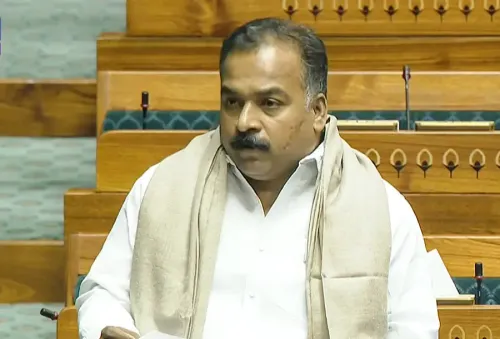
In a bold assertion, Congress MP Manickam Tagore challenges the praise directed towards the RSS by his party colleague, Digvijaya Singh. Tagore firmly declares the RSS a 'hate-driven organization' and emphasizes Congress's commitment to connecting with the people, distancing the party from any admiration of the RSS.
Key Takeaways
Tagore's condemnation of the RSS signifies a strong stance against hate-driven ideologies.
The Congress party is striving to maintain a connection with the masses.
There is a significant division within Congress regarding the recognition of the RSS's strengths.
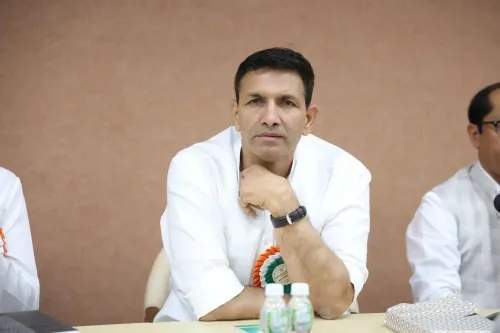
New Delhi, Dec 28 (NationPress) In a fierce response to Congress leader Digvijaya Singh’s comments commending the organizational prowess of the Rashtriya Swayamsevak Sangh (RSS), Congress MP Manickam Tagore vehemently criticized the RSS, claiming that the Congress has absolutely nothing to gain from what he termed a hate-fueled organization.
Addressing the issue, Tagore remarked, “The RSS is fundamentally an organization of hatred. It disseminates hatred, nurtures hatred, and engages in propaganda rooted in hate. There is nothing beneficial to learn from the RSS.”
He further drew a stark comparison, stating, “Just as al-Qaeda operates through bloodshed, the RSS similarly engages in spreading hatred within our nation.”
Tagore also emphasized the Congress party’s connection with the masses, declaring, “Congress is a party of the people, deeply rooted in society. From village to village, we maintain connections with the populace. We do not require any lessons from the RSS.”
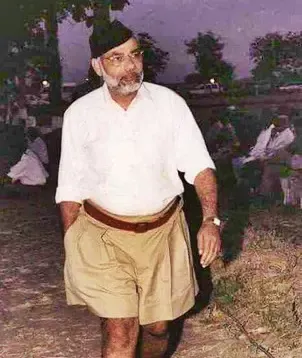
This statement comes amid a political uproar sparked by Digvijaya Singh’s social media commentary where he lauded the BJP and its ideological predecessor, the RSS, for their organizational efficiency. Singh had shared a historic black-and-white image of Prime Minister Narendra Modi alongside veteran BJP leader L.K. Advani, calling it significant.
In his Hindi post, Singh noted that the photograph illustrated how an RSS grassroots volunteer and a Jan Sangh/BJP worker could evolve from sitting at the feet of senior leaders to becoming a state’s chief minister and ultimately the prime minister of India. “This exemplifies the power of organization,” Singh stated, referencing the image that features Modi, Advani, and others at a public gathering.
Earlier, Singh’s comments faced harsh backlash from the BJP, with senior leader Ravi Shankar Prasad ridiculing the Congress leadership and asserting that these remarks indicated a belated recognition of the BJP’s organizational strength. Concurrently, reactions within the Congress were mixed, with some members defending Singh’s right to recognize organizational capability while firmly opposing the RSS ideology.
Manickam Tagore’s statement stands out as one of the most forceful rebuttals from within the Congress, clearly distancing the party from any perceived endorsement of the RSS by one of its senior leaders.
Point of View
It's crucial to recognize the ongoing political dynamics in India. Manickam Tagore’s strong criticism of the RSS reflects a significant ideological divide within the Congress party. While some leaders may see value in acknowledging organizational strengths, Tagore’s remarks underscore the need for Congress to maintain its identity and connection with the people, distancing itself from ideologies perceived as divisive.
NationPress
10 Oct 2026
Frequently Asked Questions
What did Manickam Tagore say about the RSS?
Manickam Tagore described the RSS as an organization of hatred, claiming that there is nothing to learn from it.
How did the BJP respond to Digvijaya Singh's comments?
The BJP criticized Singh, with Ravi Shankar Prasad mocking Congress leadership for acknowledging the BJP's organizational strength.
What was the context of Tagore's remarks?
Tagore's remarks were a response to Digvijaya Singh praising the RSS and its organizational capabilities, which sparked internal debate within Congress.