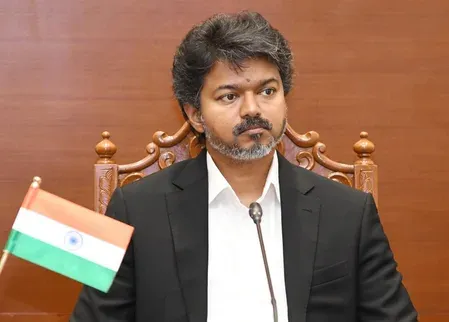
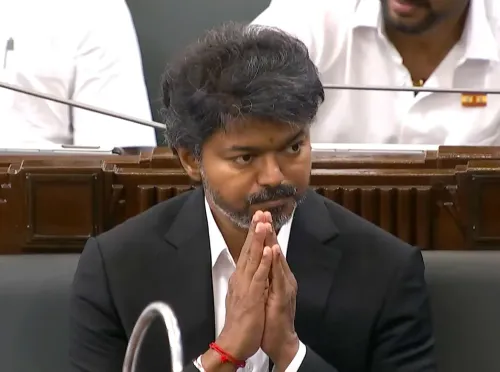
Tamil Nadu CM Vijay Calls on Finance Minister Sitharaman
Synopsis
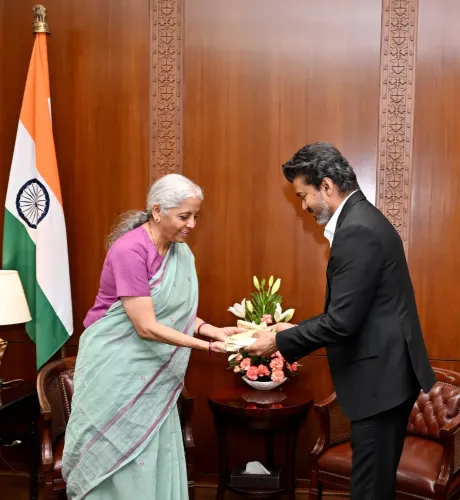
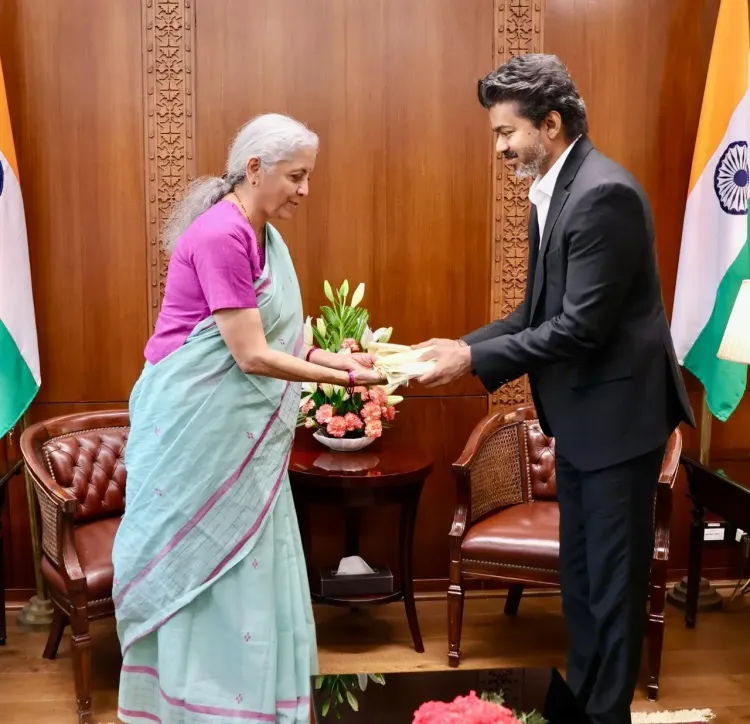
Tamil Nadu Chief Minister C. Joseph Vijay called on Union Finance Minister Nirmala Sitharaman in New Delhi on 27 May 2026. The meeting, confirmed by Sitharaman's office in English and Tamil, reflects ongoing centre-state fiscal engagement covering tax devolution, centrally sponsored schemes, and state-specific economic priorities.
Key Takeaways
Tamil Nadu Chief Minister C.
Joseph Vijay met Union Finance Minister Nirmala Sitharaman in New Delhi on 27 May 2026 .
The meeting was confirmed by Sitharaman's official X account with two photographs and a bilingual post in English and Tamil.
Such meetings are a standard mechanism for centre-state dialogue on tax devolution, centrally sponsored schemes , and budget allocations.
Tamil Nadu is a major industrial and services economy whose fiscal relationship with the Centre is significant for both Union and state finances.
The specific agenda was not disclosed; follow-up may surface at the next GST Council meeting or pre-Budget consultations.
Union Finance Minister Nirmala Sitharaman received Tamil Nadu Chief Minister C. Joseph Vijay in New Delhi on Wednesday, 27 May 2026, in a centre-state meeting that signals ongoing fiscal dialogue between the southern state and the Union government.
Context
The Finance Minister's office shared the meeting on X in both English and Tamil, noting that the Chief Minister 'calls on' Sitharaman — the standard diplomatic phrasing for a formal courtesy and working visit. The Tamil text reads: 'தமிழ்நாடு முதலமைச்சர் திரு. சி. ஜோசப் விஜய், மத்திய நிதியமைச்சர் திருமதி. @nsitharaman அவர்களை சந்தித்தார்' ['Tamil Nadu Chief Minister Shri C. Joseph Vijay met Union Finance Minister Smt. Sitharaman']. Two photographs accompanied the post, indicating a substantive in-person engagement rather than a brief protocol call.
Policy Backdrop
Meetings between state chief ministers and the Union Finance Minister are a well-established feature of India's fiscal federalism architecture. They typically cover tax devolution under Finance Commission awards, the status of centrally sponsored schemes, and state-specific capital expenditure priorities. Tamil Nadu is one of India's largest state economies, with a significant industrial base and a services sector that makes its fiscal relationship with the Centre consequential for both sides. Following the acceptance of the 15th Finance Commission recommendations in 2021, such bilateral consultations have become especially important for states seeking clarity on vertical and horizontal devolution shares.
Sitharaman has held the Finance portfolio continuously since 2019 and has been the principal interlocutor for state governments on Union Budget allocations, GST compensation, and scheme funding. Tamil Nadu, governed by an opposition party, has maintained active engagement with the Centre on these fiscal matters alongside other states.
Stakeholders and Impact
The Tamil Nadu government and its state finance department are the primary stakeholders in any outcome from this meeting. The state has consistently raised concerns about its share in central tax devolution, arguing that its relatively higher tax contribution warrants a larger return. Discussions of this kind also feed into the broader GST Council process, where state finance ministers negotiate revenue-sharing arrangements and compensation mechanisms.
For Vijay, who leads the Tamilaga Vettri Kazhagam and heads the state government, a direct meeting with the Union Finance Minister represents an important channel for advancing Tamil Nadu's fiscal interests outside of formal multilateral forums.
What's Next
The specific agenda of the meeting was not disclosed in the post. Observers will watch for follow-up signals at the next GST Council meeting or in pre-Budget consultations on state allocations. Any announcements on Tamil Nadu-specific infrastructure funding, scheme releases, or devolution adjustments in the coming weeks could be traced back to engagements of this nature. The meeting underscores that centre-state fiscal conversations remain active well into the parliamentary calendar, with both sides maintaining working-level dialogue regardless of political differences.
Point of View
Particularly for an opposition-governed state seeking equitable devolution. For Vijay, engaging Sitharaman directly signals a pragmatic approach to advancing state interests through institutional channels rather than purely adversarial politics. The timing — ahead of likely GST Council discussions and pre-Budget consultations — suggests the Tamil Nadu government is positioning itself early in the fiscal calendar. This pattern of bilateral engagement, replicated across multiple states, reflects how centre-state fiscal negotiations increasingly happen in parallel with, and sometimes ahead of, formal multilateral forums.
NationPress
20 Sept 2026
Frequently Asked Questions
Why did Tamil Nadu CM Vijay meet Finance Minister Sitharaman?
Chief Minister C. Joseph Vijay called on Union Finance Minister Nirmala Sitharaman on 27 May 2026 as part of centre-state fiscal engagement, which typically covers tax devolution, centrally sponsored scheme funding, and state-specific budget priorities.
What is the significance of a state CM meeting the Union Finance Minister?
Such meetings are a standard practice in India's fiscal federalism framework, allowing state governments to directly raise concerns about their share of central taxes, GST compensation, and allocation of funds under centrally sponsored schemes.
What issues does Tamil Nadu typically raise with the Centre on finances?
Tamil Nadu has consistently raised concerns about its share in central tax devolution, arguing that its high tax contribution warrants a proportionate return, along with issues related to GST revenue sharing and infrastructure funding.
Who is C. Joseph Vijay and which party does he lead?
C. Joseph Vijay, also known as Vijay, is the Chief Minister of Tamil Nadu and the leader of the Tamilaga Vettri Kazhagam (TVK), an opposition party at the national level.
What could follow from this meeting between Vijay and Sitharaman?
Possible outcomes include announcements on Tamil Nadu-specific scheme releases or devolution adjustments, with the next GST Council meeting and Union Budget consultations being the most likely forums for any follow-up.