Tamil Nadu CMO Backs Anti-Drug Drive on June 26
Synopsis
The Chief Minister's Office of Tamil Nadu marked International Anti-Drug Day on 26 June 2026 by calling for a collective pledge to build a drug-free state, urging youth engagement through education, sports, and skill development alongside strict enforcement under the NDPS Act.
Key Takeaways
The Chief Minister's Office of Tamil Nadu posted a drug-awareness message on 26 June 2026 , coinciding with International Anti-Drug Day.
The post called on all citizens to pledge support for a drug-free, safe, and healthy Tamil Nadu .
The campaign promotes education, sports, and skill development as constructive alternatives to keep youth away from substance abuse.
Strict enforcement under the NDPS Act, 1985 was cited alongside community action as a dual-track strategy.
Campaign hashtags #Sports_ah_Edu and #Drugs_ah_Vidu ('Embrace sports, quit drugs') anchored the social media outreach.
The Sports and Youth Welfare Department is expected to play a key role in any follow-up district-level schemes.
The Chief Minister's Office of Tamil Nadu on 26 June 2026 called on citizens to pledge support for a drug-free, safe, and healthy Tamil Nadu, marking the occasion with a push for awareness about the harms of narcotics and urging collective action to eradicate substance abuse across the state.
Context
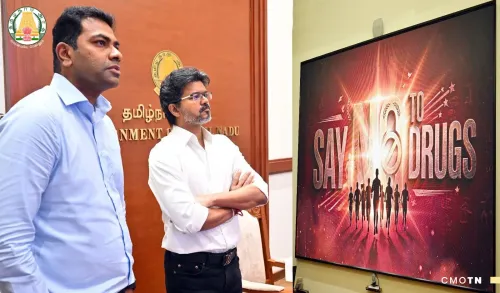
The post, published on the occasion of the International Day Against Drug Abuse and Illicit Trafficking, carried the message: 'போதைப்பொருள் இல்லாத, பாதுகாப்பான மற்றும் ஆரோக்கியமான தமிழ்நாட்டை உருவாக்கிட இந்நாளில் உறுதியேற்போம்' — 'Let us on this day pledge to build a drug-free, safe and healthy Tamil Nadu.' The statement emphasised that awareness about the ill-effects of narcotics is essential to protect the future of young people and prevent crime.
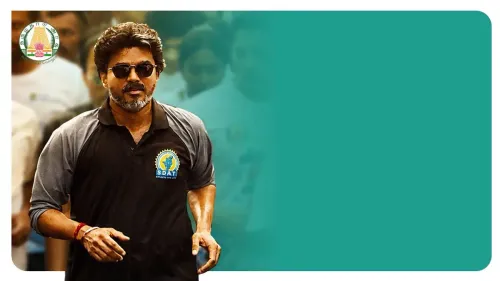
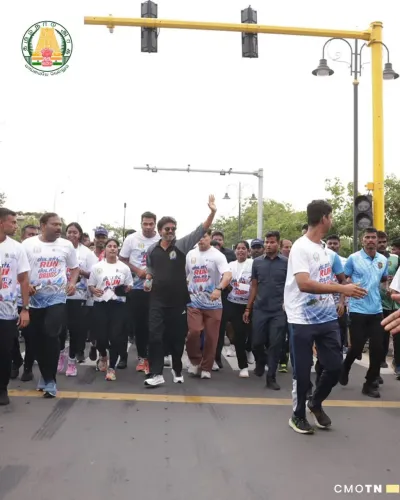
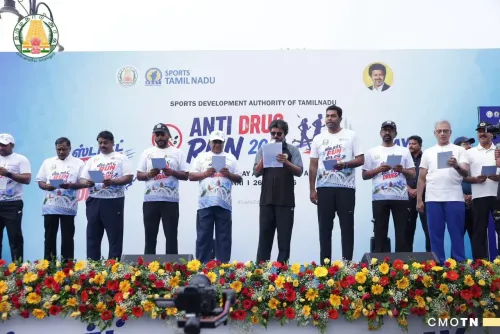
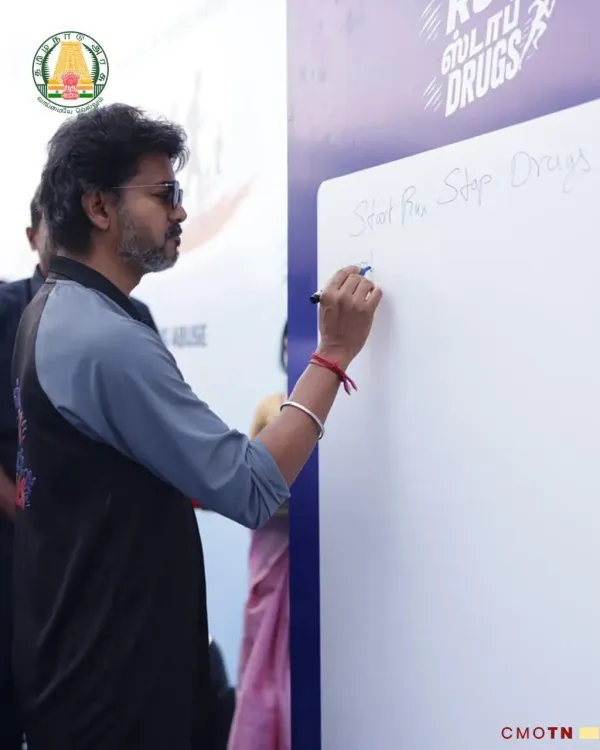
The campaign hashtags #Sports_ah_Edu, #Drugs_ah_Vidu (meaning 'Embrace sports, quit drugs'), and #CMJosephVijay accompanied the post, signalling a broad public outreach effort anchored in youth engagement. The tagline 'Start Run, Stop Drugs' reinforced the sports-as-alternative messaging.
Policy Backdrop
Tamil Nadu has maintained sustained anti-narcotics programmes through its excise and police departments since the early 2000s, combining school and college awareness drives with enforcement under the Narcotic Drugs and Psychotropic Substances (NDPS) Act, 1985 — the central legislation that provides the legal backbone for drug-related prosecutions across India. The state's approach mirrors multi-sector efforts seen in other high-seizure states such as Punjab and Maharashtra, where governments have paired enforcement with de-addiction and skill-development outreach.
The CMO's post explicitly named education, sports, and skill development as the constructive pathways through which youth should be engaged, framing these as complements to strict legal action rather than substitutes for it. This dual-track strategy — enforcement plus positive engagement — reflects the standard model recommended in state-level substance-abuse policy frameworks across India.
Stakeholders and Impact
The primary beneficiaries identified in the post are Tamil Nadu's youth and families affected by addiction. By explicitly calling for 'collective community effort' alongside government initiatives, the CMO's office positioned civil society, schools, sports bodies, and local communities as co-owners of the anti-drug agenda rather than passive recipients of state action.
The inclusion of the hashtag #CMJosephVijay indicates that the campaign draws on the public profile associated with that name to amplify reach, particularly among younger demographics active on social media. The Sports and Youth Welfare Department is expected to be a key implementing arm for any district-level schemes that follow from this messaging.
What's Next
Observers will watch for concrete follow-through: new district-level sports or skill-development schemes from the Sports and Youth Welfare Department, fresh amendments to state excise rules in the next assembly session, and any expansion of the 'Start Run, Stop Drugs' campaign into schools and colleges. The government's ability to translate this pledge-day messaging into measurable enforcement outcomes and de-addiction programme enrolments will determine its long-term impact.
If the campaign sustains momentum beyond the symbolic June 26 date, Tamil Nadu could strengthen its position as a model for states grappling with rising youth drug-use caseloads — provided enforcement data and programme outreach numbers are made publicly available.
Point of View
The Tamil Nadu government is attempting to broaden its anti-drug coalition beyond police and excise circles to include educators, coaches, and community leaders. The prominence of the #CMJosephVijay hashtag suggests the administration is consciously leveraging celebrity-adjacent political capital to reach younger voters on social media. Whether this translates into budget allocations and measurable programme outcomes, or remains a recurring pledge-day exercise, will be the real test of the state's anti-narcotics commitment.
NationPress
25 Sept 2026
Frequently Asked Questions
What did the Tamil Nadu CMO post on 26 June 2026?
The Chief Minister's Office of Tamil Nadu posted a call for citizens to pledge support for a drug-free, safe, and healthy Tamil Nadu on 26 June 2026, the International Day Against Drug Abuse, urging youth engagement through sports, education, and skill development alongside strict legal enforcement.
What is the 'Start Run, Stop Drugs' campaign in Tamil Nadu?
'Start Run, Stop Drugs' is an anti-narcotics messaging campaign by the Tamil Nadu government that uses sports as a positive alternative to substance abuse, targeting youth through the hashtags #Sports_ah_Edu and #Drugs_ah_Vidu.
What law does Tamil Nadu use to enforce anti-drug measures?
Tamil Nadu enforces anti-drug measures primarily under the Narcotic Drugs and Psychotropic Substances (NDPS) Act, 1985 , the central legislation that governs drug-related offences and prosecutions across India.
How does Tamil Nadu's anti-drug approach compare to other Indian states?
Tamil Nadu's dual-track strategy — combining NDPS Act enforcement with youth engagement through sports and skill development — mirrors approaches adopted by states like Punjab and Maharashtra, which also report high drug-seizure and de-addiction caseloads.
Who are the main stakeholders in Tamil Nadu's drug-free campaign?
The main stakeholders are Tamil Nadu's youth, families affected by addiction, schools, sports bodies, the Sports and Youth Welfare Department, and civil society organisations, all of whom the CMO's post explicitly called on to participate in collective community action.