Tejashwi Yadav pays tribute to Abdul Qayyum Ansari on birth anniversary
Synopsis
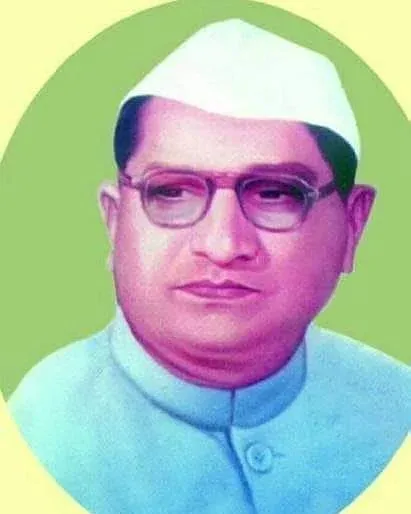
RJD leader Tejashwi Yadav on 1 July 2026 honoured freedom fighter Abdul Qayyum Ansari on his birth anniversary, recalling his opposition to the Two Nation Theory, founding of the Momin Conference, and work for education and social justice in Bihar.
Key Takeaways
Tejashwi Yadav paid tribute to Abdul Qayyum Ansari on his birth anniversary on 1 July 2026 .
Ansari founded the Momin Conference in the 1930s to mobilise Muslim weavers against partition and for community upliftment.
The Momin Conference formally rejected the demand for Pakistan and the Two Nation Theory in the 1940s .
Ansari dedicated his life to social justice , welfare of the poor, and improving education access in Bihar .
The tribute reflects Bihar opposition parties' practice of invoking secular, anti-communal pre-partition figures in political discourse.
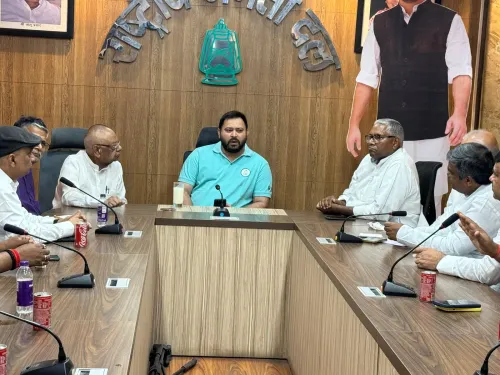
RJD leader Tejashwi Yadav on Wednesday, 1 July 2026, paid tribute to freedom fighter and social reformer Abdul Qayyum Ansari on his birth anniversary, honouring his legacy of opposing the Two Nation Theory and championing the cause of the marginalised in Bihar.
Context
In his post, Tejashwi Yadav described Ansari as 'Baba-e-Qaum' (father of the community) and 'Marhoom' (the late), offering what he called 'khiraj-e-aqidat' — a tribute of reverence. He wrote that Ansari 'dedicated his life to social justice and the welfare of the poor and the deprived,' and that he 'did exemplary work for the improvement of education in Bihar during that era.'
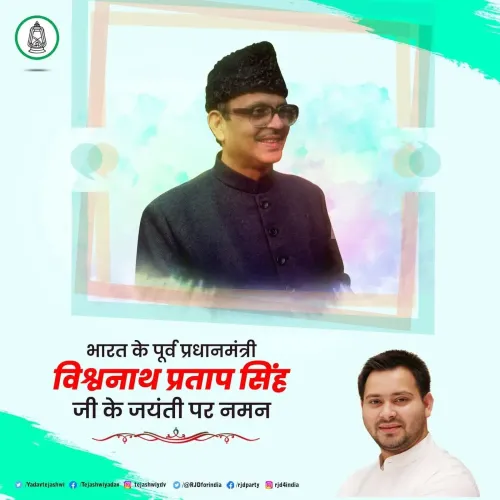
The post was accompanied by two images, underscoring the commemorative nature of the tribute. Yadav tagged the occasion with #TejashwiYadav, #Bihar, and #RJD.
Policy Backdrop
Abdul Qayyum Ansari was a prominent freedom fighter who founded the Momin Conference in the 1930s as a platform to mobilise Muslim weavers — particularly from the Ansari biradari — against the partition movement. The Momin Conference's resolutions in the 1940s explicitly rejected the demand for Pakistan, advocated joint electorates, and pushed for social reforms for backward Muslim communities.
Ansari's opposition to the Two Nation Theory — the ideological basis for the partition of British India — made him a significant figure in the secular, composite-nationalism tradition. His work in Bihar focused particularly on expanding education access for marginalised and weaving communities at a time when such access was severely limited.
Stakeholders and Impact
Ansari's legacy is most directly felt among Muslim weavers and extremely backward caste communities in Bihar, who formed the core constituency of the Momin Conference. His emphasis on education and social upliftment for the poor and the deprived continues to resonate in debates around minority welfare and backward-community representation in the state.
Bihar opposition leaders have periodically commemorated pre-partition Muslim figures who championed secularism and anti-communal politics, signalling continuity with social-justice traditions. Such tributes form part of the broader political conversation among parties seeking support from Yadav, Muslim, and extremely backward caste voters in the state.
What's Next
The tribute comes at a time when Bihar's education budget allocations and minority scholarship schemes are under scrutiny ahead of the next fiscal cycle. Rival parties are likely to respond with their own positioning on minority welfare and backward-community education during the upcoming assembly session.
Ansari's birth anniversary commemoration by a senior opposition leader signals that his legacy of secular, social-justice politics will remain a reference point in Bihar's competitive electoral discourse in the months ahead.
Point of View
Anti-partition Muslim figure at a moment when minority welfare and backward-community education remain live political issues in Bihar. By foregrounding Ansari's rejection of the Two Nation Theory, Yadav positions the RJD within a composite-nationalism tradition that cuts across religious lines — a signal aimed squarely at Yadav, Muslim, and extremely backward caste voters. The commemoration fits a recurring pattern in Bihar's opposition politics where pre-partition reformers are used to contest the ideological ground of communalism. Whether this translates into policy pressure on education and minority scholarships will be the real test in the assembly session ahead.
NationPress
30 Sept 2026
Frequently Asked Questions
Who was Abdul Qayyum Ansari?
Abdul Qayyum Ansari was a prominent Indian freedom fighter and social reformer who founded the Momin Conference in the 1930s to represent Muslim weavers, and who actively opposed the Two Nation Theory and the demand for Pakistan.
What was the Momin Conference?
The Momin Conference was a social organisation established in the 1930s to mobilise Ansari weavers and backward Muslim communities. It passed resolutions in the 1940s rejecting the partition demand and advocating joint electorates and social reforms.
Why did Tejashwi Yadav pay tribute to Abdul Qayyum Ansari?
Tejashwi Yadav paid tribute on Ansari's birth anniversary, honouring his legacy of opposing the Two Nation Theory, championing social justice, and working for education access for the poor and marginalised in Bihar.
What did Abdul Qayyum Ansari do for education in Bihar?
According to Tejashwi Yadav's tribute, Ansari did exemplary work to improve education access in Bihar during the freedom movement era, particularly for marginalised and weaving communities.
What is the Two Nation Theory and why did Ansari oppose it?
The Two Nation Theory was the ideological basis for the partition of British India into India and Pakistan, arguing that Hindus and Muslims were two separate nations. Ansari opposed it, advocating instead for a unified, secular India with social reforms for all backward communities.