Did Telangana Withdraw Its Writ Petition Against Andhra Pradesh’s Polavaram Project?
Synopsis
In a significant legal development, the Telangana government has withdrawn its writ petition against Andhra Pradesh's Polavaram project, following the Supreme Court's advice. This shift indicates a potential strategic move towards a civil suit to seek justice over water-sharing disputes. Will this lead to a more effective resolution for the states involved?
Key Takeaways
Telangana has withdrawn its writ petition regarding the Polavaram project .
The Supreme Court suggested a civil suit for a comprehensive resolution.
Water rights disputes between Telangana and Andhra Pradesh remain contentious.
The Telangana government aims to protect its share of the Godavari and Krishna rivers.
Legal proceedings may still continue in other forms.
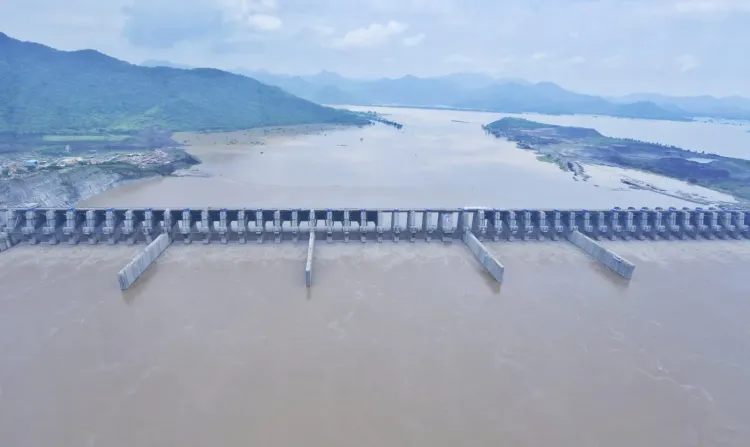
Hyderabad, Jan 12 (NationPress) The government of Telangana officially retracted its writ petition concerning the Polavaram-Banakacherla/Nallamalasagar Link Project (PBLP/PNLP) proposed by Andhra Pradesh on Monday, following the Supreme Court's conclusion that the petition was “prima facie not maintainable”.
The Supreme Court remarked that the matter should ideally be resolved through a comprehensive suit that includes all affected states.
A bench led by Chief Justice of India Surya Kant and Justice Joymalya Bagchi allowed the Telangana government to seek other legal remedies, including filing a civil suit.
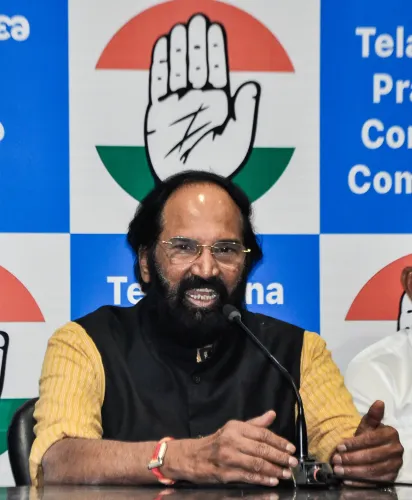
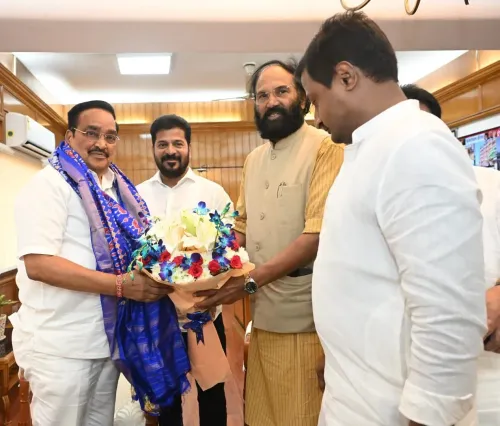
Telangana’s Irrigation Minister N. Uttam Kumar Reddy informed reporters outside the Supreme Court that the writ petition was withdrawn based on the Chief Justice's suggestion to pursue a civil suit.
He emphasized that the Congress-led government in Telangana would utilize all platforms to assert the State’s rightful share of waters from both the Godavari and Krishna rivers.
During the proceedings, senior counsel Abhishek Manu Singhvi highlighted violations by Andhra Pradesh of the Godavari Water Disputes Tribunal award.
The minister pointed out that Andhra Pradesh was attempting to use more water than it was entitled to, which he argued was unauthorized.
Furthermore, he expressed that during the construction of the Polavaram project, Andhra Pradesh was committing various infractions against the originally sanctioned project.
The Supreme Court was made aware that the ‘stop work order’ issued by the Ministry of Environment and Forest was not being adhered to.
He also stated that Andhra Pradesh was constructing infrastructure to access more than 484.5 TMC of water allocated to it.
“They are preparing a Detailed Project Report (DPR) without the necessary permissions from the Central Water Commission,” he remarked.
Senior counsel Mukul Rohatgi represented the Andhra Pradesh government.
During the earlier hearing on January 5, the Supreme Court expressed significant doubts regarding the petition's maintainability and suggested that a suit under Article 131 of the Constitution could provide a more effective resolution.
Point of View
It's crucial to recognize that this legal development reflects ongoing tensions between Telangana and Andhra Pradesh regarding water resources. The withdrawal of the writ petition suggests a strategic recalibration by Telangana, which could pave the way for a more comprehensive legal approach. The focus must remain on equitable water distribution for both states, highlighting the importance of collaborative solutions over contentious disputes.
NationPress
20 Oct 2026
Frequently Asked Questions
Why did Telangana withdraw its writ petition?
Telangana withdrew its writ petition after the Supreme Court deemed it 'prima facie not maintainable' and suggested pursuing a civil suit instead.
What is the Polavaram project?
The Polavaram project is a multi-purpose irrigation project proposed by Andhra Pradesh, aimed at providing water for irrigation and drinking purposes.
What does the Supreme Court's suggestion imply?
The Supreme Court's suggestion implies that a comprehensive legal approach involving all affected states could lead to a more effective resolution of the water-sharing disputes.
How does this decision affect water rights?
This decision could significantly impact water rights, as Telangana seeks to assert its claims to the waters of the Godavari and Krishna rivers.
What are the next steps for Telangana?
Telangana may pursue a civil suit to address its concerns about water allocation and violations of previous agreements.