TGSRTC Strike Day 3: Driver Dies, Govt Talks Scheduled
Synopsis
The TGSRTC strike hit Day 3 with a devastating twist — driver Shankar Goud, 55, died after self-immolation in Warangal, triggering fresh tension as police clashed with protestors over his body. With 40,000 workers off duty and Hyderabad's transport paralysed, a Cabinet sub-committee faces urgent talks with the JAC Friday.
Key Takeaways
TGSRTC strike entered its third consecutive day on Friday, April 25 , with approximately 40,000 employees across Telangana refusing to report for duty.
Shankar Goud (55) , a TGSRTC driver from Narsampet Depot, Warangal , died at Apollo DRDO Hospital, Hyderabad after sustaining 80 per cent burns from self-immolation during a protest.
Police clashed with protestors at Muthojipet over attempts to move Goud's body; BRS leader and former MLA Peddi Sudershan Reddy was detained.
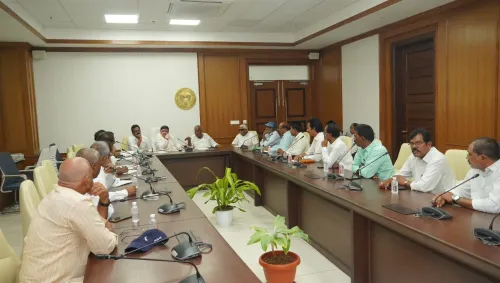
A Cabinet sub-committee led by Deputy CM Mallu Bhatti Vikramarka is scheduled to hold talks with JAC leaders on Friday to resolve the standoff.
Limited bus services are being run from MGBS and JBS in Hyderabad using hired, private, and electric buses; inter-state routes to Andhra Pradesh, Karnataka, and Maharashtra remain partially operational.
Hyderabad Metro Rail and MMTS trains are experiencing heavy overcrowding as commuters scramble for alternative transport during the strike.
Hyderabad, April 24: The indefinite strike by Telangana State Road Transport Corporation (TGSRTC) employees entered its third consecutive day on Friday, with approximately 40,000 workers across the state refusing to report for duty, leaving thousands of commuters stranded. The crisis deepened following the death of a TGSRTC driver who self-immolated during a protest, even as a Cabinet sub-committee prepared to hold emergency talks with striking workers' leaders later in the day.
Driver's Death Intensifies Strike
Shankar Goud (55), a TGSRTC driver from Narsampet Depot in Warangal district, succumbed to his injuries at Apollo DRDO Hospital in Hyderabad in the early hours of Friday, April 25. He had sustained 80 per cent burns after setting himself ablaze during a protest demonstration by striking employees on Thursday.
His death has significantly raised the emotional temperature of the standoff, with fellow employees and opposition leaders rallying around his memory. At least two other TGSRTC employees attempted self-immolation on Thursday but were restrained by colleagues and police personnel in time.
Tension Over Body, BRS Enters the Fray
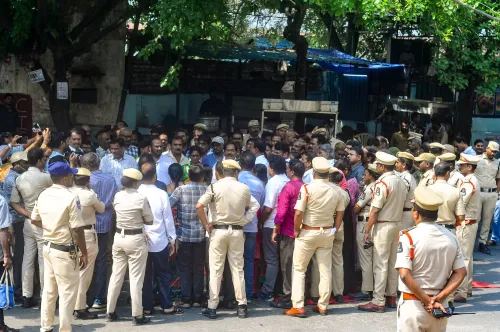
Serious tension erupted at Muthojipet when police blocked attempts by RTC employees to transport Shankar Goud's body back to Narsampet Depot, where he had set himself on fire. The standoff escalated into a scuffle between police and protestors.
Leaders of the Opposition Bharat Rashtra Samithi (BRS) sided with the employees and attempted to assist in moving the body. BRS leader and former MLA Peddi Sudershan Reddy was subsequently detained by police and taken to a local police station. Security has since been heightened at RTC depots across Telangana to prevent similar incidents.
Impact on Public Transport Across Telangana
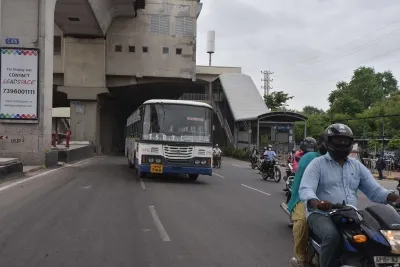
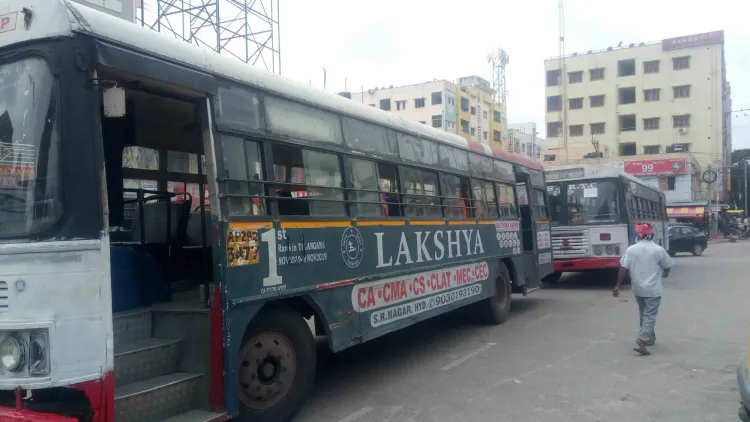
For the third straight day, the majority of TGSRTC buses remained parked inside depots statewide. The corporation claims to be running partial services using hired buses, private vehicles, and electric buses, with limited operations from Mahatma Gandhi Bus Station (MGBS) and Jubilee Bus Station (JBS) in Hyderabad.
Inter-state bus services to Andhra Pradesh, Karnataka, and Maharashtra continued to operate from MGBS. The transport vacuum has triggered a massive surge in ridership on Hyderabad Metro Rail and MMTS trains. Government employees, private sector workers, students, and daily wage labourers are bearing the brunt of the disruption.
Government Response and Scheduled Talks
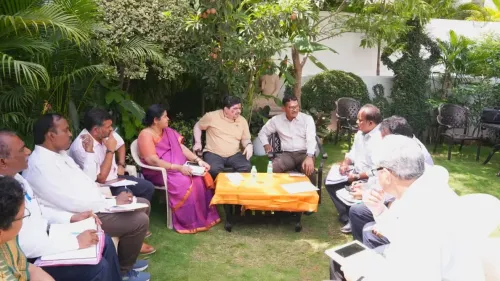
A Cabinet sub-committee led by Deputy Chief Minister Mallu Bhatti Vikramarka is scheduled to sit down with Joint Action Committee (JAC) leaders representing the striking TGSRTC employees on Friday. The JAC held an emergency internal meeting following Shankar Goud's death to assess its position ahead of the negotiations.
The Telangana State Cabinet, which convened on Thursday evening, issued a public appeal urging employees to call off the strike and exercise restraint. The Cabinet assured that the government remains committed to resolving the underlying grievances through structured dialogue.
Deeper Context: A Pattern of RTC Crises in Telangana
This is not the first time TGSRTC has been the epicentre of a major labour standoff. Notably, a prolonged and bitter RTC strike in October 2019 under the then-BRS (formerly TRS) government resulted in the dismissal of thousands of employees and significant political controversy — a painful memory that many workers still carry. The current strike reflects unresolved structural issues around pay parity, service conditions, and corporation finances that have persisted across successive administrations.
Critics argue that successive Telangana governments have treated TGSRTC's financial distress as a recurring political bargaining chip rather than addressing root causes such as fleet modernisation, route rationalisation, and debt restructuring. The corporation, which serves millions of daily commuters — particularly in rural and semi-urban Telangana — remains financially stressed, making employee demands politically sensitive but economically complex.
The involvement of BRS in the current protest is also significant: the party, which governed Telangana for a decade, is now positioning itself as a champion of the very workers whose 2019 strike it crushed — a contradiction that opposition and civil society observers have been quick to highlight.
With Shankar Goud's death adding a human tragedy to the labour dispute, pressure on the Congress-led Telangana government to deliver a credible resolution has sharply intensified. The outcome of Friday's talks between the Cabinet sub-committee and JAC leaders will be closely watched — both for its immediate impact on public transport and for its signal about the government's ability to manage labour relations in the state.
Point of View
Using dialogue as a pressure-release valve without fixing the underlying fault lines of debt, pay parity, and governance. The irony of BRS — the party that dismissed striking RTC workers en masse in 2019 — now championing their cause should not be lost on anyone. What this strike exposes is a deeper pattern: public transport workers in India remain among the most economically vulnerable state employees, and their grievances are addressed only when the political cost of ignoring them becomes too high to bear.
NationPress
19 Sept 2026
Frequently Asked Questions
Why are TGSRTC employees on strike?
TGSRTC employees launched an indefinite strike over unresolved demands related to pay parity, service conditions, and the financial restructuring of the corporation. The strike, which began earlier this week, has now entered its third day with around 40,000 workers participating statewide.
Who was Shankar Goud and what happened to him?
Shankar Goud, 55, was a TGSRTC driver attached to Narsampet Depot in Warangal district who set himself ablaze during a protest by striking employees on Thursday, April 24. He succumbed to 80 per cent burns at Apollo DRDO Hospital in Hyderabad on Friday morning.
What is the government doing to resolve the TGSRTC strike?
A Cabinet sub-committee led by Deputy Chief Minister Mallu Bhatti Vikramarka is scheduled to hold talks with the Joint Action Committee (JAC) of RTC employees on Friday. The Telangana Cabinet has also appealed to workers to call off the strike and engage in dialogue.
How is the TGSRTC strike affecting commuters in Hyderabad?
Public road transport has been severely disrupted for three consecutive days, with most TGSRTC buses remaining in depots. Hyderabad Metro Rail and MMTS trains are witnessing unusually heavy crowds, while government employees, students, and daily wage workers are the worst affected.
Has TGSRTC faced a major strike before?
Yes, TGSRTC witnessed a major and prolonged strike in October 2019, during which thousands of employees were dismissed by the then-TRS (now BRS) government, making it one of the most contentious labour disputes in Telangana's history. The current strike reflects unresolved issues that have persisted since then.