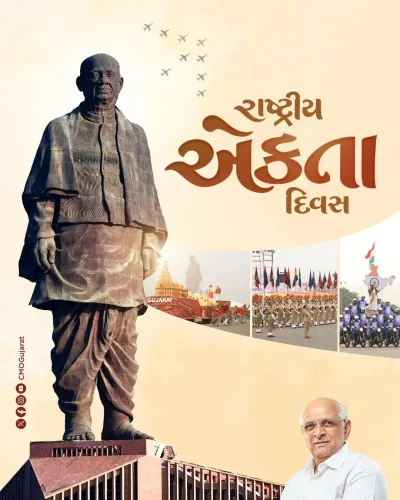
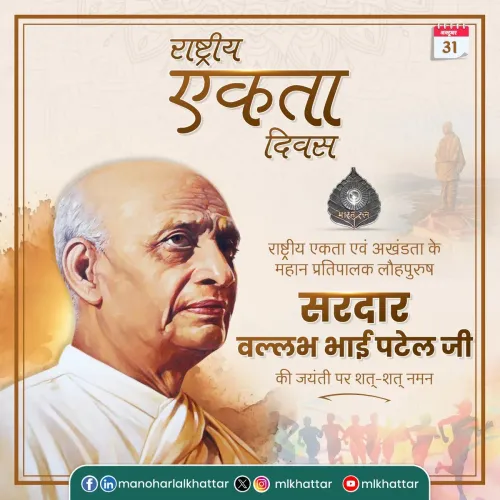
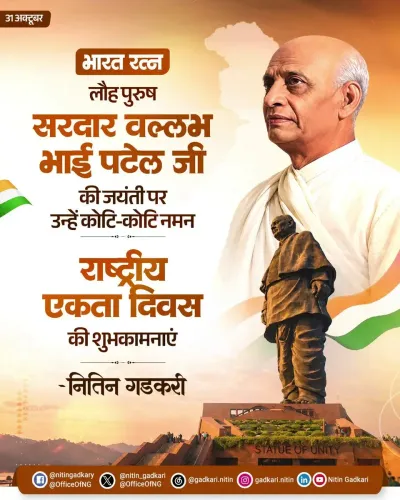
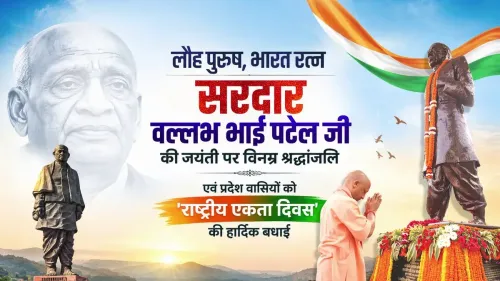
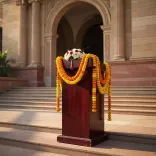
Anurag Thakur pays tribute to Sardar Patel on National Unity Day
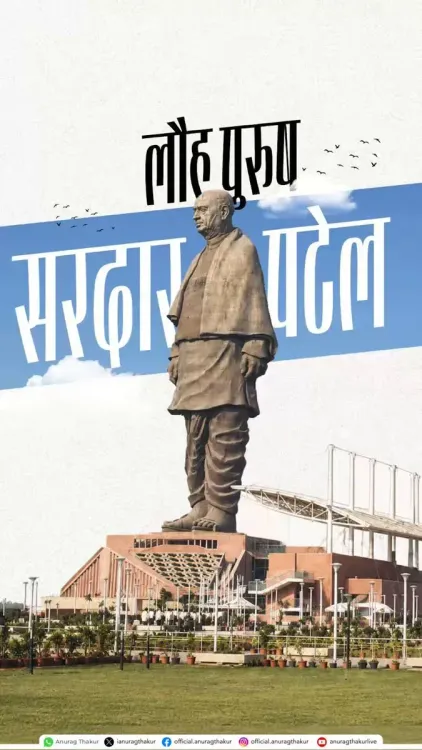
Synopsis
BJP MP Anurag Thakur marked Rashtriya Ekta Diwas on 31 October 2026 by honouring Sardar Vallabhbhai Patel — Bharat Ratna, Iron Man of India — calling his resolve for national unity and sovereignty a timeless inspiration for every Indian.
Key Takeaways
BJP MP Anurag Thakur paid tribute to Sardar Vallabhbhai Patel on his birth anniversary on 31 October 2026 .
Patel is credited with integrating 565 princely states into India after independence in 1947 .
He was awarded the Bharat Ratna posthumously in 1991 .
The Government of India declared 31 October as Rashtriya Ekta Diwas (National Unity Day) in 2014 .
Thakur described Patel as the 'architect of modern India' and saluted his resolve for national unity, integrity and sovereignty.
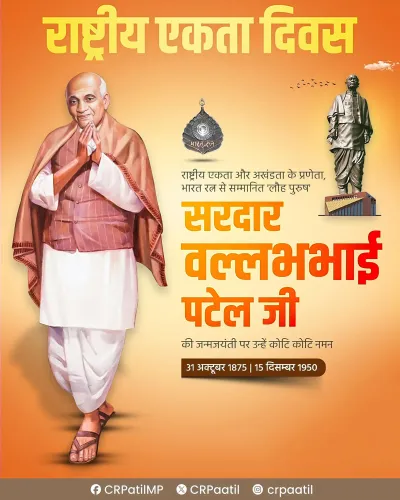
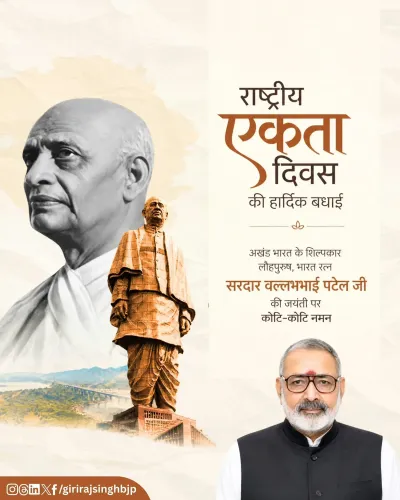
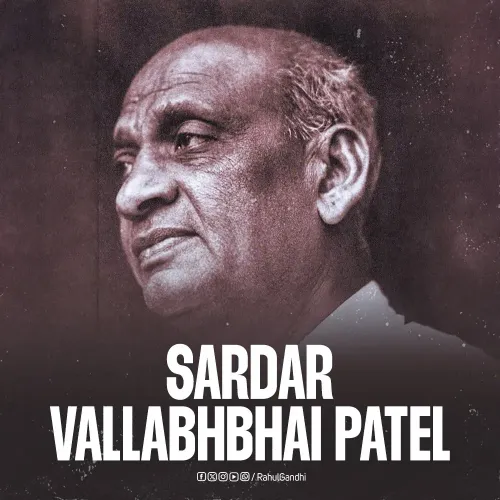
On the 131st birth anniversary of Sardar Vallabhbhai Patel, BJP MP Anurag Thakur offered his respects to the man who stitched a fractured subcontinent into a single nation — and extended greetings to all Indians on Rashtriya Ekta Diwas (National Unity Day), observed every 31 October.
In his post, Thakur described Patel as 'aadhunik Bharat ke shilpkar' — 'the architect of modern India' — and saluted his 'dridh sankalpik vyaktitv', his resolute character. He wrote that Patel's 'determined personality and efforts for national integrity will always remain a source of inspiration for us,' and that his resolve for 'the unity, integrity and sovereignty of the nation will forever inspire' every Indian.
The man who unified 565 princely states
The tribute carries weight rooted in extraordinary history. Sardar Vallabhbhai Patel, India's first Deputy Prime Minister and Home Minister, oversaw the accession and integration of 565 princely states into the Indian Union following independence in 1947 — a feat of political will and diplomatic pressure that had no modern precedent. His iron-willed approach to territorial consolidation earned him the enduring title of Loh Purush, the 'Iron Man of India.'
Patel was awarded the Bharat Ratna — India's highest civilian honour — posthumously in 1991, more than four decades after his death in 1950. The recognition, though delayed, confirmed his standing as one of independent India's most consequential architects.
Rashtriya Ekta Diwas: from 2014 to a national fixture
The day itself is a relatively recent institution. In 2014, the Government of India formally declared 31 October as Rashtriya Ekta Diwas to anchor Patel's legacy in the national calendar. Each year, the day is marked by the signature 'Run for Unity' events across cities and towns, alongside state-level ceremonies reinforcing the themes of integration and sovereignty that defined Patel's life's work.
For the BJP, invoking Patel on this date is both a tribute and a political statement — framing his legacy of strong central authority and territorial integrity as a living mandate, not a historical footnote. Thakur's post follows that well-worn but genuinely felt tradition.
Seventy-six years after his passing, Sardar Patel's project — one India, indivisible — remains the standard against which every test of national unity is measured.
Point of View
Decade-long BJP effort to reclaim Sardar Patel as the party's ideological forebearer — positioning him as the original champion of a strong, centralised, undivided India. The formal creation of Rashtriya Ekta Diwas in 2014 institutionalised this framing, giving the ruling party an annual platform to link its contemporary nationalism to Patel's post-independence unification. It is a politically shrewd move: Patel draws cross-partisan respect, meaning the tribute reads as patriotism to most voters even as it reinforces a distinct ideological message about unity and sovereignty.
NationPress
31 Oct 2026
Frequently Asked Questions
Why is 31 October celebrated as National Unity Day in India?
31 October is the birth anniversary of Sardar Vallabhbhai Patel. The Government of India declared it Rashtriya Ekta Diwas (National Unity Day) in 2014 to honour his role in integrating 565 princely states into the Indian Union and to promote national unity.
What did Anurag Thakur say about Sardar Patel on National Unity Day 2026?
Anurag Thakur described Patel as the 'architect of modern India' and the 'Iron Man,' saying his resolute character and efforts for national integrity and sovereignty would remain a lasting inspiration for all Indians.
What is the Bharat Ratna and when did Sardar Patel receive it?
The Bharat Ratna is India's highest civilian honour. Sardar Vallabhbhai Patel received it posthumously in 1991, more than four decades after his death in 1950, in recognition of his nation-building contributions.
How many princely states did Sardar Patel integrate into India?
Sardar Patel oversaw the accession and integration of 565 princely states into the Indian Union after independence in 1947, a process widely regarded as one of the most consequential acts of modern Indian statecraft.
What events are held on Rashtriya Ekta Diwas?
Rashtriya Ekta Diwas is marked by 'Run for Unity' events in cities and towns across India, alongside state-level ceremonies and programmes focused on national integration and the legacy of Sardar Patel.