Tharoor Hails Indian-Origin Players at 2026 FIFA World Cup

Synopsis
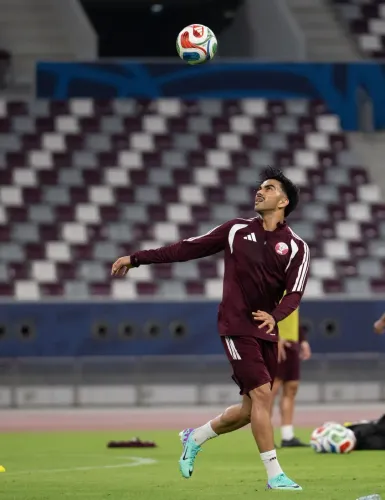
Congress MP Dr. Shashi Tharoor called it a historic moment for Indian football, noting that two players of Indian heritage will feature at the 2026 FIFA World Cup. He named 19-year-old winger Tahsin Mohammed Jamshid as the first player of Indian origin selected for Qatar's squad in the expanded 48-team tournament.
Key Takeaways
Shashi Tharoor's X post on 2 June 2026 highlights two players of Indian heritage at the 2026 FIFA World Cup.
19-year-old winger Tahsin Mohammed Jamshid is named as the first player of Indian origin selected for Qatar.
The 2026 World Cup expands to 48 teams and is co-hosted by Canada, Mexico and the United States.
FIFA rules permit national team eligibility through parentage and grandparental lineage.
Qatar has previously built squads using naturalised players with diverse origins.
The identity of the second Indian-heritage player referenced in the post is not specified.
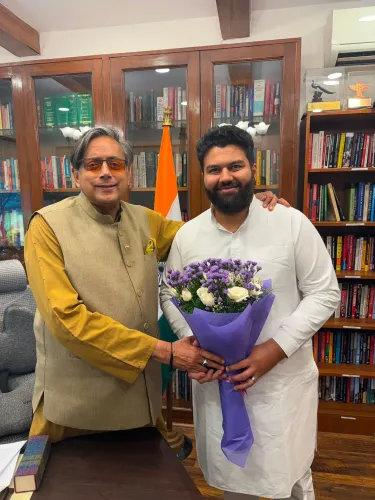
Congress MP Dr. Shashi Tharoor on Tuesday, 2 June 2026, took to X to celebrate what he described as a 'historic moment for Indian football fans', flagging that the 2026 FIFA World Cup will feature two players of Indian heritage on the global stage. The Thiruvananthapuram MP singled out 19-year-old winger Tahsin Mohammed Jamshid as the first player of Indian origin selected for the Qatar national team.
In his post, the former Union Minister wrote, 'A historic moment for Indian football fans! As the 2026 FIFA World Cup approaches, we will have two players of Indian heritage gracing the global stage.' He went on to note that Jamshid 'makes history as the first player of Indian origin selected for the Qatar' squad. The post was cut off in transmission, leaving the identity of the second heritage player unspecified in the message itself.
Context
Dr. Tharoor, a four-term Lok Sabha MP and a former UN Under-Secretary-General, has consistently used his social media platforms to spotlight diaspora achievements across sport, science and the arts. His latest intervention places the spotlight on a recurring theme in global football: the rise of players with Indian parentage or ancestry representing nations other than India at the senior international level.
The 2026 FIFA World Cup, scheduled to kick off in June 2026, is the first edition to feature an expanded 48-team format and is being co-hosted by Canada, Mexico and the United States. The larger field has opened up more roster spots for smaller footballing nations and, by extension, for heritage players who might otherwise have struggled to make traditional 32-team squads.
Policy backdrop
FIFA's eligibility statutes have for years permitted players to represent a country based on birth, parentage or grandparental lineage, subject to specific conditions on prior senior appearances. The rule has reshaped squads across Europe and the Gulf, with several teams actively scouting diaspora talent in recent cycles.
Qatar, which hosted the 2022 FIFA World Cup, has previously fielded naturalised players of diverse origins, and its football federation runs one of the most structured talent identification programmes in West Asia through its Aspire Academy pipeline. A selection from the Indian-origin pool would fit that broader recruitment template.
Stakeholders and impact
For the All India Football Federation (AIFF), the development is a double-edged signal. It underlines the growing depth of Indian-origin talent in elite academies abroad, even as the senior Indian national team remains outside World Cup qualification contention. Diaspora athletes are increasingly visible across cricket, athletics and now football, prompting periodic debate on whether India should consider mechanisms to engage overseas-born talent.
For Indian football fans, the visibility of a player such as Jamshid on a World Cup roster carries symbolic weight. It marks the first time, by Dr. Tharoor's account, that a player of Indian origin will appear at a senior FIFA World Cup with the Qatar setup, broadening the sport's cultural footprint within the community.
What's next
Attention now turns to the publication of final 26-man squads ahead of the tournament's opening matches in June, when team sheets will formally confirm Jamshid's inclusion and reveal the identity of the second Indian-heritage player referenced by Dr. Tharoor. Any statement from the AIFF on tracking overseas talent of Indian origin will also be closely watched.
Should both players take the field in North America, it would mark a quiet but notable milestone for the Indian diaspora's footprint in world football, even as the question of when an India-badged team will return to the World Cup stage remains unanswered.
Point of View
He subtly reopens the policy conversation around how India engages overseas-born athletes. The expanded 48-team format makes such heritage stories more frequent, not less, and is likely to keep pressure on the AIFF to articulate a clearer diaspora outreach strategy.
NationPress
19 Sept 2026
Frequently Asked Questions
Who is Tahsin Mohammed Jamshid?
According to Dr. Shashi Tharoor's post, Tahsin Mohammed Jamshid is a 19-year-old winger of Indian origin selected for Qatar's squad at the 2026 FIFA World Cup. Further career details were not provided in the post.
Why is an Indian-origin player representing Qatar and not India?
FIFA eligibility rules allow players to represent a country based on birth, parentage or grandparental lineage. Players raised in or developed through another country's football system often choose that nation, especially if India has not capped them at senior level.
When does the 2026 FIFA World Cup begin?
The 2026 FIFA World Cup is scheduled to begin in June 2026. It is the first edition to feature 48 teams and is being co-hosted by Canada, Mexico and the United States.
Has any player of Indian origin played at the FIFA World Cup before?
Per Dr. Tharoor's post, Tahsin Mohammed Jamshid is being described as the first player of Indian origin selected for the Qatar national team at a FIFA World Cup. Historical heritage representation for other nations is not addressed in the post.
What did Shashi Tharoor say about Indian heritage players at the World Cup?
Dr. Tharoor called it 'a historic moment for Indian football fans', noting that two players of Indian heritage will grace the 2026 FIFA World Cup stage. He specifically named Tahsin Mohammed Jamshid as the first player of Indian origin picked by Qatar.