Tharoor Raises Alarm Over SIR, Electoral Roll Deletions
Synopsis
Congress MP Dr. Shashi Tharoor has flagged serious concerns over the Special Intensive Revision process and alleged electoral roll deletions, arguing that the right to vote is a constitutional birthright of every Indian citizen, not a privilege the State can quietly revoke.
Key Takeaways
Shashi Tharoor , Congress MP from Thiruvananthapuram , posted on 3 October 2026 raising alarm over electoral roll deletions linked to the SIR process.
Tharoor asserted that the right to vote 'belongs to every Indian citizen' and is not a privilege granted by the State.
The Special Intensive Revision (SIR) is an Election Commission exercise to update voter rolls, but critics allege it has led to large-scale deletion of genuine voters.
Opposition parties and civil society groups have documented cases of eligible voters — particularly from marginalised communities — being struck off rolls during SIR drives.
The right to universal adult suffrage is guaranteed under Article 326 of the Constitution of India .
Tharoor's intervention signals the opposition intends to make electoral roll integrity a central political issue.
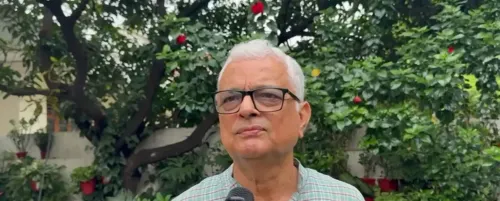
The right to vote, Congress MP Dr. Shashi Tharoor declared on Saturday, 3 October 2026, is not a gift from the State — it is a constitutional birthright, and its erosion strikes at the very heart of Indian democracy. Tharoor's pointed intervention on X zeroed in on the Special Intensive Revision (SIR) process, alleged deletions from electoral rolls, and what he described as mounting nationwide concern over the Election Commission's functioning.
Posting to his millions of followers, Tharoor wrote: 'The right to vote is not a privilege bestowed by the State. It belongs to every Indian citizen, and the integrity of that right is fundamental to our democracy. That is why the concerns being raised across the country over the SIR, electoral roll deletions and the functioning of' — the post, though appearing to trail off, carried a clear political charge that resonated widely.What the SIR Controversy Is About
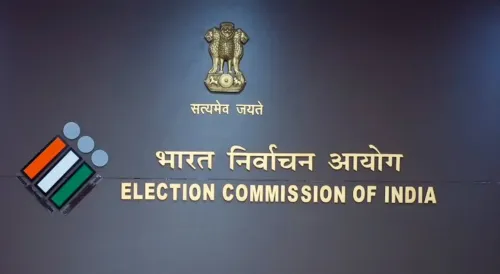
The Special Intensive Revision (SIR) is a periodic exercise conducted by the Election Commission of India to update and clean up electoral rolls — removing duplicate entries, deceased voters, and those who have shifted constituencies. In principle, it is a routine administrative process. In practice, opposition parties and civil society groups have repeatedly flagged that large-scale deletions during SIR drives can disenfranchise genuine voters, particularly from marginalised communities, migrant workers, and the urban poor, who may lack updated documentation or miss the verification window.
The concern is not new, but the intensity of the current debate signals that it has reached a political boiling point. When voter names disappear from rolls — especially in clusters tied to specific localities or demographics — the question of whether deletions are procedural or partisan becomes impossible to ignore.
Tharoor's Broader Democratic Argument
Tharoor, a former UN Under-Secretary-General and former Union Minister of State for External Affairs and Human Resource Development, has long positioned himself as a defender of constitutional values and institutional integrity. His framing here is deliberate: by asserting that the vote 'belongs to every Indian citizen' rather than being a State concession, he invokes the foundational language of the Constitution of India, which guarantees universal adult suffrage under Article 326.
That framing matters. It shifts the debate from a procedural dispute about electoral rolls to a first-principles question about democratic legitimacy. If the mechanism meant to protect the voter list is itself producing deletions that disenfranchise eligible citizens, the argument goes, then the mechanism is failing its constitutional mandate.
Why This Moment Carries Weight
Electoral roll integrity has become a live flashpoint in Indian politics. Opposition parties across the spectrum — not just the Indian National Congress — have raised concerns about the pace, transparency, and outcome of intensive revision exercises in recent electoral cycles. Civil society organisations have documented cases where entire housing societies or slum clusters have found their residents struck off rolls ahead of elections.
The Election Commission of India, as a constitutional body, operates independently of the government — but its decisions are subject to intense public scrutiny, and any perception of bias or administrative failure in managing voter data carries enormous democratic stakes. Tharoor's post, arriving in this charged atmosphere, is less a solitary protest and more a signal that the opposition intends to press this issue hard.
Every name deleted from an electoral roll is a citizen who cannot vote. That is not an abstraction — it is the difference between a democracy and a performance of one.
Point of View
Framing what could be dismissed as administrative housekeeping as a constitutional crisis of democratic access. By anchoring the argument in Article 326 rather than partisan grievance, he attempts to build cross-party legitimacy for the critique. The SIR controversy fits a broader pattern in which opposition parties are increasingly contesting not just election outcomes but the integrity of the processes that precede them — a shift that puts institutional credibility, not just vote counts, at the centre of Indian democratic politics. If the Election Commission does not respond with greater transparency on deletion data, the narrative vacuum will be filled by the opposition.
NationPress
3 Oct 2026
Frequently Asked Questions
What is the Special Intensive Revision (SIR) of electoral rolls in India?
The Special Intensive Revision (SIR) is a periodic exercise conducted by the Election Commission of India to update voter lists by removing duplicate, deceased, or relocated voters. Critics argue that the process, when conducted hastily or without adequate safeguards, can result in the deletion of genuine eligible voters.
Why is Shashi Tharoor concerned about electoral roll deletions?
Tharoor has argued that the right to vote belongs to every Indian citizen as a constitutional guarantee, not a State privilege. He is raising concerns that the SIR process may be resulting in the wrongful deletion of genuine voters, which he views as a fundamental threat to democratic integrity.
Is the right to vote a fundamental right in India?
The right to vote in India is guaranteed under Article 326 of the Constitution, which provides for universal adult suffrage. While it is a statutory right rather than a fundamental right in the technical constitutional sense, its protection is considered essential to democracy.
Which communities are most affected by electoral roll deletions during SIR?
Civil society organisations have documented that marginalised communities, migrant workers, and urban poor residents are disproportionately affected by electoral roll deletions, as they may lack updated documentation or miss verification windows during intensive revision drives.
What is the Election Commission of India's role in the SIR process?
The Election Commission of India, a constitutionally independent body, oversees and conducts the Special Intensive Revision process to maintain accurate voter rolls. Its decisions are subject to public scrutiny, and concerns about transparency in the deletion process have become a significant political issue.