Tharoor flags resource crunch at Thiruvananthapuram's RCC

Synopsis
Congress MP Dr. Shashi Tharoor met the chief of RCC Thiruvananthapuram on June 7, 2026, publicly flagging critical shortages of resources, equipment, and staff at the institution that is the primary cancer-care referral centre for southern India, and vowing to make it a priority.
Key Takeaways
Shashi Tharoor met RCC Thiruvananthapuram chief Dr.
Rajneesh on Sunday, June 7, 2026 .
Tharoor publicly described RCC as 'desperately in need of more resources, equipment and staff.' The Regional Cancer Centre was established in 1981 as a joint project of the Government of India and Government of Kerala .
RCC serves cancer patients from across Kerala , Tamil Nadu , and parts of Karnataka , making it a cross-state tertiary facility.
National schemes including NPCDCS and PMJAY provide some cancer-care funding, but capital gaps in equipment and staffing remain unaddressed.
Tharoor signalled intent to pursue additional resources through Parliament and engagement with both central and state governments.
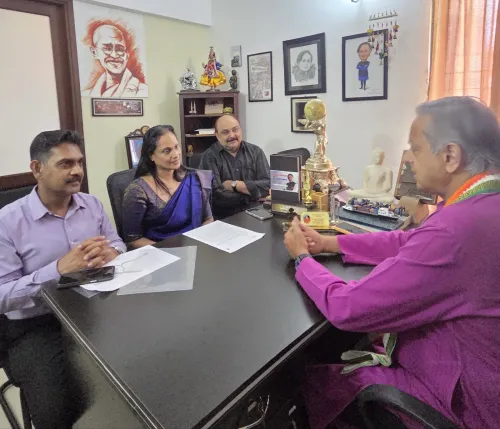
Congress MP Dr. Shashi Tharoor met Dr. Rajneesh, chief of the Regional Cancer Centre (RCC) in Thiruvananthapuram, on Sunday, June 7, 2026, describing the discussion as productive and flagging acute shortages of resources, equipment, and staff at the institution that serves as a critical cancer-care lifeline for the southern tip of the Indian peninsula.
Context
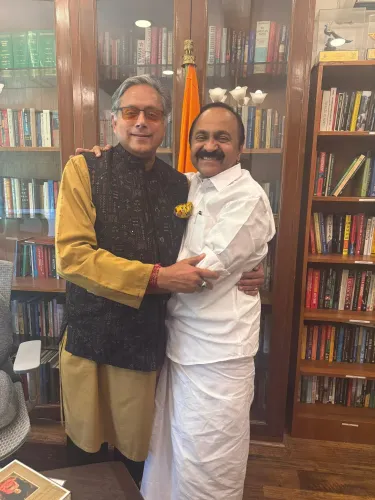
Tharoor shared the meeting on social media, writing: 'A good discussion with the chief of the Regional Cancer Centre on Thiruvananthapuram, Dr Rajneesh. RCC is a vital life-saving hospital for the entire southern tip of the peninsula, but they are desperately in need of more resources, equipment and staff. A priority going forward.'
The post, accompanied by an image from the meeting, signals that the Thiruvananthapuram MP intends to pursue the matter as a constituency priority — a role Tharoor has consistently played since winning the seat in 2009.
Policy Backdrop
The RCC Thiruvananthapuram was established in 1981 as a joint project of the Government of India and the Government of Kerala, mandated to provide tertiary oncology care, research, and training for southern India. Decades on, the institution remains the primary referral point for cancer patients not just from Kerala but also from neighbouring Tamil Nadu and parts of Karnataka.
At the national level, the National Programme for Prevention and Control of Cancer, Diabetes, Cardiovascular Diseases and Stroke (NPCDCS), launched in 2010, was designed to strengthen state-level cancer infrastructure and early-detection networks. The Ayushman Bharat Pradhan Mantri Jan Arogya Yojana (PMJAY), introduced in 2018, includes health benefit packages for cancer treatment that empanelled regional centres like RCC can access, though funding gaps for capital expenditure — equipment and staffing — persist outside these benefit-package frameworks.
Stakeholders and Impact
Rising cancer incidence across India has placed mounting pressure on regional oncology institutions. Kerala, despite boasting some of the country's strongest public health indicators, faces the same squeeze on specialised tertiary facilities that other states do: patient volumes are climbing while equipment ages and specialist vacancies go unfilled.
For patients travelling from the southern districts of Kerala and across the border from Tamil Nadu, RCC is often the only accessible centre for advanced cancer diagnosis and treatment. Any gap in staffing or equipment directly translates into delayed care and, in many cases, poorer outcomes for this population.
Medical and support staff at the centre also stand to benefit from any fresh resource allocation, as understaffing increases workload and burnout in an already high-pressure clinical environment.
What's Next
Tharoor's public framing of RCC's needs as 'a priority going forward' suggests he is likely to raise the issue in Parliament and in direct communication with the Union Health Ministry and the Kerala government. Watchers will look to the Kerala state budget's health allocations and any fresh central grants or expanded scheme empanelments under NPCDCS or PMJAY for signals that the funding gap is being addressed. With cancer cases projected to rise nationally, the pressure on institutions like RCC is unlikely to ease without deliberate, sustained investment from both New Delhi and Thiruvananthapuram.
Point of View
The optics of a neglected regional cancer centre are difficult for any government to ignore. Whether this translates into actual budget allocations will depend on how persistently Tharoor follows through in Parliament and in direct ministry-level engagement.
NationPress
21 Oct 2026
Frequently Asked Questions
What is the Regional Cancer Centre in Thiruvananthapuram?
The Regional Cancer Centre (RCC) Thiruvananthapuram is an autonomous tertiary oncology institution established in 1981 as a joint project of the Government of India and the Government of Kerala, providing cancer care, research, and training for patients across southern India.
Why did Shashi Tharoor meet the RCC chief?
Tharoor met RCC chief Dr. Rajneesh on June 7, 2026, to discuss the hospital's needs. He subsequently stated publicly that RCC is critically short of resources, equipment, and staff, and called it a constituency priority.
What funding schemes support cancer centres like RCC in India?
The National Programme for Prevention and Control of Cancer, Diabetes, Cardiovascular Diseases and Stroke (NPCDCS), launched in 2010, and Ayushman Bharat PMJAY, introduced in 2018, are the principal central schemes that support cancer infrastructure and treatment costs at regional centres.
Which states does RCC Thiruvananthapuram serve?
While RCC is based in Kerala, it functions as a referral centre for patients from across Kerala, Tamil Nadu, and parts of Karnataka, given its position at the southern tip of the Indian peninsula.
What can Shashi Tharoor do to get more resources for RCC?
As a sitting MP, Tharoor can raise the issue in Parliament, write to the Union Health Ministry for additional central grants, and engage the Kerala state government on budget allocations — all of which he has indicated he intends to pursue.