Tharoor Congratulates Jean Drèze on New Honour

Synopsis
Congress MP Dr. Shashi Tharoor publicly congratulated Belgian-born Indian development economist Jean Drèze on a recent honour on June 10, 2026. Drèze is widely credited with shaping MGNREGA and the National Food Security Act. The gesture reflects Congress's ongoing alignment with rights-based development scholarship.
Key Takeaways
Shashi Tharoor congratulated economist Jean Drèze on a new honour via X on June 10, 2026 .
Jean Drèze is a Belgian-born Indian development economist known for decades of work on poverty, hunger, and rural employment.
Drèze played a key role in designing MGNREGA (2005) , which guarantees 100 days of wage employment to rural households annually.
He was a leading voice in the Right to Food campaign, which shaped the National Food Security Act of 2013 .
Tharoor's acknowledgement may presage references to Drèze's research in the upcoming monsoon session of Parliament .
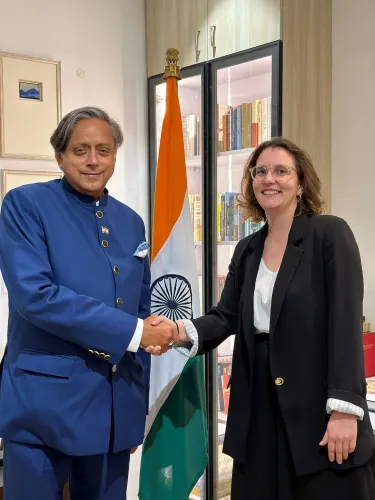
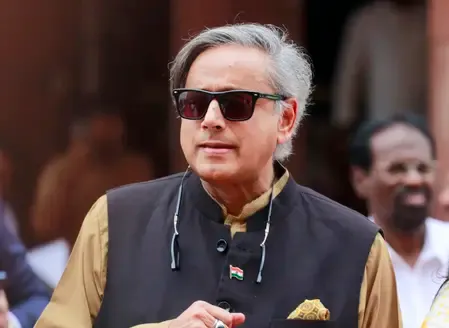
Congress MP Dr. Shashi Tharoor on Wednesday, June 10, 2026, publicly congratulated Belgian-born Indian development economist Jean Drèze on receiving a recent honour, extending best wishes for his continued work in development economics and social policy.
Context
In his post on X, Tharoor wrote: 'Warmest congratulations to Jean Drèze for this honour and best wishes for continued meaningful work!' The brief but warm message signals the Congress party's continued regard for economists and researchers whose scholarship has shaped India's landmark social-sector legislation.
Jean Drèze, a Belgian-born economist who took Indian citizenship, has spent decades working on poverty, hunger, nutrition, and rural employment in India. His on-ground research and advocacy have made him one of the most consequential voices in Indian development policy.
Policy Backdrop
Drèze's influence on Indian welfare architecture is well documented. He served on the National Advisory Council and played a central role in shaping the Mahatma Gandhi National Rural Employment Guarantee Act (MGNREGA), enacted in 2005, which guarantees 100 days of wage employment annually to rural households.
He was also a leading figure in the Right to Food campaign, whose recommendations were incorporated into the National Food Security Act of 2013. Both laws remain among the most significant social-protection measures in independent India's legislative history, directly affecting hundreds of millions of rural and marginalised citizens.
Stakeholders and Impact
Drèze's scholarship has consistently informed parliamentary debates and public discourse on employment, food security, and inequality metrics since the early 2000s. His field studies — often conducted in some of India's poorest districts — have provided the empirical backbone for civil-society and opposition critiques of welfare delivery gaps.
For rural households and development practitioners, recognition of Drèze's work underscores the continued relevance of rights-based approaches to social policy. Congress leaders have periodically used social media to highlight economists and activists whose research has been critical of central government welfare data and delivery outcomes.
What's Next
Tharoor's public acknowledgement could foreshadow references to Drèze's work during the upcoming monsoon session of Parliament, where social-sector allocations and MGNREGA funding levels are perennial flashpoints. Any subsequent Congress statements on the next Union Budget's rural welfare provisions may also draw on Drèze's latest research to press the government on spending priorities.
As India's debate over poverty measurement, food entitlements, and employment guarantees intensifies ahead of the budget cycle, the work of economists like Drèze is likely to remain at the centre of both academic and political conversations.
Point of View
But its political subtext is meaningful: by publicly celebrating Drèze, the Congress signals continued intellectual alignment with the rights-based welfare tradition that defined the UPA era's flagship programmes. Drèze's scholarship has long served as an empirical counterweight to government claims on poverty reduction and welfare delivery, making such endorsements politically loaded even when framed as personal tributes. With budget season approaching and MGNREGA funding under recurring scrutiny, the timing reinforces the opposition's positioning on rural distress. The gesture is consistent with a broader Congress pattern of using social media to legitimise academic voices that challenge the ruling establishment's social-sector narrative.
NationPress
26 Oct 2026
Frequently Asked Questions
Who is Jean Drèze and why is he famous in India?
Jean Drèze is a Belgian-born economist who became an Indian citizen and spent decades researching poverty, hunger, and rural employment in India. He is best known for his role in shaping MGNREGA (2005) and the National Food Security Act (2013), and for leading the Right to Food campaign.
What honour did Jean Drèze receive in 2026?
The exact nature of the honour has not been officially confirmed in public records available at the time of this report. Congress MP Dr. Shashi Tharoor congratulated Drèze on the honour via X on June 10, 2026, without specifying its details.
What is MGNREGA and what was Jean Drèze's role in it?
MGNREGA, enacted in 2005, guarantees 100 days of wage employment per year to rural households in India. Jean Drèze served on the National Advisory Council and was instrumental in designing the act's rights-based framework.
Why did Shashi Tharoor congratulate Jean Drèze?
Dr. Shashi Tharoor posted on X to offer 'warmest congratulations' to Jean Drèze for receiving a recent honour, reflecting the Congress party's regard for economists whose work has shaped India's social-protection legislation.
What is the Right to Food campaign in India?
The Right to Food campaign was a civil-society movement that advocated for legally enforceable food entitlements for India's poor. Jean Drèze was one of its leading figures, and the campaign's recommendations were incorporated into the National Food Security Act of 2013.