Tharoor joins Kerala ministers to launch Operation Toofan anti-drug drive
Synopsis
Congress MP Dr. Shashi Tharoor joined Kerala CM V.D. Satheesan, Home Minister Ramesh Chennithala and three state ministers at the launch of Operation Toofan, a comprehensive anti-narcotics campaign integrating enforcement with awareness and education. The drive targets youth, police and educational institutions, operating under the NDPS Act framework.
Key Takeaways
Operation Toofan launched in Kerala on 3 June 2026 as an integrated anti-narcotics campaign.
Shashi Tharoor attended alongside CM V.D.
Satheesan and Home Minister Ramesh Chennithala.
Shamsudheen were also present at the launch.
The drive combines policing and enforcement with awareness and education modules.
It operates within the framework of the Narcotic Drugs and Psychotropic Substances Act, 1985.
Key stakeholders include youth, the state police and educational institutions.
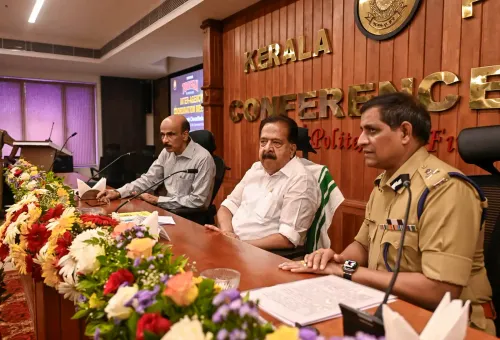
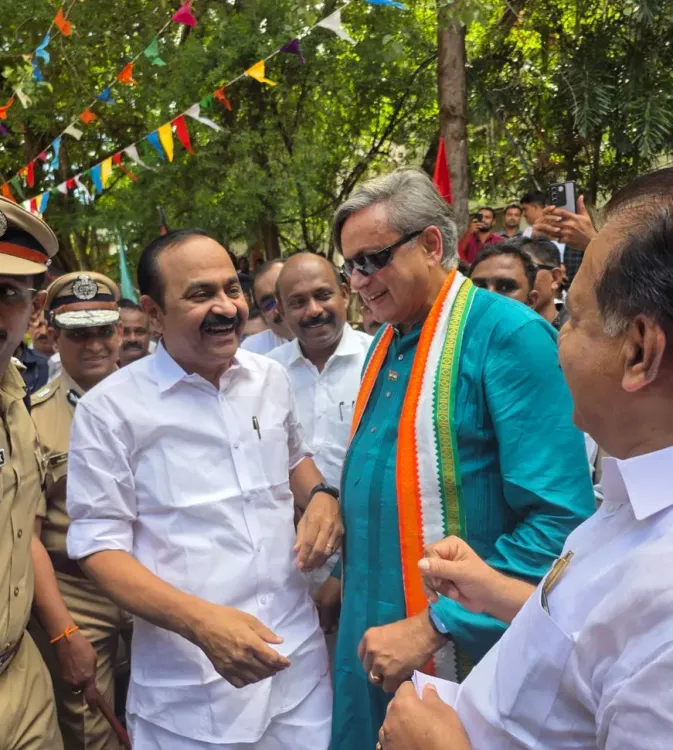
Congress MP Dr. Shashi Tharoor joined Kerala Chief Minister V.D. Satheesan, Home Minister Ramesh Chennithala and Ministers C.P. John, M. Liju and M. Shamsudheen at the formal launch of Operation Toofan, a state-wide anti-narcotics campaign unveiled on 3 June 2026. The Thiruvananthapuram MP described the initiative as a comprehensive drive that fuses policing and enforcement with awareness and education.
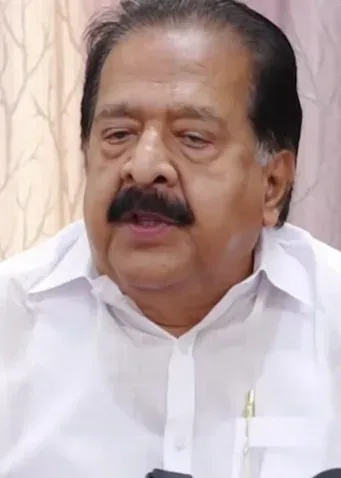
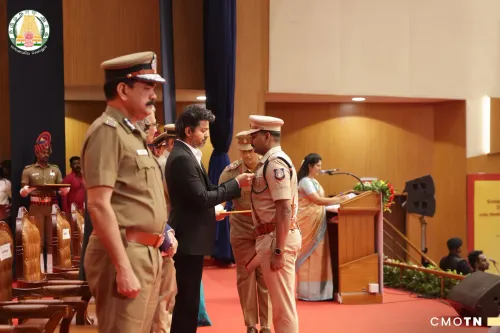
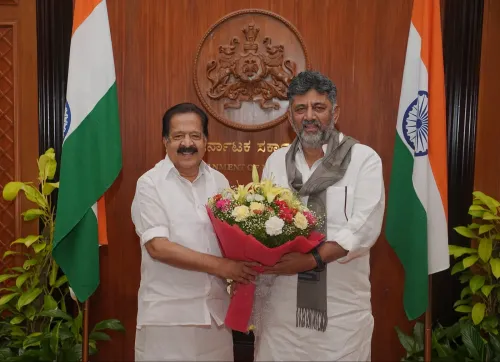
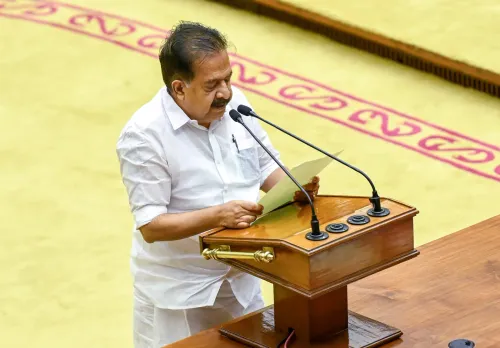
In his post, Tharoor said he had 'joined Kerala CM @vdsatheesan, Home Minister Ramesh @chennithala and Ministers @cpjohnkerala, @m_liju, and @MShamsudheen at the launch of #OperationToofan, a comprehensive anti-narcotics campaign that integrates policing and enforcement with awareness, education and' community outreach. The launch was accompanied by four images from the event venue.
Context
Operation Toofan, as framed by the state leadership, is positioned as an integrated drive rather than a purely enforcement-led crackdown. The presence of the Chief Minister, the Home Minister and multiple cabinet colleagues alongside a sitting Lok Sabha MP signals a coordinated political push that extends beyond the police department.
Tharoor, who represents Thiruvananthapuram in the Lok Sabha and is a former Union Minister and former UN Under-Secretary-General, has frequently used his platform to amplify Kerala-specific governance initiatives. His attendance lends central political visibility to a state-level campaign.
Policy backdrop
India's principal legal framework on narcotics is the Narcotic Drugs and Psychotropic Substances Act, 1985, which governs trafficking, production and consumption. State-level operations such as Operation Toofan typically function within this statute, while drawing on advisories from the Union Ministry of Home Affairs on drug demand reduction.
Kerala, with its long coastline and high literacy profile, has periodically rolled out integrated anti-narcotics drives that pair seizures with school and college outreach. The model has historically combined police-led interdiction with awareness modules in educational institutions.
Stakeholders and impact
The campaign's stated design touches three principal stakeholder groups: youth, the state police and educational institutions. Awareness and education components suggest a focus on demand-side intervention alongside supply-side action.
For students and parents, the practical implication is likely to be expanded school-level sensitisation programmes and counselling pathways. For the police, the operation typically translates into intensified surveillance of peddling networks and coastal trafficking routes.
For Tharoor and his Congress colleagues in the state cabinet, the joint appearance projects intra-party cohesion on a politically salient public-safety theme. The optics of a Lok Sabha MP standing with the Chief Minister and Home Minister at the launch underscore the campaign's billing as a whole-of-government effort.
What's next
Attention will now turn to roll-out metrics for Operation Toofan, including seizure volumes, arrests, and the geographic spread of school outreach. Such data is typically reviewed in the Kerala Legislative Assembly and during periodic central-state coordination meetings on narcotics control.
The credibility of the 'integrated' framing will hinge on whether the awareness and education limbs receive sustained funding and curriculum integration, rather than tapering after the launch phase. If Operation Toofan establishes a measurable template, it could feed into the broader national conversation on demand-reduction strategies under the NDPS framework — a conversation Tharoor, given his parliamentary platform, is well placed to carry to the Centre.
Point of View
A structure consistent with central advisories under the NDPS framework. The joint appearance of a sitting Lok Sabha MP with the Kerala Chief Minister and Home Minister signals that the Congress sees drug policy as a high-salience public-safety issue, not a niche police matter. The test will be measurable follow-through — seizure data, prosecutions, and durable curriculum integration in schools. Without those metrics, integrated campaigns risk fading into branding exercises.
NationPress
21 Oct 2026
Frequently Asked Questions
What is Operation Toofan in Kerala?
Operation Toofan is a comprehensive anti-narcotics campaign launched in Kerala that integrates policing and enforcement with awareness and education programmes. It was unveiled on 3 June 2026 with the participation of the Chief Minister, Home Minister and senior cabinet members.
Who launched Operation Toofan?
The campaign was launched by Kerala Chief Minister V.D. Satheesan and Home Minister Ramesh Chennithala, joined by Ministers C.P. John, M. Liju and M. Shamsudheen. Congress MP Dr. Shashi Tharoor also attended the launch event.
Which law governs anti-narcotics action in India?
The Narcotic Drugs and Psychotropic Substances Act, 1985 is India's principal legal framework. It regulates trafficking, production and consumption of narcotic drugs and psychotropic substances and underpins state-level operations such as Operation Toofan.
Why was Shashi Tharoor present at the launch?
Dr. Shashi Tharoor is the Congress Lok Sabha MP from Thiruvananthapuram in Kerala. His attendance reflects coordination between the state cabinet and Kerala's Congress parliamentarians on a public-safety campaign in his home state.
What does Operation Toofan focus on besides enforcement?
Beyond policing, Operation Toofan focuses on awareness and education, targeting youth and educational institutions. The aim is to combine supply-side action with demand-side interventions such as school outreach and sensitisation.