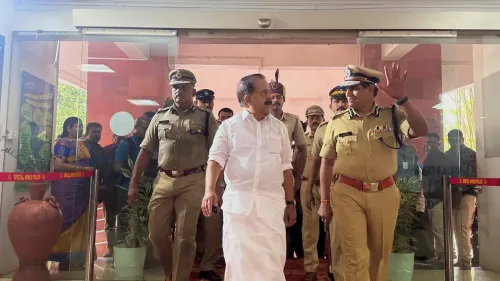
Tharoor Concludes Analysis of Kerala's Operation Toofan Anti-Drug Drive
Synopsis
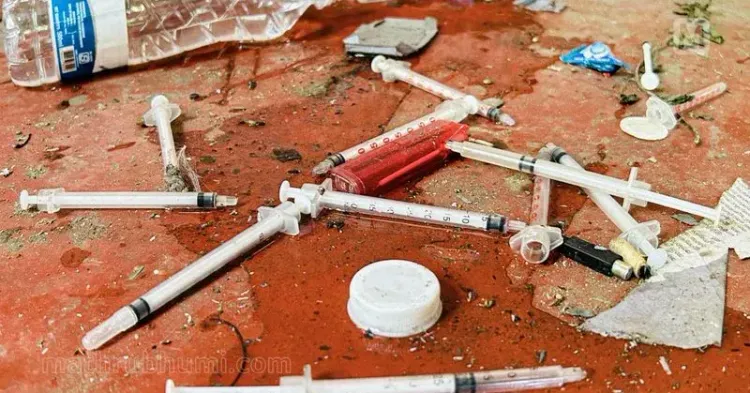
Congress MP Dr. Shashi Tharoor has published the concluding part of his analytical column series on Operation Toofan, the Kerala government's anti-narcotics drive, framing the campaign as critical to protecting the state's youth and future from the drug menace.
Key Takeaways
Shashi Tharoor shared the final instalment of his multi-part column analysing Operation Toofan on June 15, 2026 .
Operation Toofan is the Kerala government's targeted drive against drug trafficking and narco-networks in the state.
Kerala 's coastal geography makes it vulnerable to maritime narcotics routes, prompting periodic special enforcement operations.
The NDPS Act, 1985 provides the national legal framework within which Kerala 's state-level anti-drug strategies operate.
Tharoor frames the drug menace as a generational threat, calling the operation a 'war on drugs and narco-trafficking.' Official Kerala police and excise data on seizures and rehabilitation admissions will be key metrics for evaluating the operation's impact.
Congress MP Dr. Shashi Tharoor on Monday, June 15, 2026, published the concluding part of his column series analysing Operation Toofan, the Kerala government's targeted campaign against drug trafficking and narco-networks, sharing the piece on X and describing it as the state's 'war on drugs and narco-trafficking.'
Context
In his post, Dr. Tharoor characterised Operation Toofan as the Kerala Government's concerted effort to combat the drug menace threatening the state's future. The column, published in a Kerala-based media group's English platform, is framed as a multi-part analytical series, with this instalment being the final chapter. Tharoor, who represents Thiruvananthapuram in the Lok Sabha, has consistently engaged with Kerala governance issues through public commentary and parliamentary interventions.
Policy Backdrop
India's primary legal instrument for drug control, the Narcotic Drugs and Psychotropic Substances (NDPS) Act, 1985, provides the overarching framework within which state governments design their enforcement and rehabilitation strategies. Kerala has, over successive administrations, rolled out district-level anti-drug action plans and awareness drives, particularly through the 2010s, as reported seizure volumes and addiction cases rose across the state. The current Left Democratic Front (LDF) government's Operation Toofan sits within this longer continuum of state-level responses to a persistent public health and law-enforcement challenge.
Coastal geography has compounded Kerala's vulnerability. Maritime routes along the state's extensive coastline have been exploited by narcotics networks, drawing in state police, excise forces, and central agencies into periodic joint operations. Central schemes such as Nasha Mukt Bharat have sought to complement these state-level drives, though centre-state coordination under the NDPS framework remains an ongoing policy conversation.
Stakeholders and Impact
Kerala's youth population is the most directly affected constituency in this debate, with substance abuse cutting across urban and rural districts. State police and excise department personnel bear the operational burden of enforcement, while families dealing with addiction navigate a parallel demand for expanded rehabilitation infrastructure. Dr. Tharoor's decision to publish a detailed, multi-part column on the operation signals that elected representatives view public analytical engagement — beyond parliamentary questions — as a tool for holding state administrations accountable and shaping policy discourse.
Opposition MPs contributing substantive commentary on ruling-coalition initiatives is a recognised feature of Kerala's political culture, where policy debates tend to be conducted at a relatively high level of detail. Tharoor's series, framing the operation in terms of 'protecting Kerala's future,' elevates the drug menace as a generational concern rather than a routine law-enforcement matter.
What's Next
Attention will now turn to official data releases from Kerala police and excise departments on seizure volumes, arrests, and rehabilitation admissions in the quarters ahead, which will provide an empirical basis for assessing Operation Toofan's outcomes. Parliamentary questions on centre-state coordination under the NDPS framework, and possible references in the Kerala state assembly, are also likely follow-on moments. Dr. Tharoor's column series may itself become a reference point in those legislative discussions, given his dual standing as a Thiruvananthapuram MP and a commentator with a wide national and international readership.
Point of View
He raises the political salience of the drug menace beyond a routine law-and-order headline. The column series also positions an opposition MP as a substantive voice on state governance, a role that can carry weight in the run-up to assembly elections. How the LDF government responds to or engages with this commentary will be a signal of how seriously it treats cross-party public accountability.
NationPress
22 Sept 2026
Frequently Asked Questions
What is Operation Toofan in Kerala?
Operation Toofan is the Kerala state government's targeted anti-narcotics campaign aimed at dismantling drug trafficking networks and addressing substance abuse, particularly exploiting the state's coastal routes.
Why is Shashi Tharoor writing about Operation Toofan?
As the Congress MP from Thiruvananthapuram, Dr. Tharoor regularly publishes commentary on Kerala governance and social issues; his column series analyses the operation's scope and significance for the state's youth.
What law governs drug enforcement in Kerala?
The Narcotic Drugs and Psychotropic Substances (NDPS) Act, 1985 is the central legislation providing the legal framework for drug control across India, including Kerala's enforcement operations.
Why is Kerala particularly vulnerable to drug trafficking?
Kerala's extensive coastline has historically been exploited by narcotics networks using maritime routes, making the state a recurring focus of special enforcement operations by police and excise forces.
What will indicate whether Operation Toofan has been effective?
Official data from Kerala police and excise departments on drug seizure volumes, arrests made, and rehabilitation admissions over the coming quarters will be the primary indicators of the operation's outcomes.