Tharoor Shares Hindi Poem on Children's Courage
Synopsis
Congress MP Dr. Shashi Tharoor posted a Hindi poem on 24 July 2026 honouring children's fearlessness and spirit, urging adults to learn courage from the young — consistent with his long-standing practice of literary engagement on social media.
Key Takeaways
Shashi Tharoor , Congress MP from Thiruvananthapuram , shared a Hindi poem on X on 24 July 2026 .
The poem celebrates children's courage and resilience , urging adults to learn from their fearless spirit.
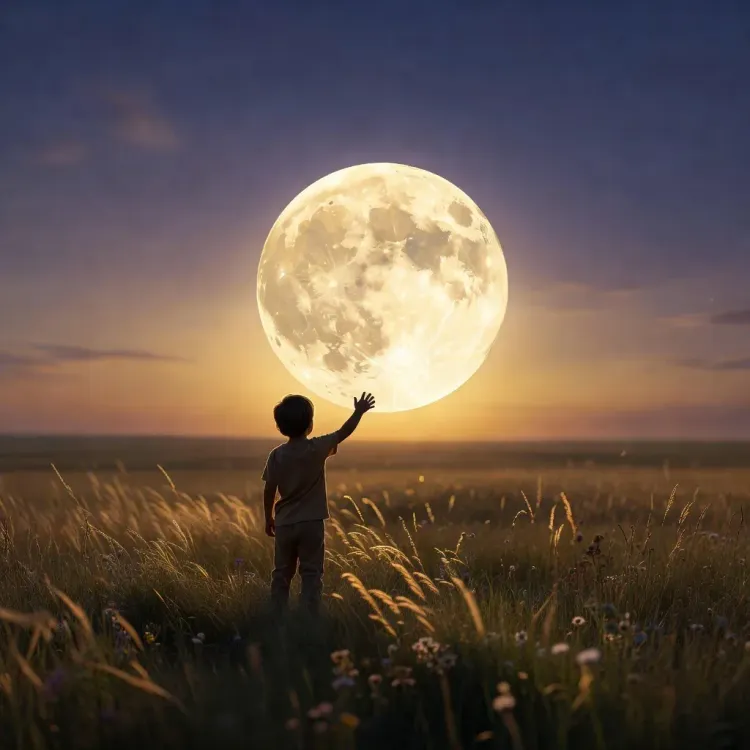
Central imagery describes children 'reaching for the moon' even in the darkest moments, without hesitation.
The post fits Tharoor's established pattern of sharing Hindi and literary content to engage vernacular audiences on social media.
As a published author and former UN Under-Secretary-General , Tharoor regularly blends cultural expression with political communication.
The poem's authorship has not been confirmed in the post itself.
Congress MP Dr. Shashi Tharoor shared a Hindi poem on X (formerly Twitter) on Friday, 24 July 2026, celebrating the spirit and resilience of children through evocative verse.
Context
The poem, posted in Hindi, opens with the lines: 'सीखने होंगे हुनर बच्चों से इनसे, ये जज़्बा भी लेना होगा' — loosely translated as 'We must learn skills from children, and imbibe their spirit too.' The verse goes on to urge that if we wish to steer our boat across, we must row with great courage and resolve.
The closing lines are particularly striking: the poem describes how, when darkness seemed overwhelming, these children did not falter even slightly — and instead reached out a finger to the moon and brought it down to earth. The imagery frames children not as subjects of care but as sources of wisdom and daring for adults.
Policy Backdrop
Dr. Tharoor has a well-established practice of sharing poetry — both original and attributed — on social media to engage followers on themes of inspiration, resilience, and culture. This places the post within a broader pattern of Indian politicians using literary and cultural expression to build a public persona beyond direct policy communication.
As a published author of over two dozen books and a former UN Under-Secretary-General, Tharoor's literary engagements are widely regarded as an extension of his intellectual identity rather than purely political messaging. Hindi poetry posts, in particular, allow him to connect with a wider, vernacular audience across India.
Stakeholders and Impact
The poem's central subject — children — is framed as a model of fearlessness and aspiration. By directing the verse at a general audience, Dr. Tharoor invites readers to reflect on what adults can learn from the unselfconscious courage of the young.
Such cultural posts tend to draw broad engagement across political lines, resonating with parents, educators, and youth advocates. They also reinforce Tharoor's positioning as a public intellectual who uses the register of poetry to communicate values that transcend partisan boundaries.
What's Next
It remains to be seen whether Dr. Tharoor will clarify the poem's authorship or link the verse to any forthcoming literary project or youth-focused initiative. His social media presence suggests that such cultural posts are often standalone expressions, though they occasionally precede or accompany larger engagements — book launches, lectures, or parliamentary speeches on education and youth policy.
As Indian public discourse increasingly blends political communication with cultural expression, Tharoor's consistent use of poetry on platforms like X signals a durable strategy of soft-power outreach that may influence how other legislators engage with vernacular audiences.
Point of View
The post taps into a deep vein of Indian literary tradition that prizes childlike wonder as a moral ideal. This kind of cultural outreach broadens his appeal beyond the English-speaking urban base typically associated with his profile. It also signals a wider trend among Indian politicians who are increasingly turning to vernacular poetry and storytelling to build emotional resonance with voters.
NationPress
22 Oct 2026
Frequently Asked Questions
What poem did Shashi Tharoor post on X on 24 July 2026?
Dr. Shashi Tharoor posted a Hindi poem celebrating children's courage and resilience, with imagery of children fearlessly reaching for the moon even in darkness. The authorship of the poem was not specified in the post.
Why does Shashi Tharoor post Hindi poetry on social media?
Dr. Tharoor regularly shares Hindi and other literary content on social media as part of his identity as a public intellectual and author, using cultural expression to connect with a broader, vernacular Indian audience beyond direct policy messaging.
What is the meaning of Tharoor's Hindi poem about children?
The poem urges adults to learn skills and spirit from children, arguing that true courage — the kind that rows a boat across with boldness and reaches for the moon without fear — is best exemplified by the young.
Is Shashi Tharoor known for sharing poetry online?
Yes. Dr. Tharoor has a well-documented history of sharing poetry — both original and attributed — on X, making it a consistent feature of his social media presence alongside political and policy commentary.
What is Shashi Tharoor's background as an author?
Dr. Tharoor is the author of over two dozen books spanning fiction, history, political commentary, and biography. He is also a former UN Under-Secretary-General and Congress MP from Thiruvananthapuram, and is widely regarded as one of India's most prominent public intellectuals.