Tharoor joins South Asian MPs for literature and politics talk
Synopsis
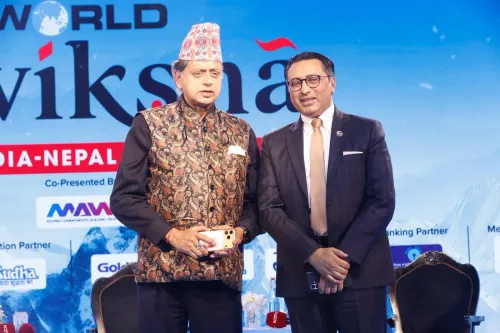
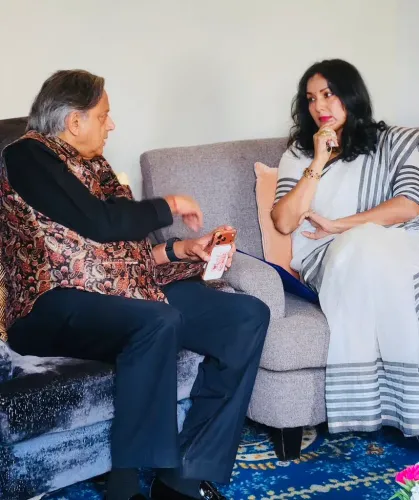
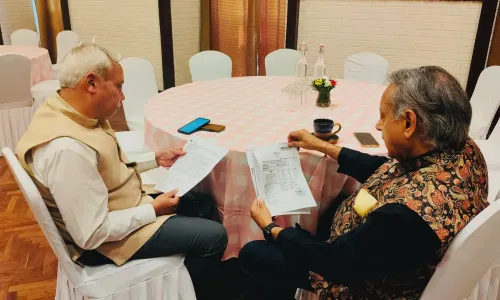
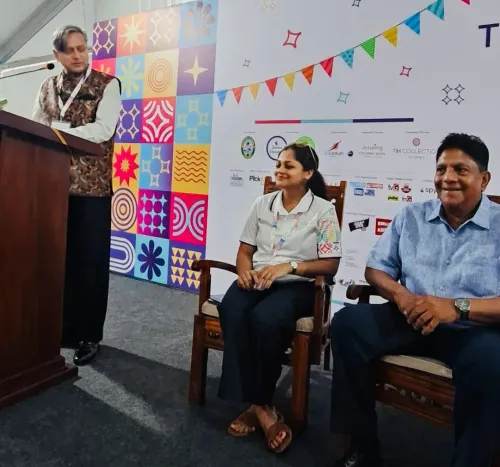
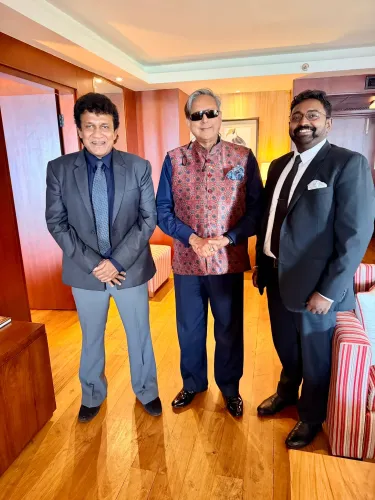
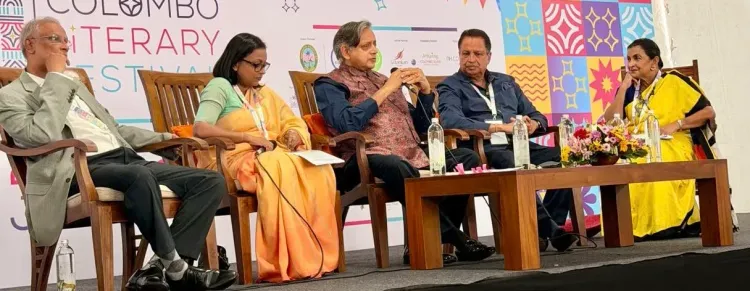
Congress MP Dr. Shashi Tharoor joined Nepalese MP Dr. Binod Choudhury, Sri Lankan Deputy Minister Dr. Kaushalya Ariyarathne, and Tamil politician M.A. Sumanthiran for a cross-border conversation on South Asian literature and politics, with Choudhury gifting Tharoor his latest book on Nepal.
Key Takeaways
Shashi Tharoor participated in a discussion on literature and politics in South Asia with legislators from Nepal and Sri Lanka .
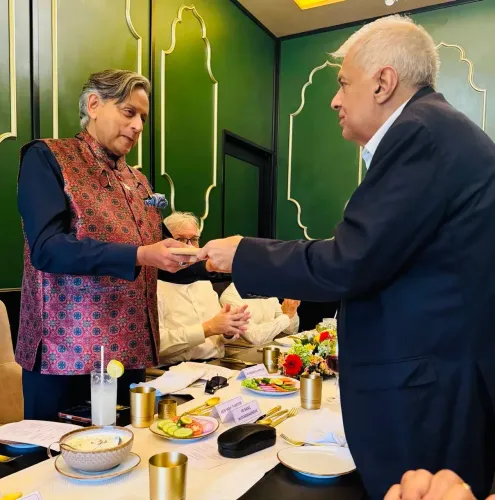
Binod Choudhury presented Tharoor with a copy of his recent book on Nepal and regional themes.
Sri Lankan Deputy Minister Dr.
Kaushalya Ariyarathne and Tamil politician and constitutional expert M.A.
Sumanthiran were also part of the exchange.
The meeting reflects a broader pattern of informal cross-border intellectual dialogue among South Asian parliamentarians, running alongside formal mechanisms like SAARC and BIMSTEC .
No formal outcomes or joint initiatives were announced from the gathering.
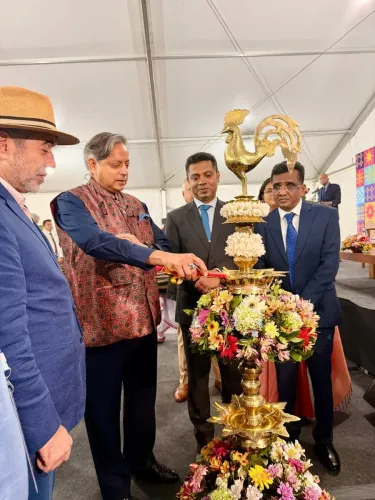
Congress MP Dr. Shashi Tharoor on Sunday, 27 July 2026 shared that he took part in a cross-border discussion on literature and politics in South Asia, meeting Nepalese MP Dr. Binod Choudhury, Sri Lankan Deputy Minister Dr. Kaushalya Ariyarathne, and Sri Lankan Tamil politician and public intellectual M.A. Sumanthiran. Tharoor noted that Choudhury presented him with a copy of his recent book on Nepal and the wider region.
Context
Tharoor described the gathering as a 'lively discussion on literature and politics in South Asia,' bringing together elected representatives and public intellectuals from three neighbouring countries. Dr. Binod Choudhury, a Nepalese Member of Parliament and author, handed Tharoor a copy of his latest book covering Nepal and themes beyond its borders. The informal setting underscores the personal networks that often run parallel to formal diplomatic channels in the region.
Policy Backdrop
South Asian politicians and intellectuals have long sustained informal cross-border conversations on shared history, literature, and governance challenges, even as formal multilateral mechanisms such as SAARC and BIMSTEC have faced periodic institutional strain. M.A. Sumanthiran, an MP of the Ilankai Tamil Arasu Kachchi (ITAK) and a constitutional expert, has been a prominent voice on minority rights and governance in Sri Lanka. Dr. Kaushalya Ariyarathne serves as a Deputy Minister in the Sri Lankan government and has been engaged in regional political exchanges. These kinds of people-to-people contacts among legislators have historically helped keep cultural and intellectual ties alive during periods of fluctuating bilateral relations between India, Nepal, and Sri Lanka.
Stakeholders and Impact
For South Asian parliamentarians and the broader literary community, exchanges of this nature carry symbolic weight: they signal that elected representatives see cultural dialogue as a complement to political engagement. Tharoor himself is a prolific author on Indian history and global affairs, making him a natural interlocutor in conversations that straddle politics and literature. Sumanthiran's presence adds a dimension of minority-rights discourse to the dialogue, reflecting the complex political tapestry of the subcontinent.
Readers and scholars of South Asian politics will note that such informal conclaves can occasionally seed more structured initiatives — joint publications, literary festivals with a regional character, or academic exchanges — though no formal outcomes have been announced from this meeting.
What's Next
Observers will watch whether this discussion translates into any joint literary event or collaborative publication among the participants. Upcoming SAARC or BIMSTEC cultural forums could provide an institutional platform to formalise the kind of intellectual exchange Tharoor described. For now, the meeting stands as a reminder that South Asia's political class continues to find common ground in the region's shared literary and intellectual heritage.
Point of View
Such person-to-person intellectual contacts serve as a low-key but consistent thread of regional connectivity. Whether they seed anything more structured will be the real test of their diplomatic value.
NationPress
24 Oct 2026
Frequently Asked Questions
Who did Shashi Tharoor meet for a South Asia literature and politics discussion?
Tharoor met Nepalese MP Dr. Binod Choudhury, Sri Lankan Deputy Minister Dr. Kaushalya Ariyarathne, and Sri Lankan Tamil politician M.A. Sumanthiran for the discussion.
What book did Dr. Binod Choudhury give Shashi Tharoor?
Dr. Binod Choudhury presented Tharoor with a copy of his recent book on Nepal and beyond, though the specific title has not been publicly confirmed.
Who is M.A. Sumanthiran?
M.A. Sumanthiran is a Sri Lankan Tamil politician and MP of the Ilankai Tamil Arasu Kachchi (ITAK), widely regarded as a constitutional expert and public intellectual on minority rights and governance in Sri Lanka.
What is the significance of South Asian MPs meeting for literary discussions?
Such informal exchanges among South Asian legislators help sustain cultural and intellectual ties across borders, complementing formal mechanisms like SAARC and BIMSTEC that have faced periodic strain.
Is Shashi Tharoor himself an author?
Yes, Tharoor is a prolific author known for books on Indian history, global affairs, and political commentary, making him a natural participant in conversations bridging literature and politics.