Tharoor Meets Sri Lankan Tamil Leader, Backs Bilateral Ties
Synopsis
Congress MP Dr. Shashi Tharoor met Sri Lankan Tamil leader Barath Arulsamy on 26 July 2026 and expressed hope that the next generation of Sri Lankan Tamil leaders would strengthen ties between Sri Lanka and India, reflecting New Delhi's long-standing policy of supporting Tamil political participation and bilateral reconciliation.
Key Takeaways
Shashi Tharoor , Congress MP from Thiruvananthapuram , met Sri Lankan Tamil leader Barath Arulsamy and publicly welcomed the exchange on 26 July 2026 .
Tharoor expressed hope that the 'next generation of SriLankan Tamil leaders' would contribute to both Sri Lanka and good relations with India .
India's engagement on Sri Lankan Tamil rights is anchored in the 1987 Indo-Sri Lanka Accord and the 13th Amendment , which mandates devolution of power to Tamil-majority provinces.
Successive Indian governments since 2009 have urged Colombo to implement power-sharing measures and protect Tamil political rights.
The exchange reflects a broader pattern of Indian political figures engaging emerging Sri Lankan Tamil leaders alongside official diplomatic channels.
Focus will now shift to Sri Lanka's provincial council elections and progress on implementing devolution commitments.
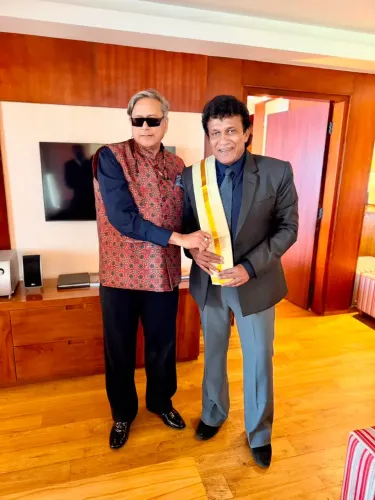
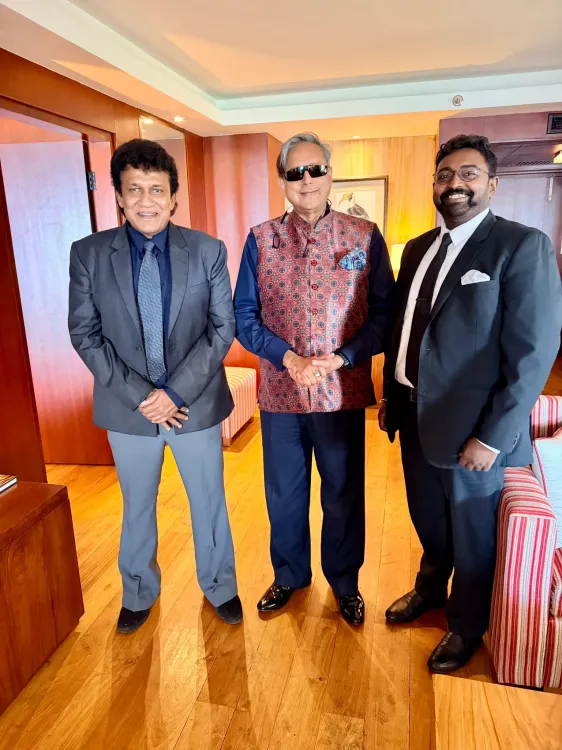
Congress MP Dr. Shashi Tharoor on Sunday, 26 July 2026, responded warmly to a meeting with Sri Lankan Tamil leader Barath Arulsamy, expressing hope that the next generation of Tamil leaders in Sri Lanka would strengthen ties between the two countries.
Context
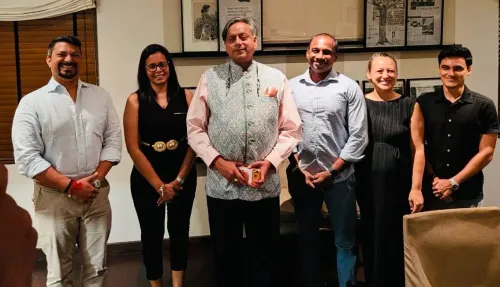
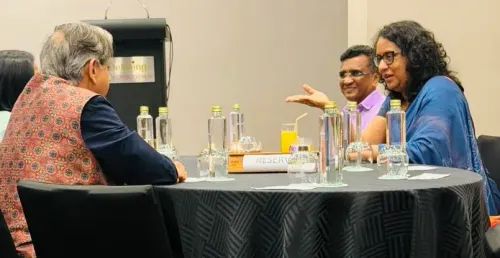
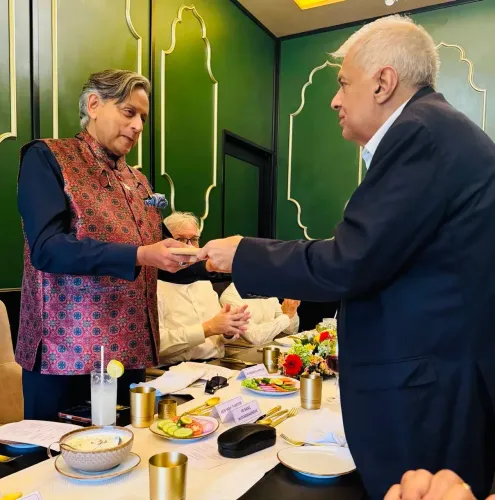
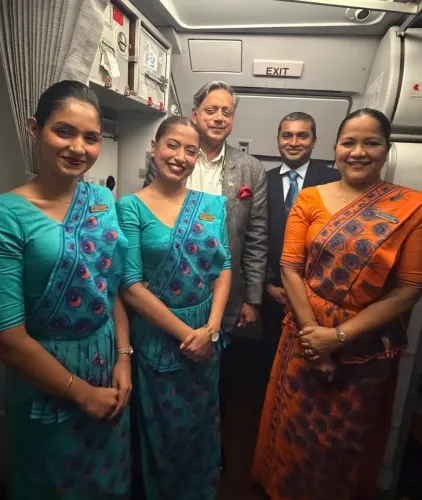
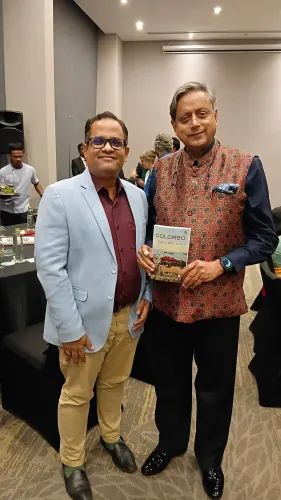
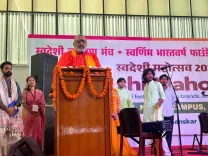
Tharoor, the Lok Sabha MP from Thiruvananthapuram and a former UN Under-Secretary-General, replied to @BarathArulsamy on X, writing: 'May the next generation of SriLankan Tamil leaders contribute to both your country and good relations with mine!' The post, accompanied by two images, signals an informal but politically significant exchange between an Indian parliamentarian and an emerging Sri Lankan Tamil figure.
Tharoor has a long record of engaging with issues of Tamil political rights in Sri Lanka and has consistently advocated for inclusive governance and reconciliation on the island. Such exchanges, while informal, carry weight given his stature in Indian foreign-policy discourse.
Policy Backdrop
India's engagement with Sri Lankan Tamil political participation is rooted in the 1987 Indo-Sri Lanka Accord, which committed Colombo to devolving power to Tamil-majority provinces. The accord's implementation — particularly the 13th Amendment to the Sri Lankan Constitution — has remained an active point of diplomatic emphasis by successive Indian governments.
After the end of Sri Lanka's civil war in 2009, New Delhi has consistently urged Colombo to ensure political rights and power-sharing arrangements for the Tamil community. India balances this advocacy with broader strategic and economic interests in its southern neighbour, making every high-profile engagement by Indian politicians on the Tamil question diplomatically consequential.
Stakeholders and Impact
The exchange is significant for multiple constituencies: Sri Lankan Tamils seeking political representation and reconciliation, the Indian Tamil community — particularly in Tamil Nadu — which watches Colombo's treatment of Tamils closely, and policymakers in both capitals managing a relationship that spans trade, connectivity, and security.
Tharoor's framing — that young Sri Lankan Tamil leaders should contribute to 'good relations' with India — reflects a dual expectation: that Tamil political participation within Sri Lanka strengthens internal reconciliation, and that a politically empowered Tamil community can serve as a bridge for stable India-Sri Lanka ties. This mirrors the broader pattern of Indian political figures signalling support for inclusive governance in Sri Lanka alongside official diplomatic channels.
What's Next
Attention will now turn to whether this informal engagement translates into any parliamentary or diplomatic follow-up, particularly around Sri Lanka's provincial council elections and the pace of implementation of power-sharing measures under the 13th Amendment. Tharoor's public statements on India-Sri Lanka relations have historically preceded or accompanied parliamentary discussions on the subject.
With New Delhi maintaining consistent pressure on Colombo for devolution, the emergence of a new generation of Sri Lankan Tamil political leaders — and their willingness to engage constructively with Indian counterparts — could become an important variable in the bilateral relationship in the years ahead.
Point of View
He reinforces the Indian political establishment's long-held position that Tamil empowerment in Sri Lanka is both a moral imperative and a strategic interest. The framing — linking Tamil contribution to Sri Lanka with good relations with India — is carefully bilateral, avoiding the optics of interference while signalling sustained engagement. It also keeps domestic pressure alive on New Delhi to ensure that its diplomacy with Colombo delivers tangible outcomes on devolution and political rights.
NationPress
25 Oct 2026
Frequently Asked Questions
Why did Shashi Tharoor meet a Sri Lankan Tamil leader?
Tharoor met Sri Lankan Tamil leader Barath Arulsamy and publicly welcomed the exchange on 26 July 2026, expressing hope that the next generation of Sri Lankan Tamil leaders would strengthen ties between Sri Lanka and India. The meeting reflects his long-standing engagement with Tamil political rights in Sri Lanka.
What is India's policy on Sri Lankan Tamil rights?
India has consistently urged Sri Lanka to implement the 13th Amendment to its Constitution, which mandates devolution of power to Tamil-majority provinces. This position has been maintained by successive Indian governments since the end of Sri Lanka's civil war in 2009.
What is the 13th Amendment to the Sri Lankan Constitution?
The 13th Amendment, introduced following the 1987 Indo-Sri Lanka Accord, requires Sri Lanka to devolve powers to provincial councils, including Tamil-majority provinces in the north and east. Its full implementation has been a consistent demand from New Delhi.
What is the 1987 Indo-Sri Lanka Accord?
The 1987 Indo-Sri Lanka Accord was a bilateral agreement signed by India and Sri Lanka committing Colombo to devolving power to Tamil-majority provinces. It remains the foundational reference point for India's engagement on the Sri Lankan Tamil question.
What does Tharoor's statement mean for India-Sri Lanka relations?
Tharoor's statement signals continued Indian political interest in Tamil empowerment in Sri Lanka as a pillar of stable bilateral ties. It reflects a broader pattern of Indian parliamentarians engaging Sri Lankan Tamil leaders to reinforce New Delhi's position on reconciliation and devolution.