Tharoor Discusses India-Sri Lanka Connectivity With PE Investor
Synopsis
Congress MP Dr. Shashi Tharoor held a late-night dinner with private equity investor Nirmal (Niro) Cooke, discussing India-Sri Lanka connectivity as a lever for regional economic growth, underscoring the growing role of private capital in shaping bilateral ties.
Key Takeaways
Shashi Tharoor , Congress MP from Thiruvananthapuram , met private equity investor Nirmal (Niro) Cooke for a late-night dinner discussion.
The discussion focused partly on India-Sri Lanka connectivity as a key driver of economic growth.
India and Sri Lanka have maintained a bilateral free trade framework since the India-Sri Lanka Free Trade Agreement of 1998 .
Private sector investors are increasingly supplementing official diplomacy on regional connectivity initiatives in the Indian Ocean region .
Sri Lanka 's post-crisis economic recovery has elevated connectivity infrastructure as a strategic priority in bilateral ties with India.
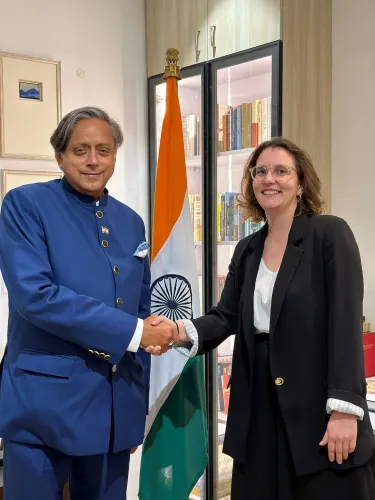
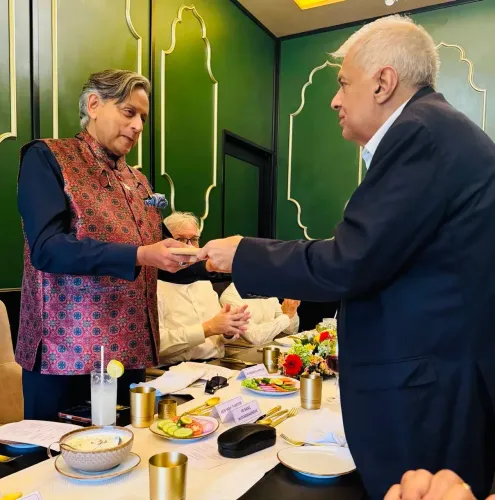
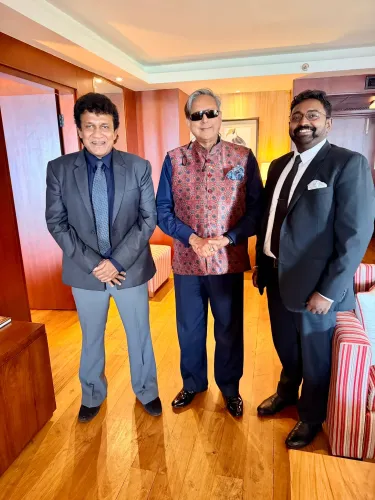
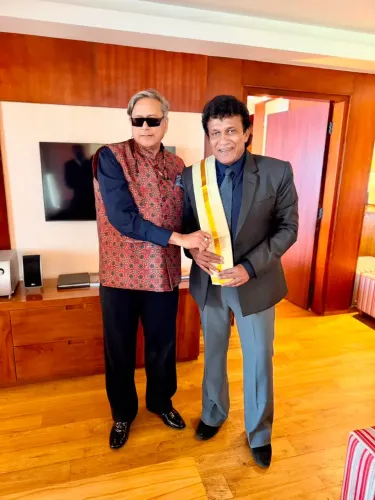
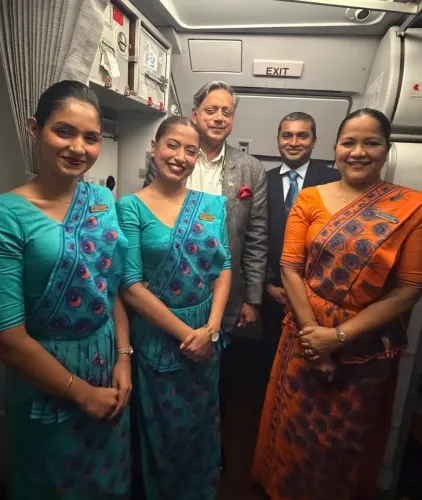
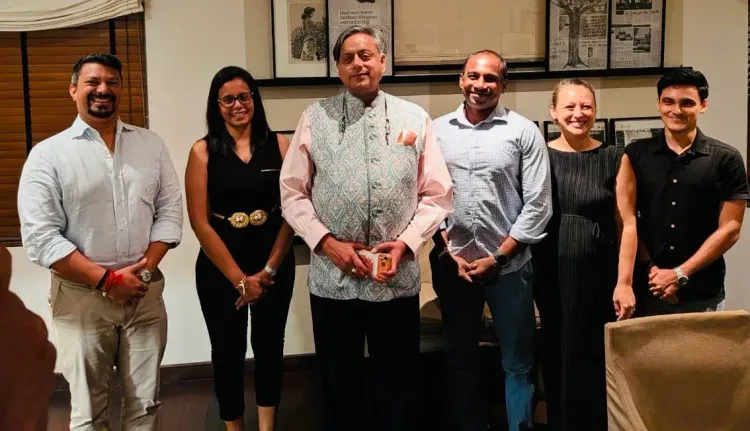
Congress MP Dr. Shashi Tharoor shared details of two late-night engagements on Monday, July 27, 2026, one of which centred on a substantive discussion with private equity investor Nirmal (Niro) Cooke and his team, focusing on India-Sri Lanka connectivity as a driver of regional economic growth.
Context
Tharoor, the Congress MP from Thiruvananthapuram and a former UN Under-Secretary-General, described the first dinner engagement as 'a substantial discussion' with Cooke that 'focused partly on India-Sri Lanka connectivity as a key to growth.' The second late-evening engagement was referenced in the post but its details were not fully disclosed. Tharoor's constituency of Thiruvananthapuram sits at the southern tip of India, making Sri Lanka a matter of both geographic and political proximity for him.
Policy Backdrop
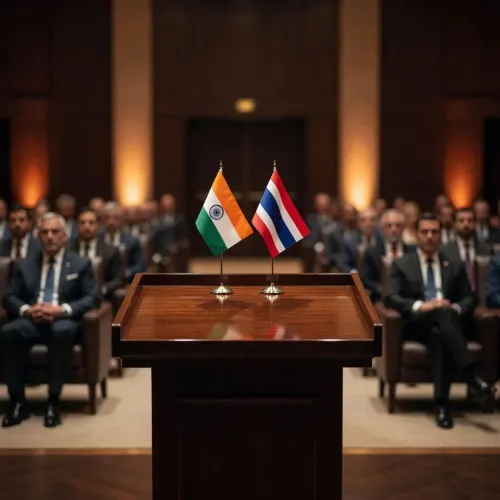
India and Sri Lanka share a long arc of economic engagement, anchored by the India-Sri Lanka Free Trade Agreement signed in 1998, which sought to deepen bilateral trade and lay the groundwork for broader regional integration. In subsequent years, discussions have expanded to include port linkages, ferry services, and energy grid connectivity as part of India's broader neighbourhood-first policy in the Indian Ocean region. Private sector investors and equity firms have increasingly played a role in supplementing official diplomacy by identifying commercially viable connectivity corridors.
Sri Lanka, which navigated a severe economic crisis in recent years, has looked to regional partners — with India prominent among them — for both financial support and long-term structural integration. Connectivity infrastructure, ranging from maritime routes to power interconnections, is seen as central to Colombo's post-crisis recovery strategy.
Stakeholders and Impact
Private equity investors like Cooke represent a growing constituency that views India-Sri Lanka connectivity not merely as a diplomatic objective but as a commercially attractive investment theme. Improved physical and economic linkages between the two countries could benefit regional traders, port operators, logistics firms, and energy companies on both sides of the Palk Strait. For Thiruvananthapuram and Kerala more broadly, stronger bilateral ties with Sri Lanka carry direct implications for trade, fisheries, and people-to-people movement.
Tharoor's role as an MP with deep expertise in international relations positions him as a credible interlocutor between private capital and the diplomatic ecosystem. Such informal engagements often serve as early-stage sounding boards before ideas enter formal bilateral channels.
What's Next
The progress of announced India-Sri Lanka connectivity projects — including maritime and energy linkages — will be the key metric to watch in bilateral diplomatic channels in the coming months. Whether discussions of the kind Tharoor described translate into formal investment proposals or policy recommendations remains to be seen. As India continues to position itself as the anchor partner in Sri Lanka's economic recovery, the involvement of private equity in shaping the connectivity agenda is likely to grow.
Point of View
Track-1.5 diplomacy increasingly shapes the agenda ahead of formal bilateral negotiations. With Sri Lanka still consolidating its post-crisis recovery, the entry of private capital into the connectivity conversation signals that commercial logic is beginning to align with India's neighbourhood-first strategic posture. For Tharoor, whose Thiruvananthapuram constituency sits closest to Sri Lanka among major Indian cities, such engagements carry both political and policy weight. The episode underscores how Indian legislators with international profiles serve as bridges between investor communities and the diplomatic establishment.
NationPress
25 Oct 2026
Frequently Asked Questions
What did Shashi Tharoor discuss with Nirmal Cooke?
Dr. Shashi Tharoor held a late-night dinner with private equity investor Nirmal (Niro) Cooke focused partly on India-Sri Lanka connectivity as a key to regional economic growth.
Who is Nirmal Cooke?
Nirmal (Niro) Cooke is a private equity investor engaged in discussions on India-Sri Lanka economic connectivity and regional growth opportunities.
Why is India-Sri Lanka connectivity important?
India-Sri Lanka connectivity — spanning maritime routes, energy grids, and trade corridors — is seen as central to Sri Lanka's post-crisis economic recovery and India's neighbourhood-first policy in the Indian Ocean region.
What is Shashi Tharoor's connection to Sri Lanka policy?
As Congress MP from Thiruvananthapuram, India's southernmost major city facing Sri Lanka across the Palk Strait, and a former UN Under-Secretary-General, Tharoor has long engaged with India-Sri Lanka bilateral and foreign policy issues.
What is the India-Sri Lanka Free Trade Agreement?
The India-Sri Lanka Free Trade Agreement, signed in 1998, was a landmark bilateral pact that sought to expand trade and lay the groundwork for deeper economic integration between the two neighbours.