Will Tiruppur exporters see a rise in investments and jobs after the India-US trade pact?
Synopsis
The textile industry in Tiruppur is set to experience substantial growth following the recent India-US trade agreement. With expectations to double revenue and create more jobs, this development is a game-changer for the sector. Discover how these agreements will transform Tiruppur's textile exports and what it means for the future of manufacturing in India.
Key Takeaways
Tiruppur is set for significant growth post India-US trade agreement .
Tiruppur Exporters Association anticipates doubling revenue within a year.
Both trade agreements are expected to create new job opportunities.
The textile sector's export value is projected to rise significantly.
Political support has been crucial in facilitating these agreements.
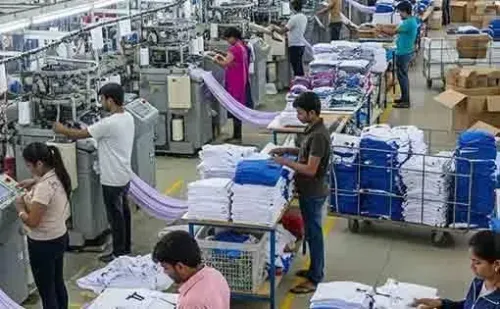
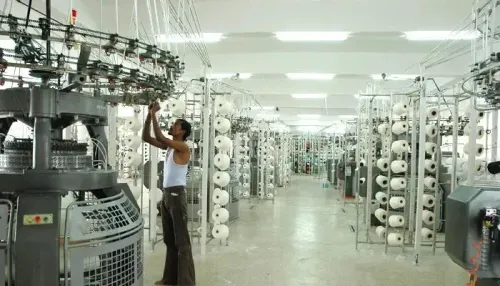
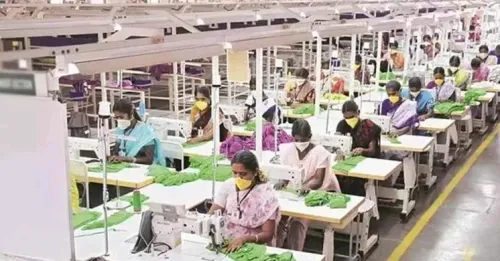
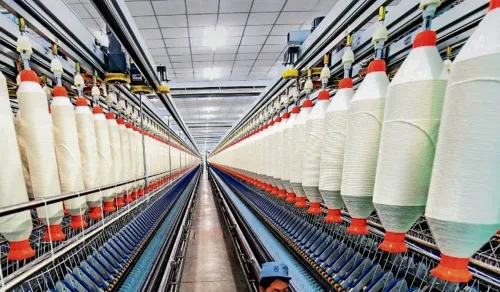
Tiruppur, Feb 4 (NationPress) The textile sector in Tamil Nadu's Tiruppur is on the brink of remarkable expansion, thanks to the newly established trade agreement between India and the US, as highlighted by the Tiruppur Exporters Association (TEA).
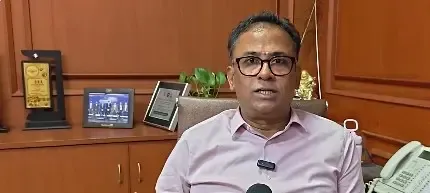
In a positive response to the India–US trade pact, TEA General Secretary Thiru Kumaran stated that this agreement is set to significantly benefit the Indian textile industry, with Tiruppur positioned as a primary beneficiary.
He noted that the agreement has bolstered international confidence in Indian textile exports, paving the way for fresh opportunities for both manufacturers and exporters.
Furthermore, he mentioned the anticipated implementation of the European Union–India Free Trade Agreement (FTA) later this year, which is expected to provide an extra boost to the textile sector.
"With both agreements in place, the entire textile landscape—especially in Tiruppur—is anticipated to experience significant growth in the upcoming months. We are optimistic about doubling our revenue within the next year," Kumaran remarked.
Currently, India's textile exports are estimated at nearly $16 billion, with Tiruppur contributing around $5.2 billion, according to expert analyses.
The association foresees both figures potentially doubling in the next three years, which is likely to create substantial investment prospects and enhance employment across the sector.
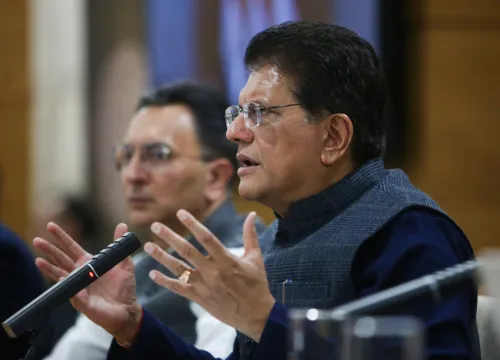
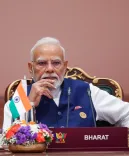
Thiru Kumaran expressed gratitude to Prime Minister Narendra Modi, Union Minister of Commerce and Industry Piyush Goyal, and Union Minister of Textiles Giriraj Singh for their roles in facilitating the India–US trade agreement and advancing the India–EU FTA.
He also extended thanks to Union Finance Minister Nirmala Sitharaman for what he termed a growth-oriented Union Budget.
Commenting on the Union Budget, he stated that the incentives introduced would stimulate new investments in the textile sector and boost export-led growth.
Additionally, he emphasized that growth within the textile industry would be advantageous for job creation.
Point of View
It's crucial to acknowledge the potential impact of the India-US trade agreement on the Tiruppur textile industry. This development not only highlights the resilience of Indian exports but also underscores the growing importance of international trade relations. With the promise of increased investments and job opportunities, Tiruppur stands at a pivotal moment that could redefine its economic landscape.
NationPress
17 Sept 2026
Frequently Asked Questions
What is the current value of India's textile exports?
India's textile exports are valued at nearly $16 billion.
How much do Tiruppur's textile exports contribute to India's total?
Tiruppur's textile exports stand at around $5.2 billion.
What are the expected outcomes of the India-US trade agreement?
The agreement is expected to boost investments, job creation, and overall growth in the textile sector.
What role does the European Union-India FTA play in this context?
The anticipated EU-India FTA is expected to provide an additional boost to the textile sector.
Who expressed gratitude for facilitating the trade agreement?
Thiru Kumaran, the General Secretary of TEA, expressed gratitude to key political figures including Prime Minister Narendra Modi and Union Ministers.