Has TN Government Finally Abolished the Controversial 'Orderly System' in Police?
Synopsis
The Tamil Nadu government has initiated the dissolution of the 'orderly system' in the police, establishing district committees to prevent the misuse of personnel. This move aims to uphold the integrity of police duties and ensure the proper deployment of staff.
Key Takeaways
Tamil Nadu government moves to dismantle the orderly system.
District-level committees will monitor compliance and gather public complaints.
Police personnel are to be redirected exclusively to official duties.
Progress reports will be submitted to the Home Secretary regularly.
This initiative aims to restore dignity within the police force.
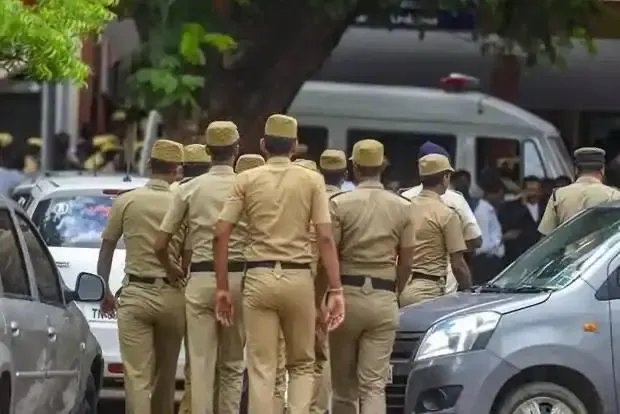
Chennai, Feb 5 (NationPress) The Tamil Nadu government has officially taken steps to eliminate the contentious "orderly system" within the police force, notifying the Madras High Court that a Government Order (GO) has been issued to form district-level monitoring committees aimed at putting an end to this long-criticized practice.
This announcement was made on Thursday before the division bench comprising Justices S.M. Subramaniam and C. Kumarappan.
Advocate General P.S. Raman presented a copy of the January 21 GO and informed the court that the state has adhered to the directives previously issued by the Bench on January 7, albeit with some minor procedural changes.
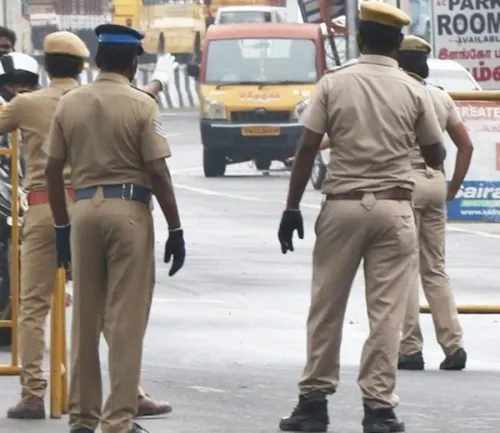
The orderly system pertains to the deployment of police personnel for personal and domestic tasks at the homes of senior officials—a practice widely regarded as exploitative and disconnected from official police responsibilities.
The High Court had mandated the government to create a system for the complete abolition of this practice.
As per the newly issued GO, a five-member committee will be established in each district, chaired by the District Collector. The committee will comprise the District Revenue Officer (DRO), an additional officer of the same rank nominated by the Collector, the Additional Superintendent of Police (Headquarters), and another ASP-rank officer.
These committees are tasked with collecting information, addressing public complaints in any format—be it oral, written, or electronic—and taking prompt actions to eradicate the orderly system. They are also responsible for ensuring that no police personnel are assigned to household or personal duties and that such staff are redirected to regular policing functions. For accountability, the committees must provide progress updates to the Home Secretary every two months.
In major urban areas like Chennai, Coimbatore, and Madurai, Collectors have been empowered to form multiple teams to enhance enforcement. The GO also states that the Additional Chief Secretary, Home (Police VI) Department, will take disciplinary action against officials if any violations are reported.
Upon noting the government's adherence to its directives, the judges emphasized the importance of ongoing monitoring and postponed the case for four weeks to evaluate the effectiveness of the implemented measures. This initiative is anticipated to foster structural reforms within the police administration and preserve the dignity of uniformed personnel throughout the state.
Point of View
The abolition of the 'orderly system' in Tamil Nadu is a commendable step towards modernizing police practices and ensuring that personnel are utilized solely for official duties. This move reflects a growing recognition of the need for accountability and integrity within law enforcement agencies across the country. It is crucial for the government to monitor the implementation of these changes effectively to ensure their success and restore public trust in the police force.
NationPress
16 Oct 2026
Frequently Asked Questions
What is the 'orderly system' in the police?
The 'orderly system' refers to the practice of assigning police personnel to perform domestic and personal chores for senior officers, which is often seen as exploitative.
What steps has the Tamil Nadu government taken to abolish this system?
The government has issued a Government Order to form district-level monitoring committees tasked with eradicating the orderly system and ensuring police personnel are focused on their official duties.
How will the monitoring committees operate?
Each district committee will gather information, handle public complaints, and provide progress reports to the Home Secretary every two months to ensure accountability and compliance.
What role do the judges play in this process?
The judges have mandated ongoing monitoring of the government's compliance with the directives and will review the effectiveness of the measures taken in four weeks.
What impact could this have on police reform in Tamil Nadu?
This initiative is expected to lead to significant reforms in police administration, reinforcing the dignity of uniformed personnel and enhancing the overall integrity of law enforcement.