Tamil Nadu CM Vijay moves Assembly resolution to keep Tamil Thai Vazhthu first at state functions
Synopsis
Tamil Nadu CM Vijay has moved a formal Assembly resolution to keep Tamil Thai Vazhthu as the opening song at all state functions — a direct pushback against a Union Home Ministry directive that would push the state song to last. With a 1970 government order and a 2021 declaration of state song status behind it, Tamil Nadu is drawing a clear cultural and constitutional line against the Centre.
Key Takeaways
Chief Minister Vijay moved a special resolution in the Tamil Nadu Assembly on 10 August to retain Tamil Thai Vazhthu as the first song at all state functions.
Tamil Thai Vazhthu , from the 1891 work 'Manonmaniam' by Manonmaniam Sundaranar , has been sung first at government functions since a 23 November 1970 order.
It was officially declared Tamil Nadu's state song on 12 December 2021 and made mandatory across educational institutions, universities, and public bodies.
A Union Home Ministry communication dated 1 July 2026 directed that Vande Mataram be sung first, followed by Jana Gana Mana , pushing Tamil Thai Vazhthu to the end.
The Assembly resolution signals Tamil Nadu's intent to resist the Centre's prescribed ceremonial sequence on grounds of cultural identity and established protocol.
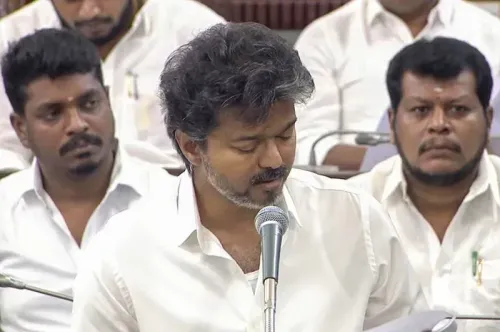
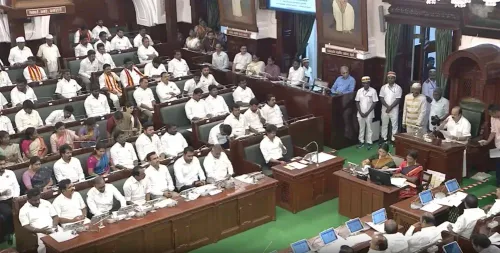
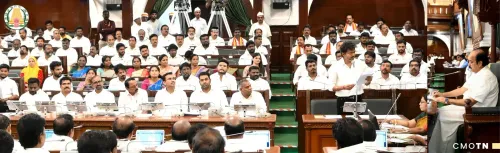
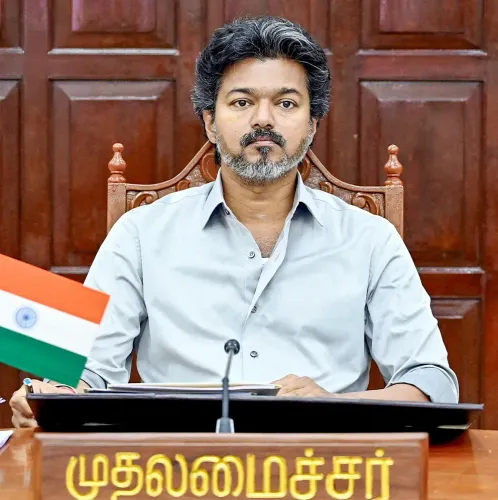
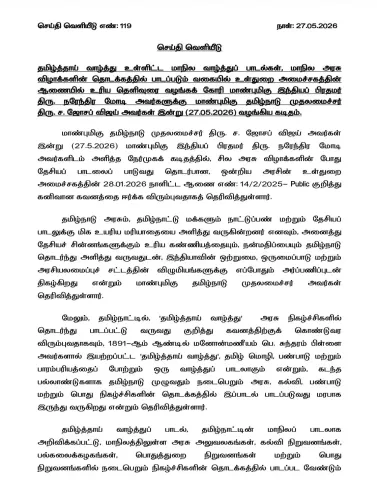
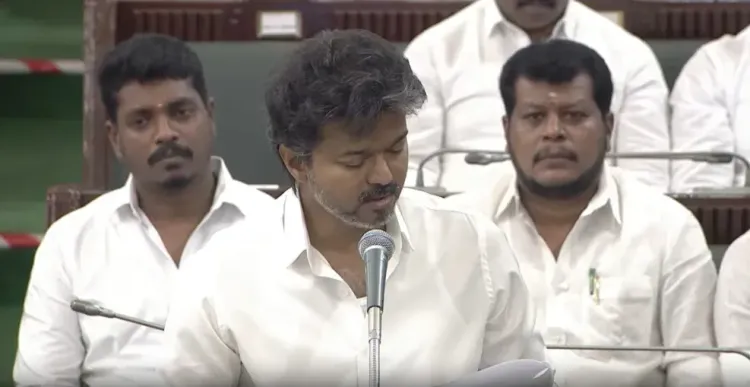
Tamil Nadu Chief Minister Vijay on Monday, 10 August moved a special resolution in the Tamil Nadu Legislative Assembly, seeking to ensure that Tamil Thai Vazhthu continues to be sung first at all functions organised by state government departments, educational institutions, and public bodies. The move comes amid a direct conflict with a Union Home Ministry directive that would push the state song to the end of the ceremonial sequence.
What the Resolution Says
The resolution affirms that Tamil Thai Vazhthu — drawn from the 1891 literary work 'Manonmaniam', written by Manonmaniam Sundaranar — has been sung at the commencement of government functions for over five decades, following a government order issued on 23 November 1970. Its standing was formally elevated on 12 December 2021, when it was officially declared the state song of Tamil Nadu.
The song was subsequently made mandatory at the start of functions held by educational institutions, universities, government offices, public sector undertakings, and other public organisations across the state. Through the resolution, the Vijay government sought the Assembly's endorsement to retain this order without modification.
The Centre-State Flashpoint
The resolution directly responds to a communication from the Union Home Ministry dated 1 July 2026, which laid out the Centre's prescribed ceremonial sequence. Under that directive, the National Song, Vande Mataram, must be rendered first, followed by the National Anthem, Jana Gana Mana — an arrangement that would relegate Tamil Thai Vazhthu to the end of official programmes.
This triggered immediate objections in Tamil Nadu, where the state song's primacy at official functions is considered a matter of cultural protocol and regional identity. Notably, this is not the first time the Centre and Tamil Nadu have been at odds over language and cultural assertion — the state has historically resisted federal impositions on Tamil heritage.
What CM Vijay Said
Chief Minister Vijay argued that Tamil Thai Vazhthu represents the state's reverence for the Tamil language, its civilisation, and its cultural continuity. He stressed that altering the established practice would amount to undermining Tamil Nadu's cultural identity. The resolution also underscored Tamil's status as an ancient classical language and described Tamil civilisation as among the oldest continuous cultural traditions in the world.
The State's Position Going Forward
The Vijay government maintained that the long-standing convention of opening official programmes with Tamil Thai Vazhthu must continue, while the National Song and National Anthem retain their own established place in the sequence. The resolution, passed through the Assembly, signals that the state intends to hold its ground against the Centre's prescribed order.
With the Assembly now formally on record, the dispute is likely to escalate into a broader constitutional question about the Centre's authority to dictate ceremonial protocol at state-organised functions.
Point of View
Framed as a procedural clarification, lands in Tamil Nadu as an assertion of cultural hierarchy. Vijay's resolution, passed through the Assembly, gives the pushback democratic legitimacy that a mere executive order could not. What mainstream coverage underplays is the precedent risk: if the Centre can dictate ceremonial song sequences at state functions, the question of where federal cultural authority ends becomes genuinely open. Tamil Nadu's resistance also has electoral logic — language and cultural pride remain among the most potent mobilising forces in the state's politics.
NationPress
24 Sept 2026
Frequently Asked Questions
What is the Tamil Thai Vazhthu resolution moved in the Tamil Nadu Assembly?
It is a special resolution moved by Chief Minister Vijay on 10 August, seeking to ensure that Tamil Thai Vazhthu continues to be sung first at all functions organised by state government departments, educational institutions, and public bodies. The resolution directly responds to a Union Home Ministry directive that would place Vande Mataram first in the ceremonial sequence.
Why is there a controversy over Tamil Thai Vazhthu at official functions?
A Union Home Ministry communication dated 1 July 2026 prescribed that Vande Mataram be sung first, followed by Jana Gana Mana, at official functions — an arrangement that would push Tamil Thai Vazhthu to the end. Tamil Nadu objected, arguing that the state song has been sung first at government functions for over five decades and its primacy is a matter of established cultural protocol.
What is the history of Tamil Thai Vazhthu as Tamil Nadu's state song?
Tamil Thai Vazhthu is drawn from 'Manonmaniam', a literary work written by Manonmaniam Sundaranar in 1891. It has been sung at the start of government functions since a state government order issued on 23 November 1970. On 12 December 2021, it was officially declared the state song of Tamil Nadu and made mandatory at the commencement of functions across educational institutions, universities, and public bodies.
What does the Centre's directive say about the order of ceremonial songs?
The Union Home Ministry's communication of 1 July 2026 prescribes that the National Song, Vande Mataram, be rendered first, followed by the National Anthem, Jana Gana Mana. This sequence would place Tamil Thai Vazhthu after both national songs, reversing the long-standing practice in Tamil Nadu.
What happens next after the Tamil Nadu Assembly passes this resolution?
With the Assembly formally on record, the dispute is expected to escalate into a broader constitutional question about the Centre's authority to dictate ceremonial protocol at state-organised functions. Tamil Nadu's position is that the established order must continue, and the resolution gives that stance democratic and legislative weight.