Tamil Nadu Assembly passes TET exemption resolution for pre-2010 teachers
Synopsis
Tamil Nadu's Assembly has unanimously demanded that the Centre exempt 3.28 lakh teachers — recruited before the TET system existed — from an exam they were never required to pass. With cross-party backing and a formal resolution headed to New Delhi, the pressure on the Union government to amend the RTE Act is now squarely political.
Key Takeaways
The Tamil Nadu Legislative Assembly unanimously adopted a special resolution on 25 August seeking TET exemption for teachers appointed before 23 August 2010 .
School Education Minister A.
Rajmohan said the mandatory TET order has affected nearly 3.28 lakh serving teachers.
The resolution urges the Centre to amend the Right of Children to Free and Compulsory Education (RTE) Act to provide statutory protection.
Parties including DMK , AIADMK , PMK , CPI , CPI-M , and Congress backed the resolution across party lines.
The resolution will be forwarded to the Union government ; it is persuasive but not legally binding on the Centre.
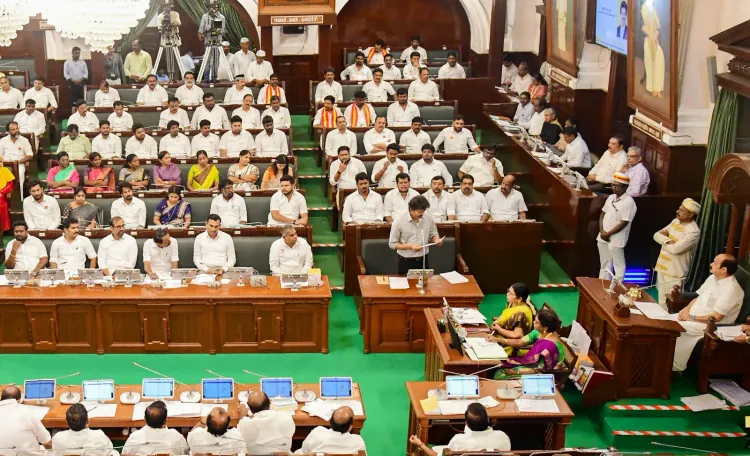
The Tamil Nadu Legislative Assembly on Tuesday, 25 August unanimously adopted a special resolution urging the Union government to exempt teachers appointed before 23 August 2010 from the mandatory Teacher Eligibility Test (TET). The resolution, introduced by School Education Minister A. Rajmohan, seeks statutory protection for nearly 3.28 lakh serving teachers whose job security has been thrown into uncertainty by the retrospective enforcement of the eligibility test.
What the Resolution Demands
The resolution calls for a complete exemption from the TET for all teachers recruited before the prescribed cut-off date. It also urges the Centre to introduce suitable amendments to the Right of Children to Free and Compulsory Education (RTE) Act to provide a permanent legal safeguard for the affected teachers. Minister Rajmohan argued that imposing a newly introduced eligibility requirement on teachers who had already entered service through valid, contemporaneous recruitment processes was fundamentally unfair.
Scale of the Impact
According to Minister Rajmohan, the mandatory TET order has affected nearly 3.28 lakh teachers across Tamil Nadu. Many were recruited under the eligibility norms and appointment procedures that were in force before the TET system was introduced. The compulsory examination has generated anxiety among long-serving teachers over their job security, promotional prospects, and retirement benefits, he said. The minister maintained that administrative measures by the state government alone would not adequately resolve the legal complications arising from the TET requirement, making a central legislative amendment necessary.
Cross-Party Support in the House
The resolution drew backing from parties across the political spectrum. Members of the Dravida Munnetra Kazhagam (DMK), All India Anna Dravida Munnetra Kazhagam (AIADMK), Pattali Makkal Katchi (PMK), Communist Party of India (CPI), Communist Party of India (Marxist) (CPI-M), and the Indian National Congress (Congress) all backed the proposal. Legislators argued that teachers who had served for several years should not be compelled to clear an examination that was not a condition of their original appointment. Speaker J.C.T. Prabhakar put the resolution to a voice vote and subsequently announced it had been passed unanimously.
What Happens Next
The resolution will now be formally forwarded to the Union government, requesting amendments to the Right to Education Act and a complete TET exemption for all teachers appointed before 23 August 2010. This comes amid a broader national debate on teacher qualification standards and the balance between maintaining educational quality and protecting the service rights of experienced educators. Whether the Centre acts on the resolution — which is persuasive but not binding — will determine the fate of the 3.28 lakh teachers at the centre of this dispute.
Point of View
But it does not compel the Centre to act — and therein lies the core tension. The TET was introduced precisely to raise the floor on teacher quality, and any blanket exemption risks being read as a rollback of that standard. The real question is whether 3.28 lakh teachers being penalised for a rule that did not exist when they were recruited constitutes a legitimate grievance or a precedent that weakens accountability. Tamil Nadu is not alone in this bind; several states have sought similar relief, suggesting the Centre may eventually need a uniform national policy rather than piecemeal responses to state resolutions.
NationPress
9 Oct 2026
Frequently Asked Questions
What is the TET exemption resolution passed by the Tamil Nadu Assembly?
It is a special resolution unanimously adopted on 25 August urging the Union government to exempt teachers appointed before 23 August 2010 from the mandatory Teacher Eligibility Test (TET). The resolution also seeks an amendment to the Right of Children to Free and Compulsory Education (RTE) Act to provide statutory protection to the affected teachers.
How many teachers are affected by the mandatory TET requirement in Tamil Nadu?
According to School Education Minister A. Rajmohan, nearly 3.28 lakh serving teachers in Tamil Nadu have been affected by the order making the TET compulsory. These teachers were recruited under eligibility norms that pre-dated the TET system.
Why does Tamil Nadu want the RTE Act amended?
The state government argues that administrative measures alone cannot resolve the legal complications arising from the TET requirement. An amendment to the central RTE Act is seen as necessary to provide a permanent statutory safeguard for teachers who were recruited before the TET was introduced.
Which parties supported the TET exemption resolution?
The resolution received cross-party support from the DMK, AIADMK, PMK, CPI, CPI-M, and Congress. Speaker J.C.T. Prabhakar announced it was passed unanimously after a voice vote.
What happens after the Tamil Nadu Assembly passes this resolution?
The resolution will be formally forwarded to the Union government, requesting TET exemption for all teachers appointed before 23 August 2010 and amendments to the RTE Act. The resolution is persuasive but not legally binding; the Centre is not obligated to act on it.