What Is TN BJP's Demand for a White Paper from CM Stalin on NEP Resistance?
Synopsis
The BJP's escalating demands for transparency from CM Stalin highlight significant concerns over Tamil Nadu's education policies. With a call for a white paper on the state's resistance to the NEP 2020, this issue raises questions about the future of educational initiatives in the region.
Key Takeaways
BJP's demand for transparency over Tamil Nadu's education policies.
Concerns about opposition to NEP 2020 and educational initiatives.
Need for political collaboration for student welfare.
Impact on rural and marginalized students due to stalled educational schemes.
Call for an all-party meeting to discuss education performance.
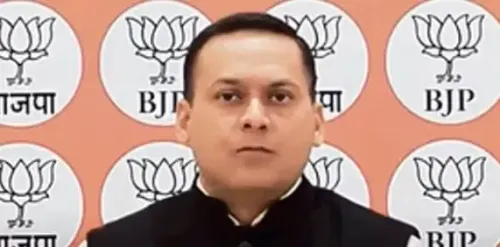
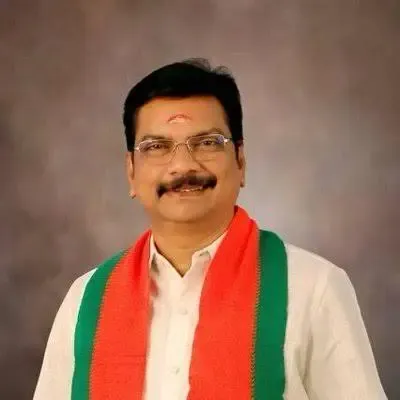
Chennai, Dec 4 (NationPress) The BJP has ramped up its criticism of the education policies of the Tamil Nadu government, with party spokesperson A.N.S. Prasad urging Chief Minister M.K. Stalin to publish a detailed white paper outlining the state’s persistent opposition to the National Education Policy (NEP) 2020 and its refusal to implement crucial Central schemes like Jawahar Navodaya Vidyalayas (JNVs) and PM-SHRI Schools.
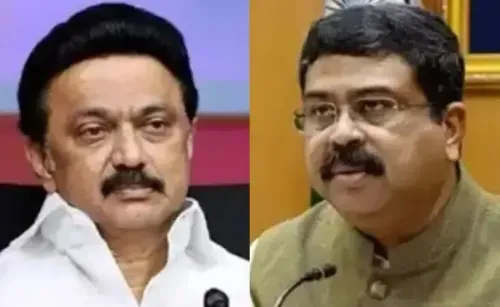
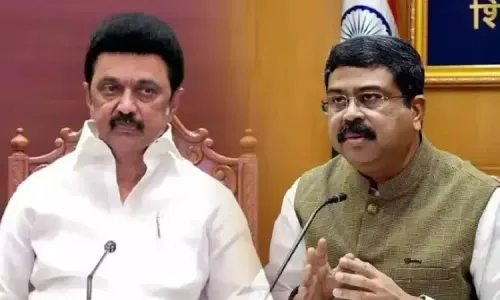
This call comes in response to remarks made by Union Education Minister Dharmendra Pradhan in Parliament on December 2, where he expressed significant concerns regarding Tamil Nadu’s unwillingness to collaborate with the Centre on initiatives focused on student welfare.
Minister Pradhan reiterated that the Centre is ready to release all pending educational funds, provided the state “takes an open-minded approach” and prioritises the interests of students over political agendas.
Prasad emphasized that the Chief Minister owes the people of Tamil Nadu a clear and accountable explanation, particularly in light of the Minister’s comments.
He urged CM Stalin to “transcend partisanship” and address the issues regarding the obstruction of NEP components that could improve student skills, broaden opportunities, and modernise the state's educational landscape.
According to Prasad, Tamil Nadu’s refusal to sign the necessary Memorandum of Understanding has hindered the implementation of JNVs and the PM-SHRI Scheme, despite multiple assurances of cooperation from the Centre.
He accused the state government of perpetuating “false propaganda” about Hindi imposition to resist the NEP’s three-language policy, which he argued does not enforce Hindi but promotes multilingual education to empower learners.
Prasad highlighted the recent directive from the Supreme Court calling for swift consultations between the Centre and states on establishing JNVs, stressing that Tamil Nadu’s current position is depriving rural students, Scheduled Tribes, and girls of high-quality educational opportunities.
To ensure transparency, Prasad urged the Chief Minister to convene an all-party meeting to evaluate the performance of the Tamil Nadu Education Department and the state’s non-implementation of NEP guidelines.
He stated that “outdated Dravidian rhetoric” should not obstruct the constitutional right to education or limit the prospects of millions of students. Prasad called on the Chief Minister to respond meaningfully to Union Minister Pradhan’s inquiries, asserting that Tamil Nadu’s education system can only advance through cooperative federalism and a genuine student-first mindset.
Point of View
The ongoing conflict between the Tamil Nadu government and the BJP over educational policies reflects a broader issue of state-central relations in India. As educational reforms are critical for student welfare, it is vital for both parties to engage in constructive dialogue to ensure that millions of students are not deprived of quality education due to political disagreements.
NationPress
10 Oct 2026
Frequently Asked Questions
Why is BJP demanding a white paper from CM Stalin?
The BJP is calling for a white paper to clarify Tamil Nadu's consistent opposition to the NEP 2020 and the non-implementation of key educational schemes.
What are the Central schemes being opposed?
The state is resisting the implementation of Jawahar Navodaya Vidyalayas (JNVs) and PM-SHRI Schools.
What did Union Education Minister Pradhan say?
He expressed concerns about Tamil Nadu's reluctance to cooperate and emphasized the Centre's readiness to release pending educational funds.
How does Tamil Nadu's stance affect students?
The current opposition to the NEP components is depriving rural students, Scheduled Tribes, and girls of access to quality education.
What is the three-language formula in NEP?
The formula encourages multilingual learning without mandating Hindi, aiming to empower students through a broader linguistic education.