Will the TN Government Challenge the Madras HC Ruling on Lamp Lighting at Thirupparankundram Hill?
Click to start listening
Synopsis
The Tamil Nadu government is preparing to contest a Madras HC order that permits lighting a lamp at the Thirupparankundram hill. Minister Raghupathi argues this new practice, introduced by judicial order, contradicts Tamil cultural traditions and lacks historical precedent. The appeal aims to protect Tamil sentiments and uphold cultural continuity.
Key Takeaways
- The Tamil Nadu government is challenging a Madras HC order.
- The order allows lighting a lamp at Thirupparankundram hill.
- The government argues this contradicts Tamil cultural traditions.
- There is no historical evidence for this practice.
- The appeal aims to uphold cultural continuity.
Chennai, Jan 6 (NationPress) The Tamil Nadu government is set to challenge the verdict issued by the Madras High Court (Madurai Bench) that allows the lighting of a lamp at the ‘deepa thoon (lamp pillar)’ situated on Thirupparankundram hill. State Minister for Hindu Religious and Charitable Endowments, Raghupathi, stated on Tuesday that establishing a completely new practice via a judicial decision is fundamentally incorrect.
While addressing reporters in Chennai, the Minister mentioned that the government feels obligated to appeal the ruling due to its legal shortcomings and its conflict with traditional cultural practices.
He noted that the initial order was made by the Madras High Court (Madurai Bench), where a Division Bench partially supported an earlier directive from single judge Justice G. R. Swaminathan.
According to Raghupathi, the Madurai Bench, while prohibiting public access to the lamp pillar, simultaneously ordered that certain individuals, led by the District Collector, could visit the site to light the lamp. He remarked, “This is inherently contradictory and legally indefensible.”
The Minister emphasized the absence of historical or documentary proof supporting the claim that lighting a lamp at the lamp pillar on Thirupparankundram hill has ever been a customary practice in Tamil Nadu.
“For a court to authorize a ritual or religious action at a specific location, there must be evidence showing that such a practice previously existed. In this situation, no such evidence was presented before the court,” he stated.
He highlighted that the district administration had clearly conveyed to the court that allowing the lighting of lamps at the lamp pillar should not be sanctioned, as it could trigger issues related to law and order.
“Historically, there has never been a need or tradition to light a lamp at this pillar. Instituting a brand-new practice via a judicial order is fundamentally inappropriate,” the Minister contended.
While expressing respect for the judiciary, Raghupathi clarified that the government is not challenging the institution itself. “The judiciary must not be denigrated. However, when an order is evidently illegal or lacks supporting evidence, the government has every right to contest it through constitutional avenues,” he stated.
Describing the matter as sensitive, the Minister pointed out that the ruling undermines Tamil sentiments and cultural continuity.
“It is vital to preserve Tamil culture and tradition. Establishing a practice that has not previously existed through a court ruling raises profound concerns and serves no public interest,” he asserted.
The controversy revolves around Thirupparankundram, a location of significant religious and historical importance, where conflicting claims regarding rituals and access have repeatedly incited legal and social debates.
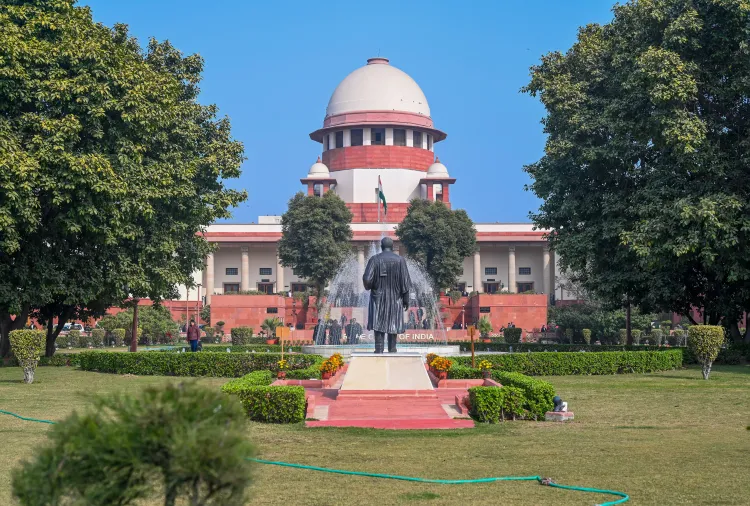
The state government is expected to submit its appeal to the Supreme Court shortly, seeking to stay the Madurai Bench’s order.
Point of View
It is crucial to observe that the Tamil Nadu government's decision to appeal against the Madras High Court's ruling highlights the ongoing tension between tradition and judicial intervention. The focus should remain on ensuring that cultural practices are respected while also navigating the complexities of legal frameworks.
NationPress
08/01/2026
Frequently Asked Questions
What is the Madras High Court ruling about?
The ruling permits the lighting of a lamp at the 'deepa thoon' on Thirupparankundram hill, which the Tamil Nadu government contests.
Why is the Tamil Nadu government appealing the ruling?
The government believes the ruling introduces a new practice that contradicts long-standing cultural traditions and lacks historical evidence.
What implications does this ruling have?
The ruling raises concerns over cultural continuity and may lead to social and legal debates regarding access and rituals at significant sites.