How Did Tribal Politics Influence Tripura in 2025 as BJP Strengthens Its Indigenous Support?
Synopsis
As tribal politics takes center stage in Tripura's electoral arena, the BJP works to solidify its ties with indigenous communities while navigating complex alliances. Discover how these dynamics shape the state's political future.
Key Takeaways
Tribal politics are crucial in shaping Tripura’s electoral outcomes.
The BJP is focused on consolidating its support among indigenous communities.
Tensions are rising between the BJP and its ally, the Tipra Motha Party (TMP) .
The upcoming TTAADC elections hold significant importance for governance.
Political dynamics are evolving, highlighting the need for inclusive representation.
Agartala, Dec 30 (NationPress) Tribal politics has historically been a pivotal element in Tripura's electoral dynamics, and this past year was no different. The ruling BJP has concentrated efforts on fortifying its organizational foothold among indigenous communities while progressively diminishing reliance on tribal affiliates, notably the Tipra Motha Party (TMP).
As the early elections for the Tripura Tribal Areas Autonomous District Council (TTAADC) approach, tribal-centric politics have gained momentum statewide.
Since 2021, the TMP has presided over the influential 30-member TTAADC, which encompasses nearly two-thirds of Tripura's 10,491 sq km area and is home to over 12.16 lakh residents, with approximately 84 percent being indigenous.
In anticipation of the TTAADC elections, major political factions, including the ruling BJP, its allies TMP and the Indigenous People’s Front of Tripura (IPFT), along with opposition parties such as the CPI (M) and Congress, have escalated their efforts to garner support from tribal voters, who represent nearly a third of Tripura's 4.2 million populace.
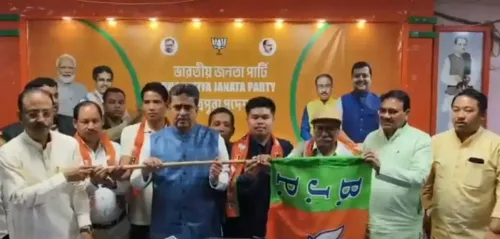
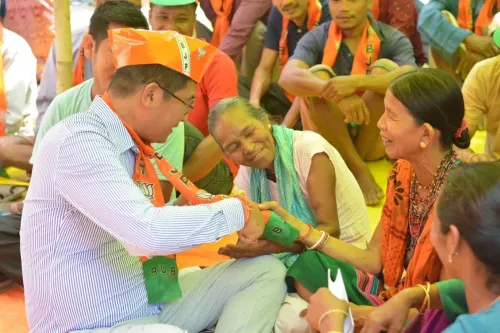
In a bid to reduce its dependency on tribal parties like TMP and IPFT, the BJP has ramped up organizational initiatives in tribal-heavy regions since the start of the year. Currently, both TMP and IPFT are allies of the BJP.
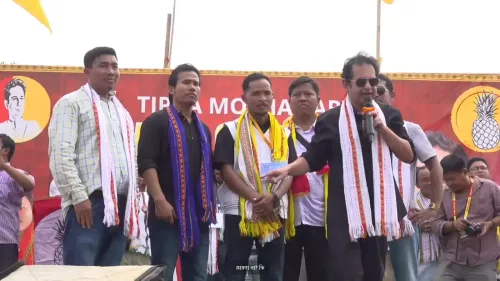
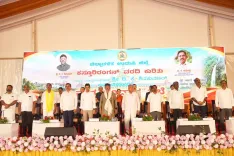
As part of this approach, the BJP convened a significant meeting on July 17 named 'Janajati Chintan Shivir', bringing together elected representatives and leaders from indigenous communities.
Chief Minister Manik Saha, state BJP president Rajib Bhattacharjee, Tribal Welfare Minister Bikash Debbarma, former MP Rebati Tripura, all tribal MLAs, TTAADC members, and various tribal dignitaries participated in this day-long event.
According to senior tribal leader and BJP state general secretary Bipin Debbarma, approximately 14,000 individuals, primarily from indigenous backgrounds, have joined the BJP over the last three to four months.
However, as the BJP intensified its outreach, tensions flared with its ally TMP, with allegations of TMP workers assaulting BJP karyakartas in various locales.
“At least 23 BJP karyakartas were injured in over 10 attacks by TMP activists in different districts,” Debbarma informed IANS.
One notable incident occurred on July 27 when at least seven BJP Janajati Morcha members sustained severe injuries following an alleged TMP assault at Asharambari in Khowai district while they listened to Prime Minister Narendra Modi’s monthly radio show ‘Mann Ki Baat’.
Subsequent attacks were reported in Takarjala in Sepahijala district and other regions, injuring several BJP members.
Conversely, TMP, Congress, and CPI (M) asserted that thousands have joined their ranks during the year.
Following extensive negotiations, the tribal-oriented TMP, then in opposition, signed a tripartite agreement with the Centre and the Tripura government on March 2 last year (2024) with Home Minister Amit Shah present.
The party, comprising 13 MLAs, joined the BJP-led coalition government on March 7, introducing a new layer to the state's political landscape.
Two TMP MLAs, Animesh Debbarma and Brishaketu Debbarma, were integrated into Chief Minister Manik Saha’s cabinet.
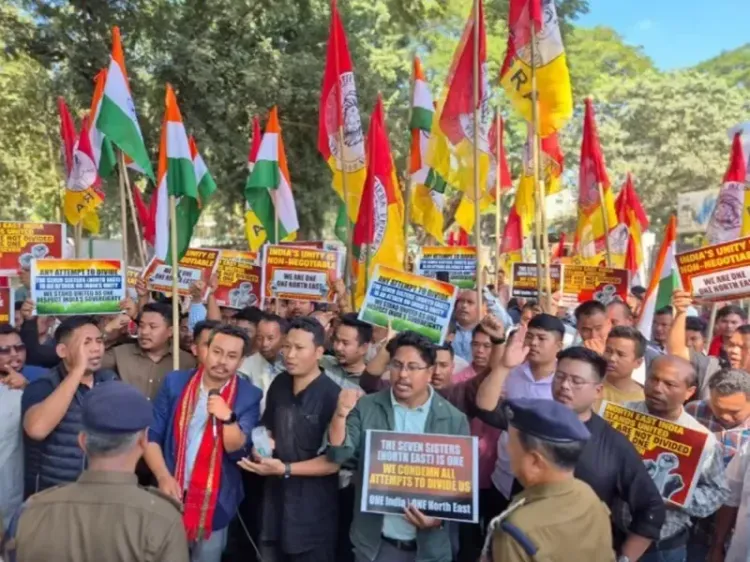
Despite being part of the government, TMP, led by Pradyot Bikram Manikya Debbarma, continued to advocate for its demands, organizing protests in Delhi on September 9 and a series of demonstrations throughout Tripura.
The party is pushing for ‘Greater Tipraland’, a distinct state for tribals under Articles 2 and 3 of the Constitution, timely Village Committee elections in TTAADC regions, deportation of illegal migrants, implementation of the Inner Line Permit (ILP), and enforcement of the tripartite agreement.
In what observers term a “sweet-and-sour” relationship between BJP and TMP, the opposition Congress expressed readiness to support all “legitimate demands” of TMP, contingent on the latter’s withdrawal from the ruling coalition.
Nevertheless, TMP has yet to respond to this proposal.
Pradyot Bikram Manikya Debbarma, a former state Congress President, exited the party in September 2019 due to disagreements over a petition to the Supreme Court regarding the implementation of the National Register of Citizens (NRC) in Tripura to protect indigenous rights.
In a surprising political twist, Chief Minister Manik Saha launched pointed critiques against BJP’s ally TMP, cautioning that politics rooted in coercion and threats would no longer be tolerated in Tripura.
While addressing a party gathering at Baijal Bari in Khowai district last week, CM Saha asserted that no force could hinder the BJP's initiatives in tribal regions.
“Our leaders are Prime Minister Narendra Modi, BJP national president J.P. Nadda, and Union Home Minister Amit Shah. We are committed to dialogue and peace, not unrest. Law and order will be maintained stringently through constitutional channels,” Saha stated.
Regarding TMP’s demands, CM Saha remarked, “Initially it was Tipraland, then Greater Tipraland, and now One Northeast. Anyone can present demands, but they must adhere to democratic protocols.”
He also emphasized increased budget allocations and infrastructure advancements in TTAADC regions under the BJP administration.
On the issue of the Kokborok language script, Saha accused various parties of hypocrisy, noting that earlier committees had evaluated numerous script options but failed to reach a consensus.
“Now they selectively raise this issue to sow confusion and incite unrest,” he alleged.
Highlighting the BJP’s commitment to tribal welfare, the Chief Minister noted that seven distinguished individuals—predominantly tribal scholars and artists—from Tripura had received Padma Shri awards, and senior tribal leader Jishnu Dev Varma was appointed Governor of Telangana.
Political instability and violence in neighboring Bangladesh have also influenced Tripura.
This turmoil necessitated heightened security measures along the international border, with the Border Security Force (BSF) increasing vigilance since mid-2024, especially following the fall of the Sheikh Hasina-led Awami League government on August 5, 2024.
Reports of attacks on minorities, particularly Hindus, in Bangladesh ignited widespread protests across Tripura, involving various political parties, civil society, and NGOs.
In a significant boost for religious tourism, Prime Minister Narendra Modi inaugurated the renovated 524-year-old Mata Tripura Sundari temple at Udaipur, located 54 km south of Agartala, on September 22.
This redevelopment, executed under the PRASHAD (Pilgrimage Rejuvenation and Spiritual Heritage Augmentation Drive) initiative at a cost exceeding Rs 54 crore, improved facilities at one of the 51 Hindu Shakti Peethas.
Furthermore, replicas of all 51 Shakti Peethas are under construction at the 51 Shakti Peethas Park in Banduar, Gomati district, with an investment of Rs 97.70 crore.
The original 51 Shakti Peethas are distributed across various Indian states, as well as in Pakistan, Nepal, and Bangladesh.
Chief Minister Manik Saha laid the foundation stone for the park project on July 13.
Similar to other northeastern states, Tripura has intensified its 'war on drugs' over the past year.
The Tripura Police, in collaboration with central forces and intelligence agencies, including the Assam Rifles, seized narcotics valued over Rs 500 crore—primarily trafficked from Myanmar—and arrested approximately 200 drug dealers.
Chief Minister Saha, who also oversees the Home portfolio, reiterated the government's zero-tolerance stance towards drugs, emphasizing a commitment to ensuring a drug-free future for Tripura's youth.
(Sujit Chakraborty can be contacted at sujitchakrabortyne@gmail.com)
Point of View
The situation in Tripura highlights the evolving dynamics of tribal politics and its implications for governance. As political parties navigate these complexities, it’s essential to consider the voices and needs of indigenous communities for a balanced and inclusive future.
NationPress
19 Sept 2026
Frequently Asked Questions
What role does tribal politics play in Tripura?
Tribal politics are pivotal in Tripura, influencing electoral outcomes and party strategies, particularly as indigenous communities constitute a significant portion of the population.
How is the BJP's strategy impacting its relationship with TMP?
The BJP's strategy to strengthen its base among indigenous groups is creating tensions with TMP, as the party seeks to reduce its reliance on tribal allies.
What are the main demands of the Tipra Motha Party?
TMP is advocating for Greater Tipraland, the conduct of Village Committee elections, deportation of illegal migrants, implementation of the Inner Line Permit, and enforcement of a tripartite agreement.
How has the political landscape in Tripura changed recently?
Recent developments, including TMP joining the BJP-led coalition and rising tensions, indicate a shifting political landscape, with tribal issues taking precedence.
What is the significance of the TTAADC elections?
The TTAADC elections are crucial as they represent a key constitutional body in Tripura and directly impact governance in tribal areas.