What Measures Did Trinamool RS Member Suggest to Union Minister to Revive the Jute Industry?

Synopsis
As the jute industry in West Bengal faces severe challenges, Trinamool Congress member Ritabrata Banerjee has proposed vital measures to Union Minister Giriraj Singh aimed at reviving this essential sector. His recommendations highlight the urgent need for government intervention to protect farmers and workers alike.
Key Takeaways
Banerjee proposed a stabilization framework for raw jute.
A strategy for balanced demand distribution is essential.
Strengthening MSP operations is crucial for farmers' security.
The ongoing crisis threatens employment in the jute sector.
Government intervention is necessary to avert long-term damage.
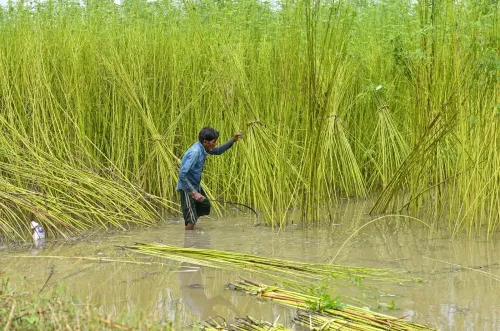
Kolkata, Jan 1 (NationPress) - Ritabrata Banerjee, a member of the Trinamool Congress in the Rajya Sabha, reached out to Union Textiles Minister Giriraj Singh on Thursday with proposals aimed at rejuvenating the struggling jute industry. This appeal comes in light of several jute mills in West Bengal shutting down due to a raw jute supply crisis.
Banerjee's first recommendation is the establishment of a raw jute stabilization or buffer framework. This framework should clearly outline reserve norms, ensure transparency in release triggers, and include time-bound stock rotation associated with minimum support price (MSP) procurement.
The second suggestion is to develop a well-defined strategy that can forecast and distribute production-control-cum-supply-order (PCSO) demands evenly. He emphasized that this approach would facilitate timely price finalizations and mitigate demand compression, which adversely affects both jute farmers and mills.
The final measure advocates for enhancing farmer-facing MSP operations to streamline procurement processes, broaden outreach, improve grading support, and guarantee timely payments to farmers.
In his correspondence, Banerjee also brought attention to the dire situation of jute mills in West Bengal, exacerbated by the circumstances in Bangladesh. He noted that many mills have reduced shifts or halted operations due to soaring raw material costs and significant working capital pressures, leading to job losses for thousands of workers.
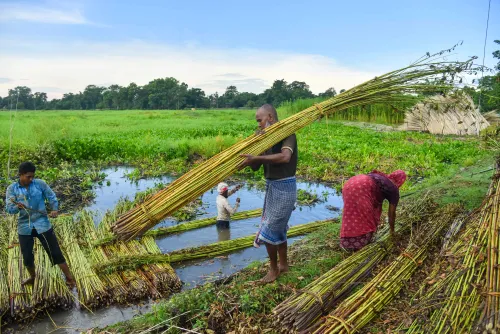
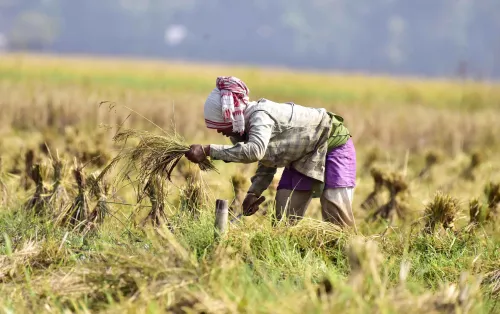
Highlighting the struggles of jute farmers, he pointed out that these cultivators are subjected to unpredictability, with no certainty that the high prices are the result of sustainable policy support rather than merely a temporary market scarcity.
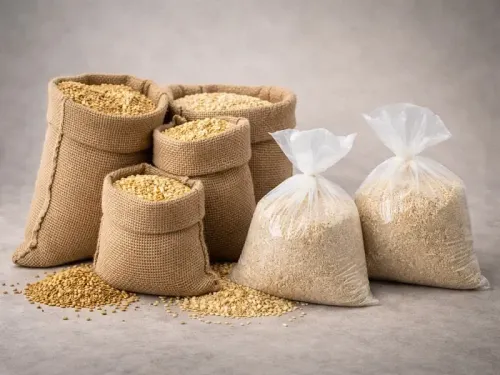
Moreover, he noted that the government's food grain procurement system is under strain regarding packaging, raising concerns about potential dilution and the likelihood of alternatives being used instead of jute packaging.
“The jute sector is not just an industry; it supports millions of farmers and workers while fulfilling a critical national packaging need. Without prompt and decisive action, the ongoing crisis could inflict lasting structural harm to the sector,” Banerjee warned.
“I urge your immediate attention and action to bring stability, trust, and equity back to the raw jute market,” he concluded in his letter.
Point of View
The challenges faced by the jute industry reflect broader issues of agricultural sustainability and economic stability in India. The recommendations made by Ritabrata Banerjee highlight the importance of government intervention to support farmers and workers, ensuring the sector's survival and growth amidst prevailing challenges.
NationPress
29 Sept 2026
Frequently Asked Questions
What are the primary measures suggested by Ritabrata Banerjee?
The primary measures include establishing a raw jute stabilization framework, developing a strategy for equitable demand distribution, and enhancing MSP operations to facilitate quicker procurement and fair payments to farmers.
Why are jute mills in West Bengal closing?
Jute mills in West Bengal are closing due to a crisis in the supply of raw jute, leading to high costs and financial stress, which has forced many mills to reduce shifts or suspend operations.
How does the jute crisis affect farmers?
The jute crisis exposes farmers to uncertainty, with fluctuating prices and a lack of assurance regarding sustainable policy support, which can jeopardize their livelihoods.