How Is India Navigating Geopolitical Strains and Security Challenges in 2025?
Click to start listening
Synopsis
As India braces for 2026, it faces a tangled web of geopolitical strains and security challenges. From economic pressures to internal Maoist threats, the path forward is fraught with complexity. Discover how the nation plans to navigate these turbulent waters.
Key Takeaways
- India faces multifaceted geopolitical challenges in 2026.
- Internal Maoist threats continue to be a priority for security forces.
- Economic pressures from US tariffs are prompting diplomatic efforts.
- Cybercrime is on the rise, necessitating stronger defenses.
- Relations with China remain tense despite diplomatic engagements.
New Delhi, Jan 1 (NationPress) As India steps into 2026, it confronts a complex web of geopolitical tensions, internal security timelines, and economic pressures exacerbated by climate change, indicating a departure from the stabilisation initiatives of the previous year, as per official statistics and strategic experts.
Despite the domestic economy sustaining a growth rate above seven percent, New Delhi is engaged in a process termed "diplomacy of repair" to tackle the 50 percent US tariffs on vital exports that were enacted in 2025.
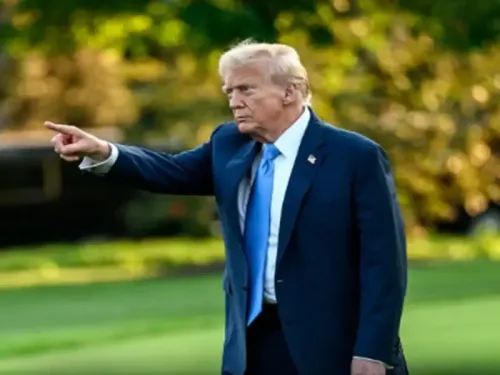
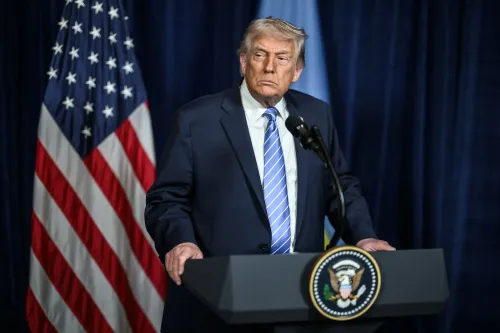
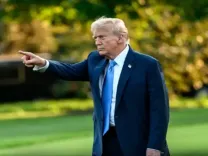
The Indian government is advocating for a trade resolution in early 2026 through various dialogues to revive halted investments following the August 6 Executive Order by US President Donald Trump, which targeted India's record-high purchases of discounted Russian oil.
On the internal security front, Union Home Minister Amit Shah reiterated the government's ambition to render India "Maoist-free" by March 31, 2026.
The feasibility of adhering to this timeline remains uncertain, even as official records indicate that Maoist activity has diminished from 125 districts in 2014 to merely three in 2025.
Efforts such as 'Operation Black Forest' successfully neutralised 270 Maoists last year, including prominent figures like Nambala Keshav Rao and Madvi Hidma from Chhattisgarh's Maoist-affected Sukma district.
Data shows that the surrender rate of Maoists surged to 1,225 nationwide in 2025, aided by state rehabilitation programs offering rewards up to Rs 20 lakh.
Bihar, Jharkhand, Odisha, Andhra Pradesh, Telangana, Madhya Pradesh, and Maharashtra have been declared 'Maoist-free' by their respective governments, with Chhattisgarh regaining control in districts like Bijapur, Sukma, and Dantewada, leaving only three vulnerable districts in the tribal-dominated area.
There has been a significant decline in Maoist violence, with incidents dropping by 53 percent and fatalities among security personnel decreasing by 73 percent from 2014 to 2024.
Security agencies reported a 95 percent conviction rate in terrorism-related cases via the National Investigation Agency, but cautioned against "white-collar terrorism" involving professionals.
This follows the November 10 Delhi car blast near the Red Fort, which resulted in the deaths of 15 individuals and injuries to several others.
In the aftermath of the Delhi terror explosion, a network linked to Jaish-e-Mohammed was dismantled, involving medical professionals from Faridabad's Al Falah University.
The bomber, Umar Un Nabi, an assistant professor at Al-Falah Medical College and hailing from Pulwama, Jammu and Kashmir, also died in the blast.
The medical professionals and their accomplices allegedly orchestrated the terror scheme, amassing Rs 26 lakh to fund their activities.
Investigations have tracked their funding sources and shell companies, leading to at least eight arrests thus far, including Jawad Ahmad Siddiqui, the founder of Al-Falah University, with several other suspects under watch.
Cyber fraud and "digital arrest" scams saw a dramatic rise in 2025, with India incurring losses of nearly Rs 1,000 crore each month due to online scams.
Approximately 18,000 cases were reported in just two months, resulting in the arrest of over 16,000 individuals nationwide through coordinated efforts by state cyber police and the National Cybercrime Reporting Portal.
President Droupadi Murmu addressed Parliament, highlighting that cybercrime, digital fraud, and deepfakes pose significant threats to social, economic, and national security, emphasizing the necessity for strong cyber protections.
The Supreme Court classified digital arrest scams as an organized national threat, granting the Central Bureau of Investigation nationwide authority and urging close collaboration with the Reserve Bank of India, the Department of Telecommunication, banks, and state cyber units to trace financial flows, tighten KYC norms, and swiftly freeze suspicious accounts.
Diplomatic analysts suggest that 2026 requires a "cautious reset" in relations with China.
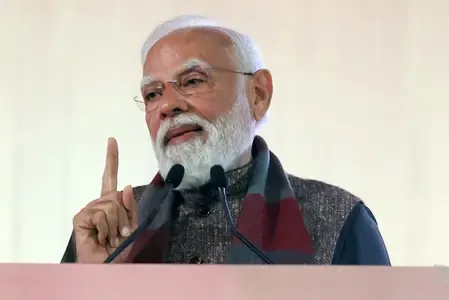
Despite a meeting in 2025 between Prime Minister Narendra Modi and Chinese President Xi Jinping at the Shanghai Cooperation Organisation Summit—where both leaders agreed on maintaining peace along the Line of Actual Control (LAC)—over 60,000 troops remain stationed.
India continues to adopt a dual strategy of a robust military stance and careful economic risk mitigation.
The threat from Pakistan persists following the Pahalgam attack and India's subsequent actions against its neighbor in May last year.
While infiltration and domestic terror incidents have notably decreased, India must remain vigilant along its northwestern border.
Though Bangladesh does not represent a direct strategic threat like China or Pakistan, rising domestic unrest and assaults on minorities, particularly Hindus, are serious concerns for India.
This issue has gained particular relevance following the ousting of former Prime Minister Sheikh Hasina last year.
IANS
snj/khz
Point of View
India stands firm in its commitment to national security and economic resilience. As we navigate these complex issues, it is crucial for the nation to remain united and proactive in addressing both internal and external challenges.
NationPress
03/01/2026
Frequently Asked Questions
What are the key challenges India faces in 2026?
India is grappling with geopolitical strains, internal security threats from Maoist groups, and economic pressures due to international tariffs.
How has India responded to the Maoist threat?
The Indian government aims to make the nation 'Maoist-free' by March 31, 2026, with significant operations leading to reduced Maoist presence.
What impact do US tariffs have on India?
The 50 percent tariffs imposed by the US on key exports necessitate a 'diplomacy of repair' to boost trade relations and unlock stalled investments.
What steps are being taken to combat cybercrime in India?
The government is enhancing cyber defenses, alongside coordinated efforts by law enforcement to address rising incidents of cyber fraud.
What is the current status of India-China relations?
Despite recent diplomatic talks, tensions remain high with over 60,000 troops stationed along the Line of Actual Control.